

Overview
Tactical roguelites live or die on one question: when a run collapses, does the blame land on the game or on the player? Dog in the Machine, developed by Studio Chahut and published by Goblinz Publishing, answers with full information. Enemies announce what they are about to do, a preview shows what planned moves will trigger, and the grid is small enough to hold in your head. What remains is a puzzle, rerolled every run.
The premise gives that puzzle a coat of fur. You control an AutoDog trying to break out of Automatown, a dystopian mecha-city, and reunite with the human companions who were exiled from it. AbsoluteGeeks called the story lightweight, and that is a fair description of a frame this thin. It still does useful work: a dog suits a game about charging, shoving and knocking things into other things.
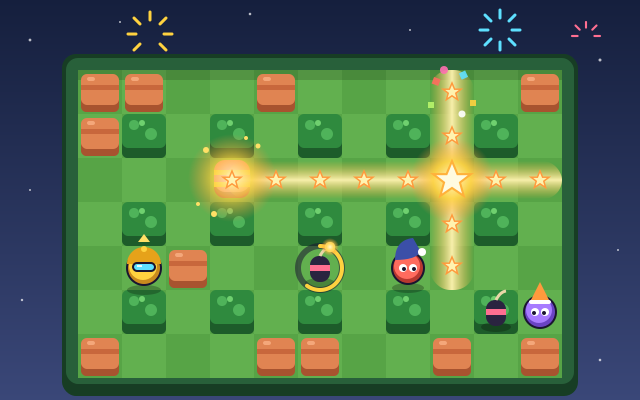
Mechanically, the game belongs to the telegraphed-intent branch of turn-based tactics. Battles play out on compact isometric boards loaded with arrow tiles, lasers, spiked traps, pushable boxes and enemies that react to being hit. The roguelite layer comes through Tricks, attack modifiers that are learned between battles and merged into more complex abilities. Eight dog breeds, procedurally generated levels, difficulty tiers, seeded runs and permanent upgrades add to it.
It ships on Steam for Windows and macOS at $17.99. Reception is warm but limited. The consensus praises the chain reactions, the fairness of the telegraphs and the value. The complaints concern readability in crowded fights and a default mode that forgives too much. Both complaints follow directly from the design, and both are worth taking seriously.
Key features
- Chain-reaction grids: Compact isometric arenas packed with arrow tiles, lasers, spiked traps, pushable boxes and reactive enemies. One well-placed attack can cascade across the whole board.
- Telegraphs and action preview: Enemies signal their intentions, and a preview shows how planned actions will resolve before commitment.
- Energy and Alarm Level: Every move and attack costs Energy. Enemy hits push the Alarm Level up, and a full meter ends the run.
- Tricks: Learned after battles, Tricks modify your next attack. They can be merged into more complex abilities and bought, exchanged, upgraded or stolen during encounters.
- Eight dog breeds: Runs begin with the Wrecker or the Shover, and six more breeds unlock over time, each changing how a run plays.
- Replayability stack: Procedurally generated levels, multiple difficulty tiers, seeded runs and permanent upgrades.
- Irondog mode: An optional mode that removes free action canceling, so every committed move is binding.
Analysis
The Grid as a Puzzle Box
The strongest design decision here is scale. On a compact grid every tile carries weight. Fill that grid with arrow tiles, lasers, spikes and boxes that can be shoved into all of them, and a small arena becomes dense with interactions instead of empty floor to cross. Reactive enemies add to the density. An enemy that responds to being hit can work like a domino, and the best move on a given turn is often the one that tips over the first piece.
That explains why chain reactions dominate the praise in both user and critic reviews. A planned cascade rewards reading the board more than a big damage number does, because it proves the board was read correctly. The telegraphs are what make that reading possible. With enemy intentions on display, the game replaces the anxiety of the unknown with the pressure of a solvable problem. All the information is there, and the challenge is finding the line that uses it.
Energy, Alarm and the Shape of a Turn
Energy budgets each turn across movement and attacks, which forces the classic tactics trade-off: reposition for a better angle, or spend the turn hitting from where you stand. The Alarm Level is the more interesting system. It rises when enemies land hits and ends the run when it fills, so it works as a health bar. The framing still matters. Tying failure to getting noticed fits an escape story better than a dog losing hit points, and it keeps the jailbreak premise present on the board.
The rule also shapes how the game plays. Only enemy hits raise the Alarm, so the design pushes toward denial. Shove enemies out of their telegraphed lanes, put boxes in the way, and remove threats before they act. Defense becomes a matter of displacement, which suits a game where positioning is the main resource.
Tricks: Builds That Live in the Next Attack
Tricks modify your next attack instead of granting permanent passive bonuses. That choice ties build-crafting to sequencing. The build question becomes what the next swing should carry, and when to spend it. Merging Tricks into more complex abilities adds a crafting layer on top.
The encounter economy gives runs room to change direction when the procedural draw goes badly. Tricks can be bought, exchanged, upgraded and even stolen. Rewarding Trick combinations are a recurring point of praise. Merge systems do carry a known risk, though. The more modifiers stack onto a single attack, the more the preview has to communicate. That is where the game’s readability problems begin.
Breeds, Seeds and Long-Term Hooks
Eight breeds, unlocked from the starting Wrecker and Shover, give runs different starting identities, and reviews single out their distinct identities. Seeded runs suit a puzzle-forward game especially well. A known seed turns a procedural run into a fixed problem to retry, refine and compare.
Permanent upgrades pull in the opposite direction from the full-information design. Meta-progression can make later runs easier through accumulation instead of skill. Multiple difficulty tiers offset that, letting experienced players raise the floor as their dog gets stronger.
The Rewind Problem
The most substantial design criticism concerns the default mode, which offers unlimited rewind through free action canceling. Pairing a full outcome preview with free undo makes experimentation cost nothing: every option can be tried and the best kept. The puzzle remains, but commitment disappears, and tactics games draw much of their tension from commitment.
Irondog mode removes free canceling and restores the stakes. The preview still informs choices, but a misread now counts. We consider Irondog the mode that best shows the design. Keeping it optional is a defensible accessibility choice, but defaults set expectations. Players who never switch it on may decide the game is easier and shallower than it is.
Onboarding and Story
KeenGamer found the opening hour information-heavy. That is a predictable cost of the design: several interacting tile types, Energy, Alarm, Tricks, merging and an in-run shop all arrive early. Front-loaded systems are a common source of onboarding friction in the genre, and nothing here suggests the game avoids it. The lightweight story is a reasonable trade for a game whose drama happens on the grid, but don’t expect the narrative to pull you through a losing streak.
Visuals & performance
The isometric presentation suits the design: compact boards seen at an angle, set in a dystopian mecha-city with a robot dog as the protagonist. That is a clear, marketable visual hook for a genre often dressed in generic sci-fi.
The interface carries more weight than in most games, because the telegraphs and the action preview are the game’s promise of fairness to the player. That makes its main weakness more damaging. Overlapping enemy previews in crowded boss fights are the most repeated criticism. When many telegraphs pile onto the same tiles, the information that makes the game fair turns into noise, at exactly the moment the design can least afford clutter. Clearer layering or a way to inspect one enemy’s intent at a time would address a problem built into the structure.
On performance, a turn-based isometric game on small boards should place modest demands on hardware. The turn-based structure means outcomes depend on information, not reflexes.
Platform nuances
- Store and price: Sold on Steam at $17.99 for both Windows and macOS.
- Input: Mouse and keyboard fit the design naturally. Selecting tiles, hovering over telegraphs and checking previews are pointer-friendly tasks with no time pressure.
- Controller and handheld PCs: Anyone planning to play with a controller or on a handheld PC should check the Steam page for current support before buying. A game this dense with on-screen information depends on precise cursor control.
- Mac owners: A macOS version at launch is a real point in the game’s favor for a turn-based tactics release on Steam.
Final verdict
Studio Chahut has built a tactical roguelite around a clear principle: show the player everything, then make them earn the solution. Compact grids full of arrows, lasers, spikes and boxes give single attacks real reach. The Alarm Level turns defense into displacement, and Tricks keep build decisions tied to the next swing. The design fails in two places. Crowded boss fights bury the telegraphs the game depends on, and the default rewind removes the commitment that gives tactics its edge. Irondog fixes the second problem. The first needs a UI pass. At $17.99, it is a reasonable pick for players who enjoy full-information tactics, provided they switch on Irondog early; the default mode is too forgiving to show what the design can do.
Reviewed by the Rankeno Strategy & Sim Desk. Scores are out of 10; the overall score is the desk’s editorial judgement, informed by the four sub-scores above. How we review