

Overview
In a market saturated with grim, open-world epics and microtransaction-laden live services, Tango Gameworks has delivered a vibrant, pulsating anomaly. Hi-Fi RUSH makes a case that single-player, character-driven action games built on mechanical ingenuity can still dominate the conversation. The premise is simple: wannabe rockstar Chai, a charming loser with a music player fused to his chest, accidentally becomes the target of a monolithic robotics corporation. What follows is a rebellion set to the beat of a killer rock soundtrack.
This is a rhythm-action hybrid, a genre that has seen its share of noble failures. Yet, where others have fumbled, Hi-Fi RUSH soars. Playing to the beat is not a suggestion but a requirement. Every environmental element, every enemy attack, every parry and dodge is linked to the music. The game weaves its soundtrack into the fabric of its design, creating a feedback loop where player action and auditory cues become one. The music is the mechanic, not a playlist laid over a brawler. For a studio known primarily for the dark corridors of The Evil Within, this explosion of color, humor, and rhythmic precision is a brilliant pivot. It reads as a passion project from a small, hungry indie studio given an AAA budget—a rare and exhilarating combination. At $29.99, it is priced like a mid-tier release and plays like a flagship.
Key features
- Rhythm-Synced Combat: Every attack, parry, and special move lands on the beat. Timing your actions correctly unleashes more powerful combos and finishers, turning combat into a fluid, rhythmic dance of destruction.
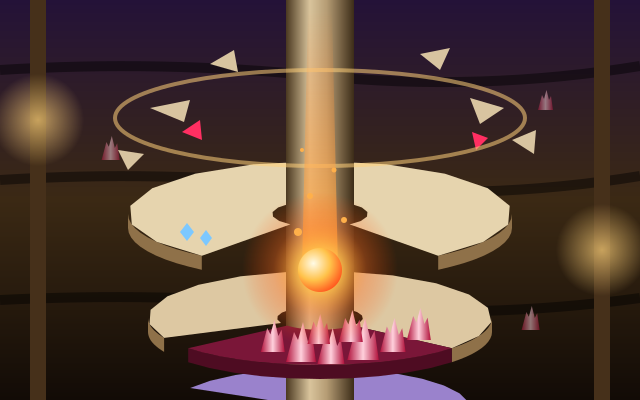
- Vibrant Cel-Shaded World: The game’s aesthetic is a comic-book-inspired explosion of color. The world pulses and moves to the music, with platforms, hazards, and environmental details all synchronized to the soundtrack.
- Dynamic Rock Soundtrack: Featuring tracks from iconic bands like Nine Inch Nails and The Black Keys, alongside original music, the high-energy rock soundtrack drives the action and serves as a crucial gameplay mechanic.
Analysis
Gameplay Loop
Hi-Fi RUSH’s core loop is expertly tuned. On the surface, it’s a character-action game in the vein of Devil May Cry, but the mandatory rhythmic component changes the entire equation. Chai’s attacks are functionally simple—a light attack, a heavy attack, a dodge, and a parry. The genius is that these actions are most effective, and in some cases only possible, when performed in time with the beat of the background music. A cat, 808, projects a constant rhythmic pulse, giving the player a visual guide, but the design rewards internalizing the music.
Fights play like an improvisational jam session: mashing buttons gives way to playing an instrument of destruction. A light-light-heavy combo lands differently, and more satisfyingly, when timed to the beat. The enemy design reinforces this. Basic robots attack on predictable beats, teaching the core rhythm. As the difficulty ramps up, enemies arrive with more complex syncopated attack patterns, forcing the player to listen, adapt, and find an opening. Boss battles are the crescendo, multi-phase epics that feel like a final exam on everything the game has taught. They are less about depleting a health bar and more about mastering a musical piece.
The game is remarkably accessible for a rhythm title. The window for timing is generous at the outset, and visual cues abound. However, the skill ceiling is sky-high. Achieving an ‘S’ rank on a level requires near-perfect timing, combo variety, and damage avoidance. This creates a powerful incentive for replayability, not for loot, but for the sheer satisfaction of a flawless performance.
World & Narrative
The narrative is a satirical jab at corporate culture, and while the humor can occasionally feel a bit broad, the sincerity of its characters carries it through. Chai is an endearing idiot, and his growing team of ragtag rebels—a cynical tech guru, a tough-as-nails security chief—are all memorable and well-voiced. The world itself is a character. Vandelay Technologies’ campus is a sprawling monument to corporate excess, rendered in vibrant cel-shading that pops off the screen. Platforms activate on the beat, lasers fire in time with the drums, and the entire world feels alive and responsive to the soundtrack. It’s a visual and auditory spectacle. The story won’t win awards for its complexity, but its charm and relentless optimism are a welcome respite from the industry’s obsession with dystopian gloom.
Visuals & performance
Visually, Hi-Fi RUSH is immaculate. The cel-shaded art style is executed with a level of polish that is simply breathtaking. Animations are fluid and expressive, channeling the energy of classic Saturday morning cartoons. Every combo, every dodge, and every special move is a feast for the eyes. Strong, confident art direction can outshine a chase for photorealism, and this is proof. The UI is clean, minimalist, and provides all the necessary feedback without cluttering the screen. The rhythmic visualiser at the bottom of the screen is a brilliant touch, offering a constant, non-intrusive guide for players who need it.
Platform nuances
On Steam, the control scheme is built with a gamepad in mind. A controller’s rumble is designed to carry the beat into the player’s hands, a tactile layer that reinforces the rhythm in a way a keyboard can’t. For a game where timing is everything, that physical feedback matters. The design also leans hard on performance: any latency or dropped frames would shatter the experience, so a stable frame rate is baked into the core mechanic rather than treated as an afterthought.
Final verdict
Hi-Fi RUSH is a triumph of creative vision and confident execution. It’s a game that respects the player’s intelligence, rewards skill, and bursts with an infectious passion for its own ideas. In an industry that often feels risk-averse, Tango Gameworks has delivered a shot of pure adrenaline—a reminder of how exhilarating video games can be when they dare to be different. It sets a new benchmark for the rhythm-action genre.
Reviewed by the Rankeno Action Desk. Scores are out of 10; the overall score is the desk’s editorial judgement, informed by the four sub-scores above. How we review