

Overview
Most platformers are built around failure. You die, you learn and you try again, and the good feeling comes from getting past something that beat you. Hoa takes that loop out entirely and asks whether what’s left is enough. Sometimes it is, often it isn’t.
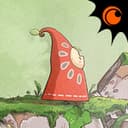
Hoa comes from Skrollcat Studio, a small independent team, and released on September 8, 2026. You play Hoa, a tiny fairy who comes home after a long absence and finds the world she remembers has changed. The route back runs through lush forests, glowing caves and the rusted remains of mechanical ruins. The story is told in images and small moments rather than dialogue trees. It is a story about memory and return, and it trusts the scenery to carry most of it.
The design is defined by what it leaves out. There is no combat and no punishing failure state. Progress comes from physics-based movement, light environmental puzzles and gentle exploration. Hoa slowly gains new abilities, including higher jumps, a dash and magical interactions with the world, and each one opens routes that were closed before. Many of the creatures you meet help you rather than block you. Beetles launch you to higher ledges, and other creatures quietly tell stories of the forest.
That places Hoa in the “cozy” or meditative game category, next to titles that treat mood as the main feature. The praise it draws focuses on the same three things again and again: the art, the music and the lack of stress. The criticisms are just as consistent. It is short, it is easy and the controls feel floaty. None of those complaints is wrong. Whether they matter depends on what you want from an evening.
Hoa is available on Steam for PC and Mac, on Nintendo Switch, and on iOS and Android through Crunchyroll’s game library, which is a separate distribution model with its own trade-offs. That is covered below.
Key features
- Hand-Painted Worlds: Every area is illustrated in a style inspired by classic animated films. Depth, soft light and foliage get the care that most platformers save for their key art.
- Live-Recorded Orchestral Score: The original soundtrack was recorded with real musicians and shifts as the scenery changes. This is the game’s strongest technical asset.
- Zero-Combat, No-Fail Design: There are no enemies to fight and nothing that meaningfully punishes a mistake. A missed jump costs a few seconds, not your progress.
- Ability-Gated Progression: Higher jumps, a dash and magical interactions unlock over time and reopen the map in a light Metroidvania style, without the backtracking load.
- Creatures as Allies: Wildlife works as part of the level design. Launch beetles and storytelling creatures replace the usual enemy placement.
- Short, Complete Runtime: A full run takes about two to three hours. That’s a single sitting for most players.
Analysis
The Gameplay Loop
The core loop is simple. You enter a new area, read the space, find the route, use whatever ability you most recently unlocked, and move on. Puzzles are environmental and physical. They are about where to stand, what to activate and which creature will help you up, not about logic grids or inventory combinations. Most solutions are clear within seconds of arriving on a screen.
That clarity is intentional, and it is Hoa’s biggest strength and its most obvious weakness. The strength is flow. Because players almost never stall, the game’s pacing stays under the designers’ control. The art and music land where they are supposed to, and a transition from forest to cave hits with the timing the composer intended rather than twenty minutes late because someone was stuck on a switch. Few platformers can guarantee that. Hoa can because it removes the thing that usually breaks pacing: player failure.
The weakness is that once the level grammar is understood, nothing surprises. The puzzles never escalate into combinations that force a rethink of abilities already held. Each new ability is introduced, used a few times, and absorbed into the background. Tighter games in this genre build a second, harder layer on top of their mechanics near the end. Hoa doesn’t, and experienced players will notice around the halfway mark that the game has shown its whole hand.
Movement and Feel
The most common criticism of Hoa is floaty controls, and it’s a fair one, though it needs context. Hoa’s jump has a soft, drifting arc with generous air control. That suits a fairy, and it matches the calm the game is going for. It also means inputs feel slightly disconnected from their results. The crisp acceleration and precise landing that makes a platformer feel good in the hands never arrives.
In a game where precision mattered, this would be a real problem. Because Hoa almost never asks for precision, it’s more of a texture issue than a functional one. Overshoots cost seconds, and because nothing punishes them, frustration never builds. Still, movement is the verb used for the entire runtime, and a verb that feels vague keeps the player slightly at arm’s length from a world the game clearly wants them to sink into.
Friction and Onboarding
Onboarding is close to frictionless. There are no stats, no menus to manage and no tutorials that stop the game. New abilities appear in context and are explained by the level geometry around them. That’s good design, and it makes Hoa one of the easiest recommendations in the genre for people who don’t usually play games. A parent and child, a partner who “doesn’t do platformers” or someone coming back to games after years away can all finish it without help.
Narrative Delivery
The story works through suggestion. Hoa’s homecoming is told through environmental changes and the small stories creatures pass on, not cutscenes or long text. Mechanical ruins spreading into natural spaces make an obvious but effective thematic point. Players who want an explicit plot will find it thin. Players who like to piece meaning together from scenery will find enough here, though not much depth, since the runtime doesn’t leave room for the themes to develop past their first statement.
The Runtime Question
At two to three hours, Hoa will draw “too short” complaints, and those complaints are about value, not design. Structurally, the length is right. The game ends before its limited mechanical depth wears thin, and a longer version with the same systems would be worse, not better. The real question is whether a few beautifully crafted hours are worth the time. That’s a personal call. A short game that respects the player’s time beats a padded one that doesn’t.
Visuals & performance
This is where Hoa earns its reputation. The hand-painted art is exceptional for a studio this size. The comparison to classic animated films comes from the soft edges, the layered parallax that gives each scene real depth, and the way light filters through leaves and cave crystals. Forests feel humid and alive. Caves glow without looking garish. The mechanical ruins bring in a colder palette that clashes with the organic areas on purpose, which serves the story.
The orchestral score is just as strong and arguably the game’s best asset. Live-recorded instruments have a warmth and slight imperfection that sampled libraries can’t reproduce, and the music follows the environment closely enough to work as a second narrator. Headphones recommended.
The UI is almost invisible, which suits a game about immersion. Hoa’s systems are simple and its presentation is 2D, so it isn’t a demanding game. It’s the kind of title that should run comfortably on modest hardware, including handhelds and older laptops. The common technical criticism — the floaty movement — is a design choice rather than a performance defect.
Platform nuances
- Steam (PC and Mac): The strongest version for most people. Hoa’s modest demands suit older machines and Macs, and a gamepad is the natural input for a physics-based platformer. Keyboard works, but a controller softens the floaty feel.
- Nintendo Switch: Probably the best fit. A short, calm, beautiful game suits handheld play in bed or on the couch, and the Switch audience lines up closely with Hoa’s intended players. Short sessions suit the game’s chapter-like areas.
- iOS and Android (Crunchyroll): The caveats pile up here. The mobile versions are Crunchyroll-published ports that require a Crunchyroll Mega Fan or Ultimate Fan membership. You can’t just buy the game outright, and it’s tied to an ongoing subscription. If you already pay for the membership for anime, Hoa is effectively a free extra and worth trying. If you don’t, subscribing just for this makes little sense. There are also very few ratings on iOS (4.1/5 from 14), so there isn’t much public evidence of how well the port holds up. A platformer whose main criticism is imprecise movement is also a questionable match for virtual on-screen controls. On mobile, a physical controller is the safer bet where the device and port allow it.
Final verdict
Hoa knows exactly what it wants to be, and it gets there — but what it wants to be is slight. It is a small, gorgeous, stress-free journey carried by artwork and music that would stand out in a game with ten times its budget. Taking out combat and failure is a legitimate design choice, not laziness, and it gives the game the pacing control that makes its best moments work.
That same restraint caps how good it can be. The puzzles are simple from start to finish, the movement never feels tight, and the game stops developing its ideas early. It’s worth playing once and unlikely to be replayed, and its value depends heavily on platform. Get it on Steam or Switch, set aside one quiet evening, and put on headphones. On mobile, only bother if you already have the Crunchyroll membership. For most people, though, this is a pleasant detour rather than an essential one.
Reviewed by the Rankeno Action Desk. Scores are out of 10; the overall score is the desk’s editorial judgement, informed by the four sub-scores above. How we review