
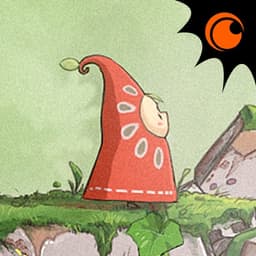
Bottom Line: Hoa looks and sounds better than almost any game its size, and it deliberately asks almost nothing of you. It's a two-to-three-hour hand-painted diorama that is easy to love and easy to outgrow. Buy it for the atmosphere, not the platforming.
The Gameplay Loop
The core loop is simple. You enter a new area, read the space, find the route, use whatever ability you most recently unlocked, and move on. Puzzles are environmental and physical. They are about where to stand, what to activate and which creature will help you up, not about logic grids or inventory combinations. Most solutions are clear within seconds of arriving on a screen.
That clarity is intentional, and it is Hoa's biggest strength and its most obvious weakness. The strength is flow. Because you almost never stall, the game's pacing stays under the designers' control. The art and music land where they are supposed to, and a transition from forest to cave hits with the timing the composer intended rather than twenty minutes late because you were stuck on a switch. Few platformers can guarantee that. Hoa can because it removes the thing that usually breaks pacing: player failure.
The weakness is that once you understand the level grammar, nothing surprises you. The puzzles never escalate into combinations that force you to rethink abilities you already have. Each new ability is introduced, used a few times, and absorbed into the background. Tighter games in this genre build a second, harder layer on top of their mechanics near the end. Hoa doesn't, and experienced players will notice around the halfway mark that the game has shown its whole hand.
Movement and Feel
The most common criticism of Hoa is floaty controls, and it's a fair one, though it needs context. Hoa's jump has a soft, drifting arc with generous air control. That suits a fairy, and it matches the calm the game is going for. It also means inputs feel slightly disconnected from their results. You never get the crisp acceleration and precise landing that makes a platformer feel good in the hands.
In a game where precision mattered, this would be a real problem. Because Hoa almost never asks for precision, it's more of a texture issue than a functional one. You will overshoot ledges. You will float past where you meant to stop. And because nothing punishes you for it, the frustration never builds. Still, movement is the verb you use for the entire runtime, and a verb that feels vague keeps you slightly at arm's length from a world the game clearly wants you to sink into.
Friction and Onboarding
Onboarding is close to frictionless. There are no stats, no menus to manage and no tutorials that stop the game. New abilities appear in context and are explained by the level geometry around them. That's good design, and it makes Hoa one of the easiest recommendations in the genre for people who don't usually play games. A parent and child, a partner who "doesn't do platformers" or someone coming back to games after years away can all finish it without help.
Narrative Delivery
The story works through suggestion. Hoa's homecoming is told through environmental changes and the small stories creatures pass on, not cutscenes or long text. Mechanical ruins spreading into natural spaces make an obvious but effective thematic point. Players who want an explicit plot will find it thin. Players who like to piece meaning together from scenery will find enough here, though not much depth, since the runtime doesn't leave room for the themes to develop past their first statement.
The Runtime Question
At two to three hours, Hoa will draw "too short" complaints, and those complaints are about value, not design. Structurally, the length is right. The game ends before its limited mechanical depth wears thin, and a longer version with the same systems would be worse, not better. The real question is whether a few beautifully crafted hours are worth the price to you. That's a personal call. I'd rather play a short game that respects my time than a padded one that doesn't.


