Overview
Every few months, a mid-budget studio takes the Souls formula, flattens it into two dimensions, and hopes nobody notices the seams. Most of them get noticed. Mandragora: Whispers of the Witch Tree is the rare one that earns its comparisons — and then complicates them with ambitions no side-scroller of this size has any business having.
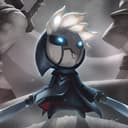
Developed by Hungary’s Primal Game Studio and published by Knights Peak, Mandragora casts the player as an Inquisitor of the Order, a sanctioned monster-hunter working the corpse of a kingdom called Faelduum. Reality here is coming apart at the seams — a force called Entropy is warping people, animals and geography into something wrong — and the job is to hunt the witches accelerating the collapse. The companion for all this is a talking mandrake root, which sounds twee and mostly isn’t, largely because the writing refuses to play it cute.
That writing matters. Primal recruited Brian Mitsoda, whose fingerprints on Vampire: The Masquerade — Bloodlines still shape how the industry writes morally grubby NPCs, and the dialogue carries that DNA: dry, unsentimental, allergic to fantasy grandeur. The score comes from Christos Antoniou of the Greek extreme metal band Septicflesh, recorded with the FILMharmonic Orchestra Prague. That is an unusual credit stack for a game at this budget tier, and the money shows on screen and in the mix.
Commercially, it landed in the awkward middle: liked by many, argued with by plenty. That is the signature of a game people enjoy for a long stretch and then start negotiating with. Post-launch updates rebalanced progression and added New Game+, which suggests the launch build shipped a little early.
Mandragora is positioned squarely against Blasphemous, Salt and Sanctuary, and the Metroidvania-soulslike hybrids that dominate this price tier. It out-classes most of them on production values. It loses to several of them on discipline.
Key features
- Six-Class Build Sandbox: Vanguard, Flameweaver, Spellbinder, Nightshade, Wyldwarden and Vindicator each feed into one enormous shared talent tree. Combined with full respec support and deep gear crafting and enchanting, hybridization isn’t a trap — it’s the intended endgame.
- Dozens of Hand-Painted Locations: An interconnected Metroidvania map of startling scale, with unlockable traversal abilities, hidden routes, and shortcuts that funnel back to a travelling caravan hub where recruited NPCs open crafting and upgrade services.
- Deliberate, Stamina-Gated Combat: Timed dodges, parries and committed heavy strikes, with real bosses behind them — plus a difficulty slider that lets players who came for Mitsoda’s story skip the wall-banging without shame.
- A Real RPG Underneath: A large quest count, branching dialogue, and multiple endings across a lengthy campaign, now extended by New Game+.
Analysis
The Gameplay Loop
Mandragora’s combat is heavier than it looks. The animation commitment on a two-handed swing is long enough to punish greed, stamina drains fast enough to matter, and the parry window is tight without being cruel. It is tactile in a way most 2.5D brawlers never manage — hits are built to land with a low, wet thud, and enemies stagger with weight behind them. Primal understood the most important thing about this genre: the fantasy isn’t power, it’s timing.
The bosses are where that pays off. The good ones are excellent — multi-phase, readable, and built to be learned rather than out-statted. Several rank with anything in the sub-genre.
The problem is everything between them.
Mandragora has a content-density problem, and it’s the single flaw that holds it back most. Enemy variety runs thin fast: the roster is exhausted well before the campaign, and the game’s answer is to hand back the same silhouettes in new colors, sometimes with a health bar that says “boss” above it. Palette-swapped repeat bosses are the laziest tool in the design kit, and in a game this visually accomplished they are deflating — the one place where the budget shows.
That thinness collides badly with the map’s ambition. The interconnection is real: shortcuts loop back, sealed doors open once the right traversal ability is earned, and the caravan hub is a smart, mobile alternative to the static bonfire town. But the backtracking-to-content ratio goes wrong somewhere in the back third. Long stretches are spent re-crossing known geography, fighting known enemies, to reach a quest marker that could have been three screens closer. The pacing sags precisely where a game of this length most needs to accelerate.
The Skill Tree Problem
Character building is billed as the core hook, and mechanically it delivers — but the talent tree is bloated. A large tree is only exciting if its nodes are decisions. Too many of Mandragora’s are +2% flat increments: nodes clicked because they’re between the player and something interesting, not because anyone wanted them. The result is a system that looks deep on the screenshot and reads like paperwork in motion — a level gained, a number nudged, nothing about the character changed.
Which is a shame, because the parts around it are terrific. Gear crafting and enchanting have real teeth — the systems are built so a player can meaningfully commit to a damage type, a status effect, a playstyle — and the generous respec policy is exactly right for a game with six classes. Primal clearly wanted experimentation and removed the punishment for it; the class design is built so that a Flameweaver/Nightshade hybrid, which shouldn’t work, does. The post-launch rebalancing helped here too, sanding down some of the launch build’s dead ends.
Fix the ratio of transformative nodes to filler nodes and this becomes a best-in-class progression system. As shipped, it’s a great gear game wearing a mediocre talent tree.
Story and Onboarding
The narrative is the quiet triumph. Mitsoda writes NPCs who want things, lie about them, and don’t exist to dispense objectives. The Order is not clean. The witches have motives of their own. The multiple endings aren’t a menu at the finish line — they’re the accumulated weight of who the player believed. The mandrake companion, which every instinct says should be an irritant, works as a dry counterweight to the character’s institutional certainty.
The difficulty slider deserves specific credit. It’s not a concession; it’s an acknowledgment that a game with this much writing shouldn’t gate its third act behind a boss wall. The purists lose nothing. Everyone else gets to finish the story.
Visuals & performance
The art is the reason to buy this. Every one of those locations is hand-painted, and the parallax layering gives a genuine sense of depth — ruined cathedrals receding into fog, sickly green Entropy-light bleeding through architecture that looks structurally exhausted. It is dark fantasy done with restraint, and it avoids the muddy sameness that swallows so much of the genre. Character models sit slightly awkwardly against those backdrops in places, a 3D-on-2D mismatch most visible in cutscenes, but it rarely breaks the spell.
Antoniou’s score is the other half of the effect. Orchestral, dread-heavy, and mixed to sit underneath the action rather than shove at it — the FILMharmonic recording gives it a physical presence that synthesized scores at this budget simply cannot fake.
The UI is the weak link. Menus are functional and cluttered — the crafting and enchanting interfaces in particular ask a player to hold too much in their head across too many screens, and the talent tree’s visual hierarchy doesn’t distinguish meaningful nodes from filler, which compounds the design problem underneath it.
Platform nuances
Steam is the version to buy, unambiguously. A 2D-forward game of this scope is light on hardware, and the menu-heavy systems are far more tolerable with a mouse — crafting comparisons and tree navigation that feel like a chore on a stick read as routine with a cursor. A controller suits combat; keep the mouse near for everything else.
The Nintendo Switch port is the compromise. It’s playable and it’s complete, and there’s real value in a lengthy dark-fantasy RPG that travels. But the compromises are the ones you’d expect and then some: the menu-heavy crafting and talent screens are at their worst without a cursor, and in a game where the equipment menu gets opened hundreds of times, any friction there compounds fast. The hand-painted art survives a resolution drop better than most 3D games would — that’s the upside of a 2D-forward aesthetic.
If portability is non-negotiable, it’s an acceptable trade. If there’s a choice, take the PC build.
Final verdict
Mandragora is the most frustrating kind of good game: the one where the better version is visible underneath. The art direction is beautiful, the score is legitimately world-class, the writing is smarter than the genre demands, and the combat has the weight and clarity that separates a real soulslike from an imitation. Primal Game Studio spent their money in exactly the right places.
They just spread it too thin. Dozens of locations, a large quest count, a lengthy runtime — those are marketing numbers, and Mandragora pays for them in recycled enemies, recolored bosses and a talent tree padded with nodes nobody will remember clicking. The structural issues look baked in rather than patchable.
We rate it a mixed recommendation: for most people, the padding will outweigh the pleasures. Soulslike devotees with patience for the back half — on PC — will find a superb core game in here, and for them it’s worth the price of the whole thing.
Reviewed by the Rankeno RPG & Adventure Desk. Scores are out of 10; the overall score is the desk’s editorial judgement, informed by the four sub-scores above. How we review