
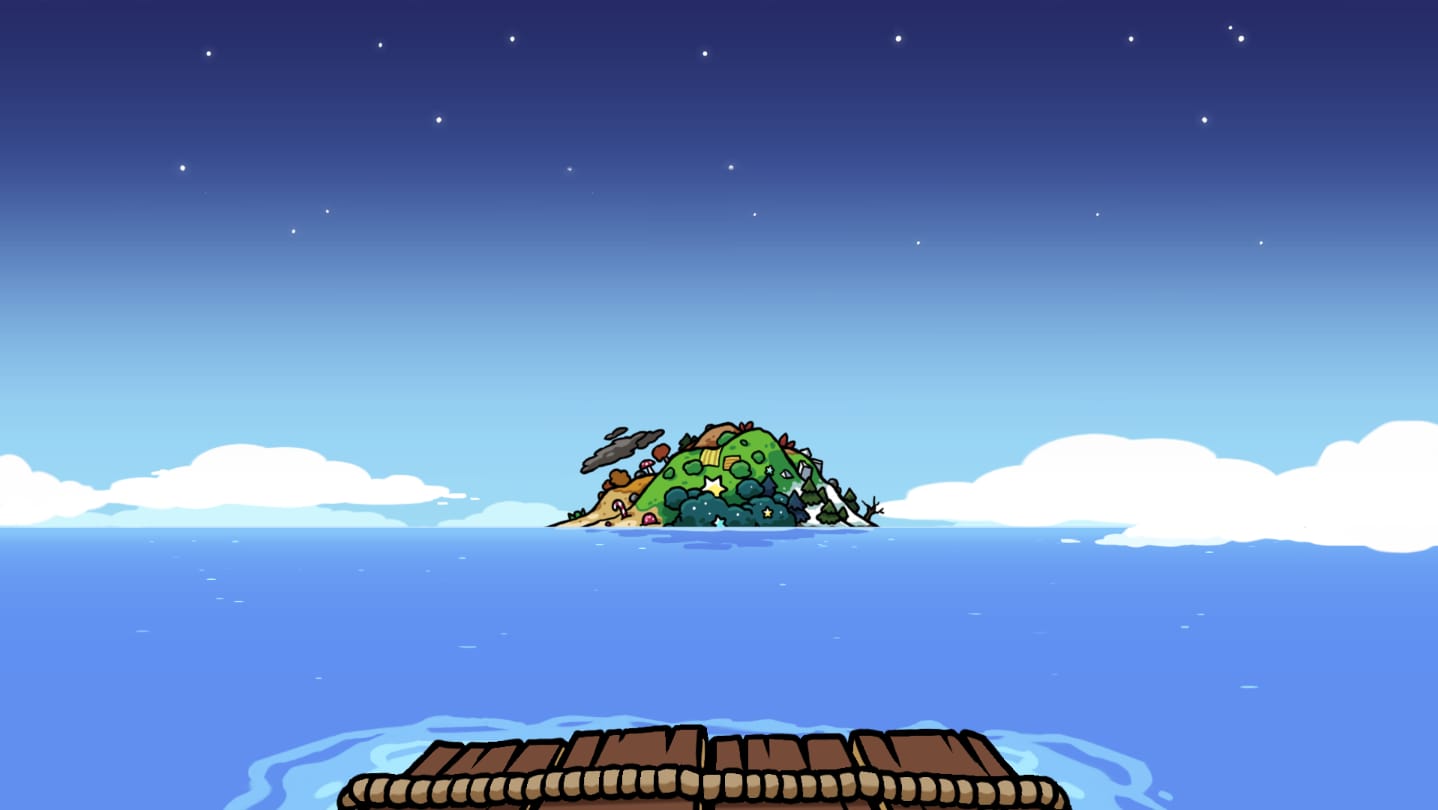


Bottom Line: Ludosity built a Zelda-like that treats sequence-breaking as a feature instead of a bug, and the dungeon design is sharp enough to earn the arrogance. Combat is thin and the main campaign is over fast — but the secret content underneath it is some of the meanest, smartest puzzle work in the genre.
The Gameplay Loop
The core rhythm is old and reliable: wander the overworld, spot something you can't reach, file it away, find the tool, come back. What's changed is the friction between those beats. Ittle Dew 2 keeps the overworld dense — you're rarely more than twenty seconds from a bush that shouldn't be there or a cliff edge that's suspiciously walkable — and it pairs that density with a warp system that keeps backtracking from curdling. The result is a loop that stays hot. The dead air most Zelda-likes accumulate in their second act mostly doesn't happen here.
The Four-Tool Grammar
This is where the design earns its reputation. Four weapons is a small vocabulary, and Ludosity treats it like a constraint to exploit rather than a limitation to apologize for. Every tool has a combat identity, a movement identity, and an interaction identity, and the dungeons are built by combining those layers rather than gating on them.
The consequence is a puzzle language that gets more expressive as you learn it, not more cluttered. Compare that to the standard Zelda structure, where the dungeon item is essentially a single-use key — you get the hookshot, the dungeon is about hookshots, you never think about it again. Here, a tool you picked up in hour one is still generating new ideas in hour eight because the context around it keeps shifting. That's the trick, and it's a hard one to pull off.
Upgrading via duplicates is a quieter piece of good design that deserves credit. There's no currency, no vendor, no menu economy. Finding a second copy of a weapon in a cave is the upgrade. It collapses two reward systems into one and removes an entire layer of interface between you and the thing you wanted.
Sequence Breaking as a Design Contract
Plenty of games tolerate sequence-breaking. This one shakes your hand for it.
The seven-dungeon structure isn't a soft suggestion enforced by invisible walls — the game is architected so that clever tool use, tight movement, and lateral thinking are legitimate solutions, including to problems the designers presumably had a specific answer in mind for. That's a real philosophical commitment, and it costs something. It means the difficulty curve can't be tightly authored, because the designers don't control your arrival order. It means some encounters land soft and others land hard depending on what you're carrying.
Ludosity took that trade knowingly, and I think they were right to. The payoff is a specific and increasingly rare feeling: the sense that you outsmarted the game rather than completed it. Most modern adventure games have optimized that feeling out of existence in the name of a smooth onboarding curve. Getting it back is worth a bumpy difficulty line.
Where It Thins Out
Combat is the weak leg of the table. It's arcade-clean — responsive, readable, low-latency, with none of the input mush that plagues indie action games — but it's shallow. Enemy variety is functional rather than inventive, and most encounters resolve into positioning plus a couple of swings. The fighting-game DNA gave this game excellent feel and mediocre depth. When the puzzle design is this inventive, the combat reads as filler by comparison, and the game is at its worst in the stretches where it asks you to fight instead of think.
The main campaign is also short. Depending on how thoroughly you comb the overworld, you're looking at a single long weekend. The story is thin — intentionally so, and the deadpan writing is funnier than 90% of what indie adventure games attempt — but there's no emotional throughline to carry you past the credits. Nothing here is trying to make you feel anything except clever.
Which brings up the real structural quirk: the game hides its best material behind its optional content. The Secret Dungeons and the Dream World are where the puzzle design goes from "very good" to genuinely exceptional, and the difficulty spike between the main campaign and that content is a cliff, not a slope. Players who finish the seven dungeons and stop will walk away thinking this is a pleasant, funny, slightly slight little game. They will have played maybe 60% of the actual design work. That's a discovery problem, and it's the single thing I'd change.