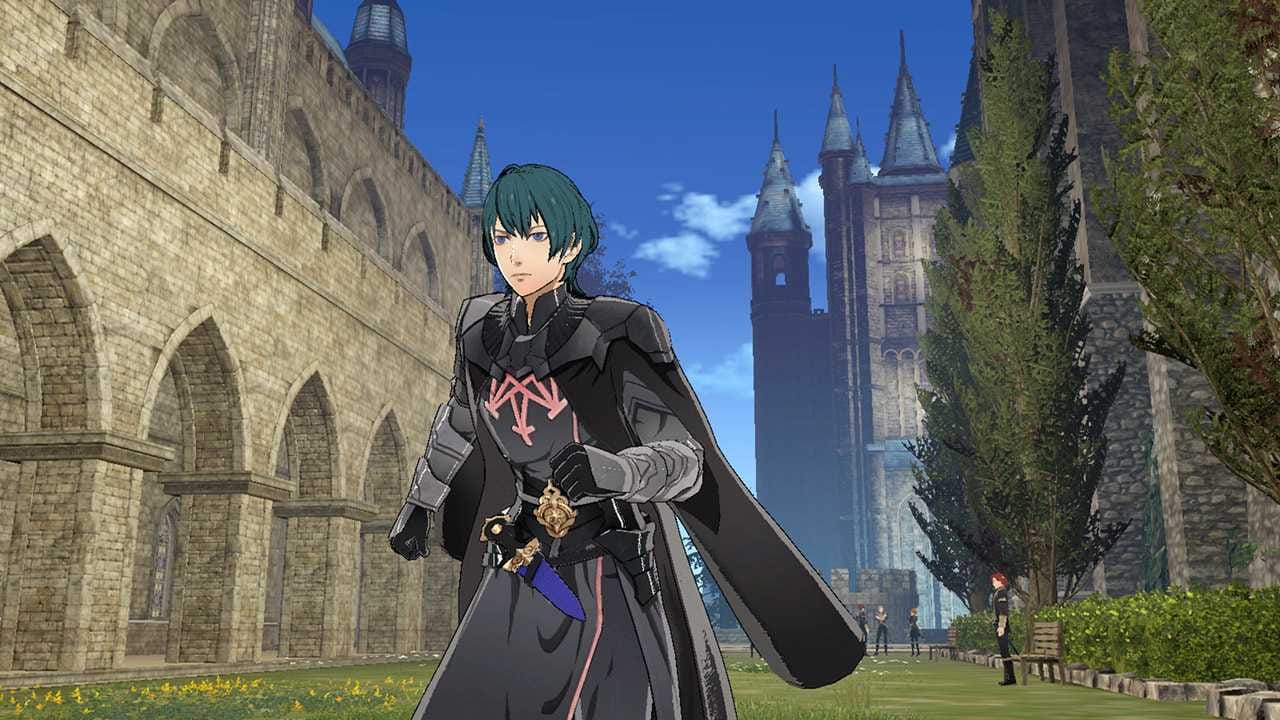
Bottom Line: Three Houses welds a genuinely excellent tactical RPG to a school-management sim that has no business working as well as it does — and then asks you to play it four times. It's the deepest, most replayable strategy game on Switch, hobbled only by a monastery that looks and runs like a Wii U leftover.
The Gameplay Loop
Three Houses runs on two clocks that never quite sync, and that friction is the point.
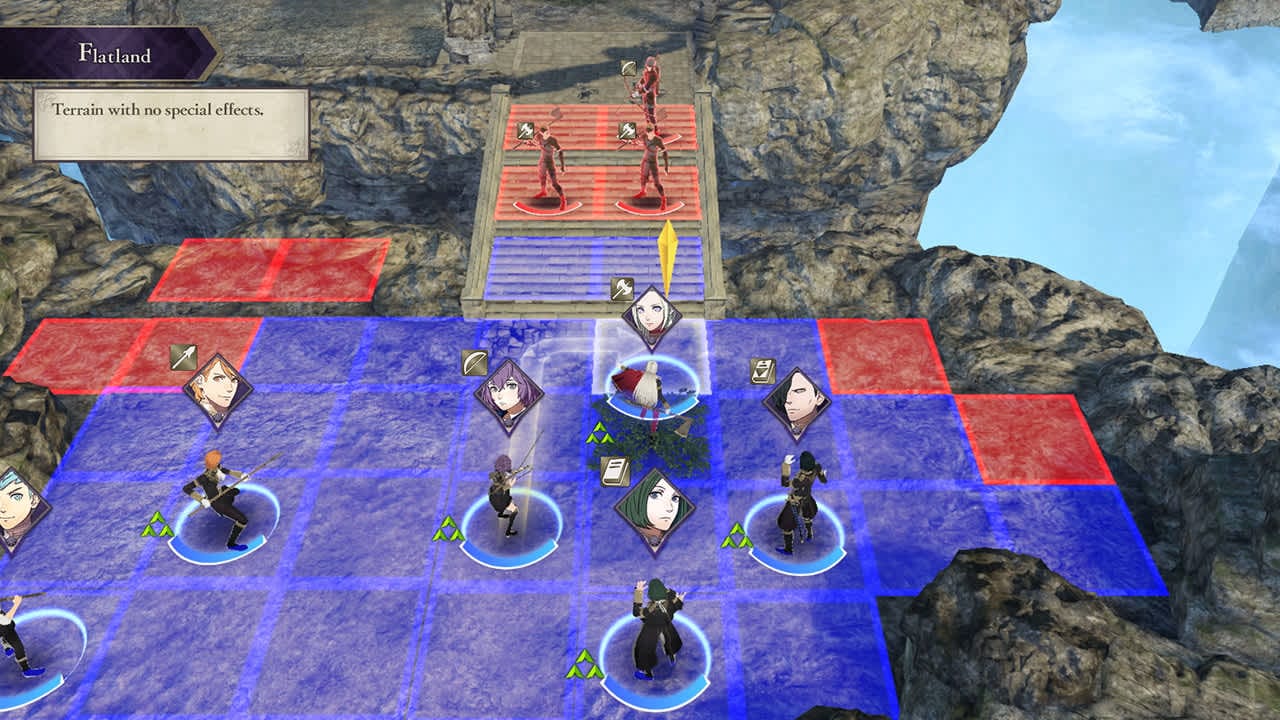
The battlefield clock is classic Fire Emblem: grid-based, turn-based, unforgiving. Units have weapon types, movement ranges, and terrain modifiers. Archers threaten from two tiles. Cavalry flank. Mages evaporate armor knights. What's new is texture. Combat Arts let you spend weapon durability for a stronger hit with a specific property — a knockback, a guaranteed crit range, a follow-up. Battalions hang off every unit like a second health bar, absorbing chip damage and firing Gambits that ignore the usual combat math entirely. A well-timed Stride gambit grants extra movement to everyone in range and can collapse a three-turn approach into one. Rally-heavy support units become genuinely useful instead of bench filler.
The most interesting design decision is a subtraction: the weapon triangle is gone. Sword-beats-axe-beats-lance, the series' load-bearing rock-paper-scissors, simply isn't here outside of niche Breaker skills. Purists howled. They were half right — the triangle was a clean teaching tool, and losing it makes early combat feel mushier. But its absence forces you to think in terms of stats, terrain, and gambit coverage instead of a memorized cheat sheet, and by the mid-game that's a richer problem.
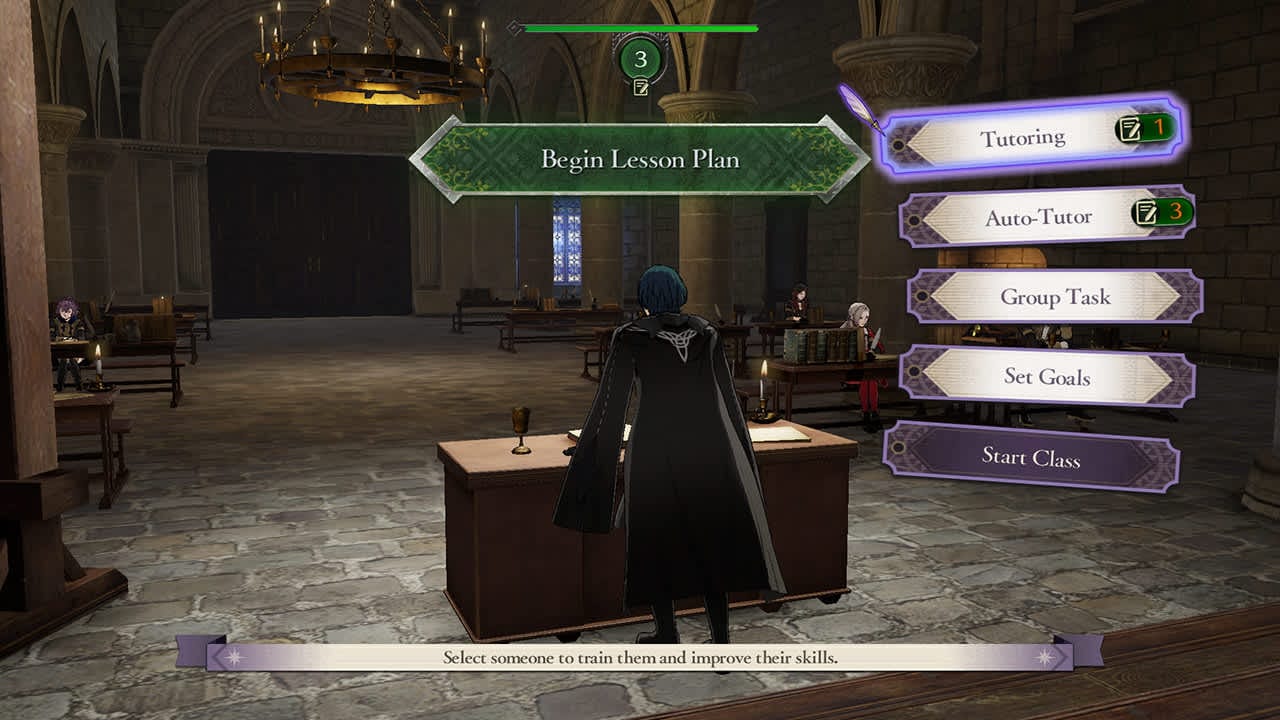
The other clock is the calendar, and it's where the game either grabs you or loses you. Each in-game week you assign instruction to individual students, watching a gauge fill toward the skill rank that unlocks the class you want them in. Sundays offer a choice: explore the monastery, hold a battle, run a seminar, or rest. Exploration burns activity points, and there are never enough — do you eat lunch with the student you're trying to push toward an A-support, or hand out lost items to farm motivation, or fish because the fishing minigame gives absurd EXP for the effort? Your Professor Level gates how many points you get, so the meta-progression is teaching yourself to teach better.
It's a genuinely great loop, and it's genuinely tedious. Those two facts coexist. The monastery hands out fetch quests with all the imagination of an MMO daily — find this lost glove, deliver this letter — and the game never stops generating them. On a first playthrough, the ambient busywork reads as texture. On a third, it reads as a tax.
Difficulty, Divine Pulse, and the Tension Problem
Normal difficulty is too easy. Not "approachable" — actually undertuned, to the point where a moderately optimized party steamrolls most of Part 2 without strategy. Hard is the correct default for anyone who's played a tactics game before. Maddening, added after launch in a free update, is a different animal: brutal, occasionally unfair, and reliant on ambush spawns and enemy gambit spam in ways that reward save-scumming more than cleverness.
Which brings us to Divine Pulse. Rewinding a turn to undo a bad hit is, mechanically, a fine idea — Fire Emblem's permadeath has always been enforced by the reset button anyway, and Divine Pulse just makes that honest and cheap. The cost is real, though. The series' signature tension comes from the moment a 78% hit chance whiffs and your favorite unit is gone forever. Divine Pulse converts that moment from tragedy into a minor inconvenience. It's the right call for reaching a wider audience. It also means the story's tragedies land harder than the combat's.
Story and Cast
The writing is the best in the franchise, and it's not close. Fódlan's three nations aren't good-versus-evil; they're three coherent ideologies with real grievances, and the route structure means you see your own righteousness from the outside. Edelgard's war looks like naked imperial aggression from Blue Lions and like overdue revolution from Crimson Flower. Neither version is a lie. Dimitri's arc — from courtly prince to something feral and back — is the most ambitious character writing Nintendo has published in a decade, and the voice performance carries it.
The cast is where the calendar pays off. Support conversations are short, frequent, and specific, and because you chose to spend an activity point on each one, they feel earned rather than dispensed. Byleth, the player-avatar professor, is the weak link — a near-silent cipher whose romance options include a distractingly wide swath of students you've been formally teaching.
The structural flaw is repetition. Part 1's first eleven-ish chapters are close to identical across routes: same missions, same monastery, same lectures, different colored jackets. The game demands multiple playthroughs to see its full shape and then makes the front half of each one a rerun. Silver Snow, the Black Eagles route you get by not siding with Edelgard, is the clear runt — it reuses Golden Deer's second half with a weaker emotional throughline. Crimson Flower is the sharpest and the shortest by a wide margin. New Game+ blunts the grind by letting Renown buy back progress, but it can't make the third viewing of the White Heron Cup feel new.