

Overview
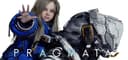
What does a publisher known for established series do with a blank slate? CAPCOM Co., Ltd. answers with Pragmata, a single-player sci-fi action-adventure set on the Moon. The player controls Hugh, the last survivor of an investigation team sent to a lunar research facility that a rogue AI now controls. Stranded, Hugh teams up with Diana, a young android, and the two search the station for a route back to Earth.
The game is built around two characters run by one pair of hands. Hugh shoots. Diana hacks. The player does both in the same fight, aiming at hostile machines while solving a grid-based puzzle in real time to strip their defenses and expose weak points. That one design decision shapes everything else in Pragmata: its pacing, its upgrade paths, its difficulty and the audience it will win or lose.
Around the combat sits a conventional but sturdy structure. Players explore the facility’s environments, collect resources, upgrade weapons, gear and Diana’s hacking abilities, and return to a shelter hub between areas to prepare. The narrative ties it together as the growing bond between a weary astronaut and a curious android in a world the machines have taken over.
Pragmata is a paid release on Steam and Nintendo, priced at $59.99, with a release date of April 16, 2026. For a new IP, the design profile is telling. The central idea is legible and coherent; the open questions are how long it holds up and who will tolerate the friction around it.
Key features
- Dual-character combat: Hugh handles the gunplay while Diana hacks enemy machines, and the player runs both at once in the same encounter.
- Real-time grid hacking: Hacks are grid-based puzzles solved live, mid-fight. A successful hack breaks down enemy defenses and opens weak points for Hugh’s weapons.
- Three upgrade tracks: Resources found while exploring feed upgrades to weapons, gear and Diana’s hacking abilities, so progression strengthens both halves of the combat system.
- Shelter hub: A safe base to return to between areas, where players prepare before the next push into the facility.
- Lunar facility exploration: Explorable environments inside a research station run by a rogue AI, with level design built around exploration and decompression.
- Character-driven story: The narrative follows the bond between a weary astronaut and a curious android trying to get home.
Analysis
The Split-Attention Loop
Most shooters ask the player to manage one stream of decisions: where to aim, when to fire, when to move. Pragmata asks for two, and they draw on different kinds of attention. Aiming is spatial and reflexive. A grid puzzle is analytical. Forcing both into the same encounter is the game’s boldest decision and the reason it exists.
The logic is clean. Hacking is the key; shooting is the payoff. Because a successful hack breaks enemy defenses and opens weak points, the puzzle is a damage gate, not decoration. Players who ignore Diana face armored machines head-on. Players who lean on Diana have to keep Hugh alive while their focus sits on a grid. Every fight turns into a negotiation over where attention goes, and that tension is the game’s signature.
It is also the biggest risk. Split attention raises the skill ceiling and the skill floor at once. Players who enjoy plate-spinning get a loop that rewards mastery in two directions. Players who want a shooter to stay a shooter will read the grid as friction. Pragmata makes no attempt to split the difference, and we respect that. A hybrid that hedged would have produced two diluted halves.
Hacking as a Progression System
The hacking layer gets its own upgrade track, and that choice does real work. Diana’s abilities improve alongside Hugh’s weapons and gear, so the puzzle half of combat grows instead of hardening into a fixed tax paid at the start of every fight. Players get two parallel ways to get stronger and can steer between them, investing in firepower to force through or in hacking to make defenses collapse faster.
The weakness is the one that dogs every puzzle-in-combat design. Puzzles run on novelty, and a grid that poses a fresh problem early becomes a known quantity once its patterns are learned. The repetition risk in the second half fits that curve. Once hacking becomes routine, the dual-input loop risks shrinking into a checklist: hack, expose, shoot, repeat. Upgrades can delay that slide, but the design suggests they may not stop it.
Exploration and the Shelter
Between encounters, Pragmata slows down. Players move through the lunar facility, gather resources and spend them on upgrades. The level design is built for exploration and decompression, and the structure suits this kind of combat. A system this demanding needs decompression, and exploration supplies it.
The shelter hub completes the rhythm. A safe base to prepare in before each new area gives every section a clear start and end, turning the facility into a series of expeditions instead of one continuous grind. That hub-and-expedition structure also fits a relationship-driven story, because it builds natural pauses between the fights.
Hugh and Diana
The premise of a weary astronaut, a curious android and a hostile machine world is familiar sci-fi territory. It works because the mechanics and the story point the same way. The player cannot fight well without both characters contributing, so the bond the story describes is the bond the combat enforces. Action games rarely align narrative and systems this tightly, and the Hugh–Diana relationship gives the systems emotional weight.
The cost shows up late. The story’s pacing slows near the end, and in a narrative carried by two characters, a sagging final stretch does more damage than it would in a plot-driven thriller.
Where It Frays
The checkpoint system is the clearest friction point, and it compounds the game’s central demand. A combat model that splits focus will produce more failures than a conventional shooter. Every failure in a fight built on two simultaneous skills costs more to replay. Checkpoint design matters more here than it would in almost any other action game.
Taken together, the three friction points describe one shape: a game whose systems run out of new questions before the story runs out of road. That is a real flaw. It is also the flaw of a game whose idea is stronger than its content plan, which is the better problem to have.
Visuals & performance
The setting does a lot of work for the art direction. A Moon research station seized by a rogue AI justifies isolation, machine enemies and a hostile environment without lengthy exposition, and it gives the curious android and the weary astronaut a world that visibly isn’t theirs.
The harder visual problem is the interface. A game that asks players to read a hacking grid while tracking enemies in a firefight depends on readability. The grid has to be legible at a glance, and the combat space has to stay visible around it. In a system like this, any overlay that hides a threat is a design failure. The hybrid only works if the grid stays legible and the combat space remains visible.
For a real-time action game, performance matters more than usual: when aiming and puzzle-solving share the same moment, frame pacing has to support both halves of the loop.
Platform nuances
On Steam, mouse aiming lowers the cost of the shooting half by design, which should leave more attention for the grid. That matters in a game whose difficulty comes from divided focus.
On Nintendo, aiming and grid input share the same controller and the same pair of thumbs, so the split-attention demand sits closer to the surface. The payoff is portability, and the area-by-area structure and shelter hub divide naturally into shorter sessions. Checkpoint frustrations weigh more when a session may end at an awkward moment.
At $59.99, the standard release is the sensible entry point; the platform choice comes down to input and portability.
Final verdict
New IP from a major publisher often plays it safe. Pragmata commits fully to a strange central idea instead. Shooting and hacking in the same fight is a real design risk, and the design is coherent enough to justify it. The relationship between Hugh and Diana gives that system emotional weight, because the story and the mechanics ask for the same partnership.
The flaws are real, and they cluster. Checkpoints punish a combat model that already demands a lot, the second half repeats its formula, and the story loses momentum near the end. None of it breaks the game, but together these problems keep Pragmata from the top tier. We recommend it to players who want an action game that asks for more than reflexes, with the caveat that its best ideas peak before the credits roll.
Reviewed by the Rankeno Action Desk. Scores are out of 10; the overall score is the desk’s editorial judgement, informed by the four sub-scores above. How we review