
Overview
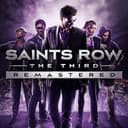
What happens to a street gang once it wins? Volition’s answer is the central idea in Saints Row: The Third: the Third Street Saints have stopped being criminals in the conventional sense and become a celebrity media brand. That premise gives the game licence to abandon any pretence of gritty crime drama. The setting is Steelport, a new city for the Saints to conquer, and the opposition is the Syndicate, a criminal organisation that wants the brand dismantled.
The open-world action genre is crowded with games that take themselves seriously. This one refuses to. Its tone is comic and over-the-top, built on crude humour, wild set pieces and an arsenal that runs from conventional firearms to deliberately ridiculous weapons and vehicles. That positioning is deliberate, and it works: rather than compete on realism or narrative weight, Volition competes on permission. The player is allowed to do nearly anything, and the game rarely scolds them for it.
The store rating is 4.3 out of 5 from 154 ratings, and Metacritic records 84. Praise tends to centre on the humour, the absurd weapons, the character customisation and the co-op. Those four pillars are the whole pitch, and they have aged better than much open-world design of the same vintage.
The current release picture is broader. The mobile version bundles the add-on content; on Nintendo Switch, The Full Package does the same. It is a paid one-off purchase at $2.49. With iOS, Android, Steam and Switch covered, the remaining question for a buyer is which screen suits the chaos best.
Key features
- Steelport sandbox: An open city to cross on foot, by car or by air, structured around story missions, side activities and turf takeovers.
- Deep character creator: Players build a highly customised gang leader, and the celebrity framing makes that authorship part of the joke.
- Absurd arsenal: Conventional firearms sit beside deliberately ridiculous weapons and vehicles, so combat doubles as a punchline.
- Full-campaign online co-op: The whole campaign is playable with a second player, not a cordoned-off side mode.
- Complete mobile package: The port includes the add-on mission packs and bonus items.
- Flexible input on mobile: Fully customisable touch controls, plus gamepad and keyboard-and-mouse support.
Analysis
A Premise That Justifies the Mayhem
Most open-world crime games suffer from a tonal split: the story asks for sympathy while the sandbox rewards carnage. Saints Row: The Third closes that gap by making the protagonists famous for being outrageous. A gang that operates as a media brand has every reason to stage spectacle, so the set pieces and the free-roam chaos pull in the same direction. The fiction and the mechanics agree with each other, which is uncommon in this genre.
The cost is equally clear. The humour is crude by design, and the game makes no attempt to broaden it. Players who find the register juvenile will find it juvenile for the entire campaign, because nothing here offers a quieter mode. We count that as honest design rather than a flaw, but it narrows the audience.
Gameplay Loop
The structure rests on three layers:
- Story missions carry the war with the Syndicate and house the big set pieces.
- Side activities give the sandbox short, repeatable bursts of play.
- Turf takeovers convert the map into a ledger of progress, district by district.
This is a familiar loop, and the game does little to disguise it. What separates it from rote map-clearing is the toolset. When the arsenal includes weapons and vehicles designed to be ridiculous, a routine objective becomes a prompt for improvisation. The loop’s variety comes from the player’s choices more than from the mission design, which makes the sandbox the star and the checklist a pretext.
That approach has a weakness. Turf takeover as a progression system rewards volume, and volume invites repetition. Players who need authored variety in every activity will feel the template underneath. Players who treat an open world as a toybox will not care.
Customisation as Identity
The character creator does more work than a typical appearance menu. Because the tone is comic, a highly customised gang leader becomes part of the joke: the protagonist can be as dignified or as absurd as the player wants, and the game’s celebrity framing accommodates either. Customisation is structurally important. In a game about a brand, the player authors the brand’s face.
Co-op
Making the entire campaign playable in online co-op is the design decision with the longest tail. Comedy lands harder with an audience, and a sandbox built for chaos produces better stories with two people misusing it at once. It also changes the value calculation: a campaign that can be replayed with a partner has a second life that a solo-only game lacks. Co-op is the mode the design favours.
Content and Value
The mobile and Switch editions arrive complete. The add-on mission packs and bonus items ship in the box, with no storefront nagging and no piecemeal unlocks. At $2.49 as a one-off purchase on mobile, the pricing rejects the free-to-play conventions that dominate phone gaming. That is the correct call for a game of this type, since timers or currency packs would wreck a sandbox whose whole appeal is unrestricted access to its toys.
Visuals & performance
The art direction serves the comedy. Steelport is a stage for exaggerated characters, garish weapons and oversized spectacle, and the mobile version gives that style a more modern presentation than the original release had. Nobody should expect restraint; visual excess is the point, and it matches the writing.
Interface design on mobile carries a heavier burden. An open-world action game demands driving, shooting, flying and menu navigation, and fitting all of that onto a touchscreen is a hard layout problem. The answer is fully customisable touch controls, which hands the layout problem to the player. That is the right instinct, though it adds onboarding friction for anyone unwilling to tinker.
The mobile version’s hardware demands are the main caveat. A full open-world game on a phone is demanding by nature, and the requirements are the gatekeeper. The store rating is solid, but the mobile port is not the lowest-friction way to play.
Platform nuances
- iOS and Android: The mobile port includes the add-on content at $2.49 as a one-off purchase. Touch controls are fully customisable, and the port also supports gamepads and keyboard and mouse. A gamepad is the natural fit for a game built around driving and shooting; touch is the fallback for portability. The hardware requirements are the gatekeepers.
- Steam: The original game’s home, and the lowest-risk option for anyone with a capable PC. Keyboard and mouse suits the shooting; a controller suits the driving.
- Nintendo Switch: The Full Package bundles the add-on content, offering physical controls and portability in one device without the touch-layout question.
The $2.49 price applies to the mobile version; Steam and Switch pricing should be checked on their own stores.
Final verdict
Saints Row: The Third works because it knows exactly what it is selling. Volition built a sandbox around permission, wrapped it in a premise that makes the mayhem coherent, and let the whole campaign be shared in co-op. The mission structure is conventional and the turf system leans on repetition, but the arsenal and the character creator keep handing the player reasons to improvise. The store rating and Metacritic score reflect a design that has held its audience.
The mobile release is the more convenient argument for attention now. A complete edition with add-on mission packs, no microtransactions and flexible input for $2.49 is a reasonable deal. The mobile hardware requirements are real barriers, and buyers on older or mid-range phones should weigh them before paying. We rate it a selective recommendation for anyone whose hardware clears the bar and whose sense of humour can take the hit. Players who want subtlety should shop elsewhere.
Reviewed by the Rankeno Action Desk. Scores are out of 10; the overall score is the desk’s editorial judgement, informed by the four sub-scores above. How we review