Overview
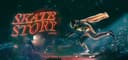
Skateboarding games have spent two decades oscillating between two poles: the arcade maximalism of Tony Hawk and the punishing simulation of Session and Skater XL. Skate Story, from solo developer Sam Eng and publisher Devolver Digital, plants its flag somewhere else entirely. This is a skateboarding game as myth — a descent narrative where you play a demon made of glass and pain, cutting a deal with the Devil himself: skate through the nine layers of the Underworld, reach the Moon, and swallow it to buy your freedom.
That premise could easily curdle into art-game posturing. It doesn’t, because Eng understands something most studios miss: skateboarding is already a spiritual practice. The falling, the getting up, the thousandth attempt at a trick your body refuses to learn — Skate Story literalizes that loop by making your avatar physically shatter on impact. Every bail matters when your protagonist is made of glass.
The market positioning is shrewd. At $19.99 on Steam and Nintendo Switch, it’s priced as an impulse buy but built like a statement piece. Devolver has a long history of shepherding singular auteur projects — this one arrived December 8, 2025 after years in development, and the patience shows in how fully realized the thing is.
Key features
- 70+ tricks with real progression: You start wobbly and incompetent by design. Ollies, kickflips, grinds, and manuals unlock and improve as you skate, so mechanical growth mirrors the narrative arc.
- Nine layers of the Underworld: Freeform street skating through surreal, ash-choked environments — ledges, gaps, stair sets, and demonic encounters woven into an adventure structure rather than a menu of levels.
- Gear customization: Decks, wheels, and trucks with meaningful stat and feel differences, giving the trial structure a light RPG spine.
- A genuinely great soundtrack: Original music from Blood Cultures and John Fio that functions less like background audio and more like the game’s central nervous system.
Analysis
The Gameplay Loop
The core loop is deceptively traditional: enter a layer of the Underworld, complete trials, help the strange denizens of the Emptylands, learn new tricks, descend. What makes it work is friction as a design philosophy. Early on, the demon can barely push without stumbling. Tricks come out sloppy. The board is built to feel like it hates you. This is intentional, and it’s a gamble — plenty of players bounce off games that open with deliberate clumsiness.
But the payoff is real. By the time the design lets you thread a line through a cathedral of ash, popping a kickflip over a gap that would have ended the run in hour one, the competence feels earned in a way no XP bar can fake. Skate Story understands that mastery is only meaningful if incompetence came first. It’s the same trick Getting Over It and Death Stranding pulled — weaponizing frustration in service of catharsis — applied to a trick system with genuine mechanical depth.
The trick system itself sits closer to arcade than sim. Inputs are flick-and-button combinations rather than Session’s dual-stick foot simulation, and the game is more interested in flow than technical fidelity. Purists will notice the physics bend toward drama: grinds magnetize slightly, landings forgive more than a sim would. That’s the right call for what this game is. This isn’t about nailing a switch tre down El Toro; it’s about skating through Hell, and the handling model serves momentum and mood over precision.
Combat and Structure
The light combat — performing tricks to dispatch demonic encounters — is the game’s thinnest layer. It works as punctuation, forcing you to skate at something rather than past it, but it never develops much beyond that. A few encounters late in the run drag, and for anyone here purely for skating, these sections read as speed bumps. The pacing and occasionally repetitive trial structure are the game’s most legitimate criticisms: some layers of the Underworld ask you to do fundamentally similar things with different lighting.
The Emotional Register
Here’s what a scorecard misses. Skate Story is about something — pain, persistence, the absurdity of striking bargains with forces that don’t negotiate in good faith — and it commits to that theme through mechanics, not cutscenes. The NPCs of the Emptylands are written with a strange, melancholy generosity. The story’s final movement lands harder than anything else in the genre, which is admittedly a low bar (skateboarding games have historically had the narrative ambition of a cereal box), but it would land in any genre. “One of a kind” is not an exaggeration here. It is.
Visuals & performance
The art direction is the loudest thing about Skate Story, in the best sense. The glass demon refracts light like a prism rolling through purgatory; environments layer VHS grain, chromatic aberration, and saturated gradients into something that looks like a Blood Cultures album cover in motion — fitting, given who scored it. Screenshots undersell it. This is a game built to be seen at speed, where the visual noise coheres into rhythm.
The flip side: this aesthetic is aggressively lo-fi and occasionally hostile to readability. Judging a landing zone through deliberate visual distortion will frustrate some players, and the heavy post-processing means anyone sensitive to visual noise should approach with caution. The stylized rendering is light on hardware by design, which suits a game meant to be played in long, uninterrupted lines.
Platform nuances
On Steam, this is the definitive version: highest fidelity and full controller support — and a controller is the only sane way to play it. On Switch, the case is different but compelling. Skate Story’s session-based trial structure fits handheld play beautifully — one more trial, one more line, the classic portable loop. The visual style survives the smaller screen better than most games because it was never chasing photorealism. With access to both platforms, choose based on where meditative single-player games actually get played; the experience translates intact.
Final verdict
Skate Story is what happens when a solo developer spends years answering a question nobody asked — what if a skateboarding game was about grief and deliverance? — and sticks the landing. Its flaws are real: the combat is thin, some trials repeat, and the opening hours demand patience. None of it matters much against what the game achieves. This is an emotionally complete skateboarding game, one of 2025’s genuine originals, and at twenty dollars an easy recommendation — with the caveat that its deliberate friction and repetitive stretches won’t be for everyone. Sam Eng made a deal with the Devil and came back with something luminous.
Reviewed by the Rankeno RPG & Adventure Desk. Scores are out of 10; the overall score is the desk’s editorial judgement, informed by the four sub-scores above. How we review