
The Stillness of the Wind
game
•Updated Sep 2026iOS

The Stillness of the Wind

The Stillness of the Wind takes the daily routine of a farming sim and uses it to tell a quiet story about old age, loneliness and loss. It is beautiful and often moving. It is also slow on purpose, thin as a farming game, and over in a few hours. Players who expect Stardew Valley will feel misled. Players who expect a short interactive story will find one of the more affecting examples of the form.

Scores

Score breakdown

How we weighted the criteria

Design
7.5/10
Innovation
8/10
Value
7/10
Utility
6/10

Our strongest category here is Innovation (8.0/10); the weakest is Utility (6.0/10).

Price
$4.99
one-time or subscription
Released
Feb 7, 2019
Platforms
iOS · Steam · Nintendo Switch
Developer
Memory of God, Lambic Studios
Age rating
9+
Store rating
3.4 ★ · 125 ratings
from the app store listing

More iPhone & iPad app reviews

Quick summary

The Stillness of the Wind (iOS) — scored 7.4: The Stillness of the Wind takes the daily routine of a farming sim and uses it to tell a quiet story about old age, loneliness and loss. It is beautif...

Pros

  • Farm chores become the main way the story is told
  • The merchant's letters build real, gradual dread
  • Evocative lo-fi pixel art and a restrained score

Cons

  • Farming mechanics are thin and stop evolving early
  • Talma's slow walk will put off many players
  • Only a few hours long, with almost no replay value

Verdict

Is The Stillness of the Wind worth it?

The Stillness of the Wind takes the core pleasure of farming games, the satisfaction of routine, and asks what that routine means for someone who has nobody left to share it with. Its answer is quiet and sad, and it lands well. The merchant's letters are an excellent way to deliver a story, the art and sound are well matched, and the slow walk is a bold choice even though it costs the game part of its audience.

As a game, it is thin. As a farming sim, it barely qualifies. As a short, reflective story about the end of a life, it is one of the stronger examples you'll find. Know which of those you're buying. If you're in the right frame of mind for it, it will stay with you.

Pros

  • Farm chores become the main way the story is told
  • The merchant's letters build real, gradual dread
  • Evocative lo-fi pixel art and a restrained score
  • Trusts the player with environmental storytelling
  • Moving, honest treatment of aging and loss

Cons

  • Farming mechanics are thin and stop evolving early
  • Talma's slow walk will put off many players
  • Only a few hours long, with almost no replay value
  • Easy to miss the story if you play distracted
  • Easily mistaken for a Stardew-style farming sim

Pricing: $4.99

From Rankeno

Today's top charts

The daily chart ranks our newest scored reviews — see which titles lead today.

Open the daily chart

Gallery

Screenshots

4 screenshots · tap to enlarge

What stands out

Key features

  1. Chores that carry the story: Milking, cheesemaking, egg collecting, planting and cooking make up the entire loop. They also do the storytelling, because repeating them every day is how the game makes you feel Talma's isolation.
  2. The merchant and his letters: The traveling merchant is your only economy and your only regular human contact. The letters he delivers are the main story thread, and they gradually add dread to ordinary farm work.
  3. Environmental storytelling: Talma's past and the state of the world come through found objects, dream sequences and small details. The game expects you to piece things together yourself.
  4. Deliberately slow movement: Talma walks at the pace of an old woman. This is the game's boldest design choice and also its most divisive one.
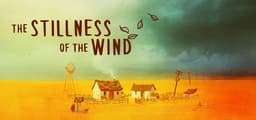
  5. Lo-fi pixel art and a sparse ambient score: A wide, mostly empty desert and quiet music set a reflective tone that the game never breaks.

Full review

The Stillness of the Wind in depth

Bottom Line: The Stillness of the Wind takes the daily routine of a farming sim and uses it to tell a quiet story about old age, loneliness and loss. It is beautiful and often moving. It is also slow on purpose, thin as a farming game, and over in a few hours. Players who expect Stardew Valley will feel misled. Players who expect a short interactive story will find one of the more affecting examples of the form.

The Gameplay Loop, Stripped to the Studs

Mechanically, The Stillness of the Wind is very simple. You wake up and do the chores: goats, chickens, garden, kitchen. Surplus goods can be traded with the merchant for seeds and supplies. Then the day ends. There is no skill tree, no relationship meter and no crafting system beyond turning milk into cheese.

As a farming game, it is shallow, and it's better to say so plainly. The economy barely exists and the systems have no depth. After the first hour you won't find new strategies or optimizations, because there is nothing to optimize. The critics who call the mechanics thin are right about that.

They are wrong about what it means. This game is not trying to be a systems game and failing. It is a story that uses the structure of a farming game as its setting. The chores are simple because Talma's life is simple. They repeat because her days repeat. The game wants you to do the same small tasks again and again, and to feel that their meaning comes from the fact that nobody else is around to do them.

The Walk

Talma's walking speed is where the game will win you or lose you.

She moves slowly, and the game never lets you speed her up. Walking from the goat pen to the garden takes real time. In most games that would be poor design: pointless friction that adds nothing. Here the friction is the point. You are meant to feel the distance across her small farm the way an old woman would, and to spend that walk thinking.

I think it mostly works. Many players won't, and they aren't wrong. Deliberate pacing only succeeds if players accept the premise, and a slow walk is the most direct way to test that. If you arrive in a restless or task-focused mood, the walk will feel like an obstacle. If you arrive willing to slow down, it becomes the thing that sets the mood for everything else. The game makes no effort to convince skeptics, and it shouldn't have to. Still, you should know before buying that this is the main thing the whole experience depends on.

The Letters as the Engine

The real driver of the game is the mail. Each time the merchant arrives, he brings something from outside the homestead: letters from family, news from the city. They start out ordinary and become gradually more unsettling.

This is the smartest decision in the game, because it changes how the chores feel without changing the chores themselves. On day two, milking a goat is just milking a goat. Later, after a letter has left you worried, the same action carries that worry with it. The mechanics stay the same while your understanding of the situation changes, and that gap is where the story lives.

The merchant also serves two roles well. He is your only way to get new seeds and tools, so you have a practical reason to look forward to his visits. He is also your only contact with other people, so you have an emotional reason too. The game ties the two together naturally.

Show, Don't Tell

The story unfolds through found objects, dreams and small environmental details, not dialogue trees or cutscenes. This works well because it treats you as capable of drawing your own conclusions. The dream sequences in particular break up the routine and hint at Talma's inner life without spelling it out.

The weakness is that a story told this sparingly can be easy to miss. If you rush, and the slow walk is partly there to stop you from rushing, you will likely finish with a vague sense of sadness but not much sense of what the game was saying. The game rewards attention and gives little back without it.

Length and Its Consequences

The game is short, a few hours, and this is the most legitimate complaint against it. A story about slowness and time passing that ends quickly creates some tension. The ending is emotionally satisfying, but there is no replay value to speak of. Once you know how things go, going through the routine again loses most of its effect. Judge it the way you would judge a novella, not a farming game you expect to play for a whole season.

Your rating for The Stillness of the Wind:
Was this helpful?

Alternatives

If not The Stillness of the Wind, then what?

Best alternatives to The Stillness of the Wind

FAQ

Common questions

Is The Stillness of the Wind worth it in 2026?

The Stillness of the Wind takes the core pleasure of farming games, the satisfaction of routine, and asks what that routine means for someone who has nobody left to share it with. Our experts scored The Stillness of the Wind 7.4 out of 10 — recommended.

Is The Stillness of the Wind good?

With a score of 7.4 out of 10, The Stillness of the Wind lands in our recommended band. Innovation is its strongest category at 8.0 out of 10. Utility is the weakest at 6.0.

How much does The Stillness of the Wind cost?

The Stillness of the Wind costs $4.99. Its Value category scores 7.0 out of 10.

What do users like most about The Stillness of the Wind?

Farm chores become the main way the story is told. The merchant's letters build real, gradual dread.

What do users dislike most about The Stillness of the Wind?

Farming mechanics are thin and stop evolving early. Talma's slow walk will put off many players.

What platforms is The Stillness of the Wind available on?

The Stillness of the Wind is available on iOS, Steam, Nintendo Switch.

Who makes The Stillness of the Wind?

The Stillness of the Wind is made by Memory of God, Lambic Studios.

What are good The Stillness of the Wind alternatives?

The closest alternatives to The Stillness of the Wind are Mars Horizon, Paperbark, Aeolis Tapes.

Is our The Stillness of the Wind review up to date?

We last refreshed our The Stillness of the Wind review in Sep 2026.

About this review

How we scored The Stillness of the Wind

The Stillness of the Wind was scored on Design, Innovation, Value and Utility — each from 1 to 10, with the same rubric as every other game in its category — for an overall 7.4. Research and drafting follow Rankeno's fixed editorial rules; the rubric, the checks before publishing and the decision to publish are ours. Published Sep 27, 2026.

Editorial disclaimer The reviews and scores on this site are based on our editorial team's independent analysis and personal opinions. While we strive for objectivity, gaming experiences can be subjective. We are not compensated by developers for these scores.

Publish an app? Submit it for review

Embed this score badge on your site

Embed this review badge

Paste this snippet on your site to show your Rankeno score. The link back to rankeno.com is a normal link — no redirect, no tracking.

From Rankeno

Keep reading

More scored reviews from our editors — verdicts, alternatives and head-to-heads.

7.4The Stillness of the WindApp Store