
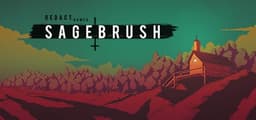
Bottom Line: Sagebrush is a short, carefully researched walk through the ruins of a doomsday cult, and it earns its discomfort honestly. Expect about two hours of reading and listening, not a puzzle game. Few games treat radicalization with this much empathy and restraint.
The Gameplay Loop
The core loop is easy to describe. You explore a space, read or listen to what you find, locate a key or work out a simple environmental puzzle, and unlock the next area. It's the loop of a hundred found-footage adventures, and Sagebrush doesn't try to hide it.
That matters because players who arrive expecting a puzzle game will leave disappointed. The most consistent criticism in user reviews is that Sagebrush is more walking simulator than puzzle game, and that's accurate. The puzzles are mostly gates. They pace the story rather than challenge you. You'll rarely be stuck, and when you are, it's usually because you missed a door, not because you misunderstood a system.
I don't count that against the game, because the puzzles aren't the point. The keys and locks serve as narrative sequencing. They control what you learn and when, so the story unfolds in a deliberate order even though you're free to wander. The early areas show the communal, almost wholesome surface of Perfect Heaven. Deeper in, and literally further underground in the mines, the documents get darker. That structure is where the game's authorship shows.
Writing and Characterization
The writing is Sagebrush's biggest strength, and the reason to buy it. The central question isn't "what happened?" You know that before you arrive. The question is "why?", and the game answers it one follower at a time.
The members of Perfect Heaven come through as individuals with histories: people who were lonely, grieving, searching or in need of structure. The game grants each of them a basic dignity. That makes the ending harder to take. Once you understand someone, their death stops being a statistic.
Father James is the harder writing problem, and Berens mostly handles it. A cult leader written as pure evil lets the audience off the hook. If he's obviously a monster, only fools follow him. Sagebrush resists that. The game shows how control builds up gradually, how devotion gets turned into a weapon, and how a community that once felt like rescue slowly closes around its members. For a two-hour game, that's a sophisticated position.
This is also where the mature content matters. The abuse and self-harm here are not used for shock. They are the mechanism by which the group consumed its members, and the game treats them with appropriate gravity. That doesn't make them easier to read. Anyone with personal experience of these themes should take the content warning seriously.
Pacing and Length
The 60–120 minute runtime is the most common complaint, and it's partly fair. Some players feel the game is short for its asking price. If you judge value by hours played, Sagebrush will look thin.
I'd push back on that. The game is exactly as long as its story needs. There's no padding, no collectible checklist and no busywork to stretch it out. A two-hour film isn't overpriced because it isn't a miniseries, and Sagebrush respects your time in a similar way. The cost of that tightness is replay value: once you know the story, there's little reason to go back.
Atmosphere as Mechanic
Without combat or jump scares, Sagebrush has to generate tension purely from its environment, and it mostly succeeds. The desert is empty in an oppressive way. The communal halls feel recently abandoned. The mines are the game's best space, narrow and dark in a way that matches where the story is heading. The dread is cumulative, not spiked. You're never afraid something will attack you. You're afraid of what the next letter will say.


