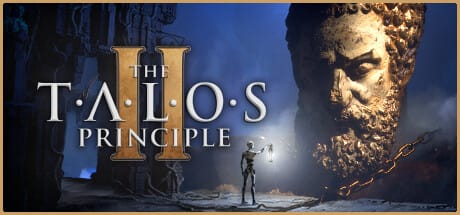

Bottom Line: Croteam's latest opus confidently builds upon its predecessor, presenting a monumental puzzle experience intertwined with deeply resonant philosophical discourse, though its expansive ambition occasionally treads the line into meandering introspection.
The core of The Talos Principle 2 resides in its meticulously engineered puzzle design. Croteam has consistently demonstrated a prowess for crafting logic gates out of environmental interactions, and this sequel amplifies that strength. Players are routinely presented with scenarios that, at first glance, appear insurmountable, only to reveal their underlying elegance through careful observation and iterative experimentation. The progression from basic laser redirection to manipulating gravity, transferring consciousness between bodies, and drilling through barriers creates a satisfying difficulty curve. Each new tool integration feels earned, expanding the player’s toolkit and, crucially, their conceptual understanding of the game's physics and rules. The most compelling aspect of these puzzles is their often-multi-solution nature; while there's a primary path, the freedom to discover alternative, perhaps less obvious, resolutions rewards creative thinking, a hallmark of superior puzzle design.
However, the game's expansive approach also presents its own set of friction points. The world is undeniably beautiful, often breathtaking, but the sheer scale of the maps can lead to periods that feel more like a walking simulator than an active puzzle pursuit. Traversing these large environments between puzzle hubs, while visually rewarding, can break the flow of intense problem-solving. This is exacerbated by moments where the puzzle difficulty can feel inconsistent, with some areas offering relatively straightforward solutions followed by sudden spikes in complexity. While a challenge is expected, a more consistent escalation would refine the player experience, preventing moments of minor frustration.
The philosophical narrative, a defining characteristic, is both a towering strength and a potential impedance. The game's writers engage with weighty topics—the nature of a soul, the purpose of creation, the inherent flaws and glories of human endeavor—with an intellectual rigor rarely seen in the medium. The dialogue, delivered through a cast of eloquent robot companions and holographic echoes of the past, is substantial, often requiring the player to pause and absorb the implications. For those who relish deep introspection and extended discussions on ethics and metaphysics, this is a banquet. For others, particularly those accustomed to more concise storytelling in gaming, the sheer volume can at times feel overly verbose, bordering on didactic. The balance between gameplay and narrative exposition is a delicate act, and while Croteam largely succeeds, there are instances where the philosophical discourse risks overshadowing the immediate gratification of puzzle progression. This tension, however, is arguably part of the game's identity, forcing players to contend not just with logical puzzles, but with existential ones. The game isn't merely asking "how do I solve this?"; it's asking "why am I solving this, and what does it mean for my existence?" This duality elevates it beyond a mere puzzle game into something more akin to interactive philosophy.
User Experience Flow
The user experience largely mirrors the intentional, contemplative pace of the game. Onboarding is gentle, reintroducing mechanics gradually, allowing players to build confidence before escalating the challenge. The interface itself is clean and unobtrusive, ensuring focus remains on the environmental puzzles and the rich world. Menu navigation and inventory management (minimal as it is) are intuitive. The primary friction points arise from the aforementioned world traversal and the occasional search for the next puzzle node within a sprawling environment, which can subtly shift the experience from stimulating deduction to minor exploration tedium. The fast travel system alleviates some of this, but it doesn't entirely mitigate the feeling of expanse between significant logical hurdles.