
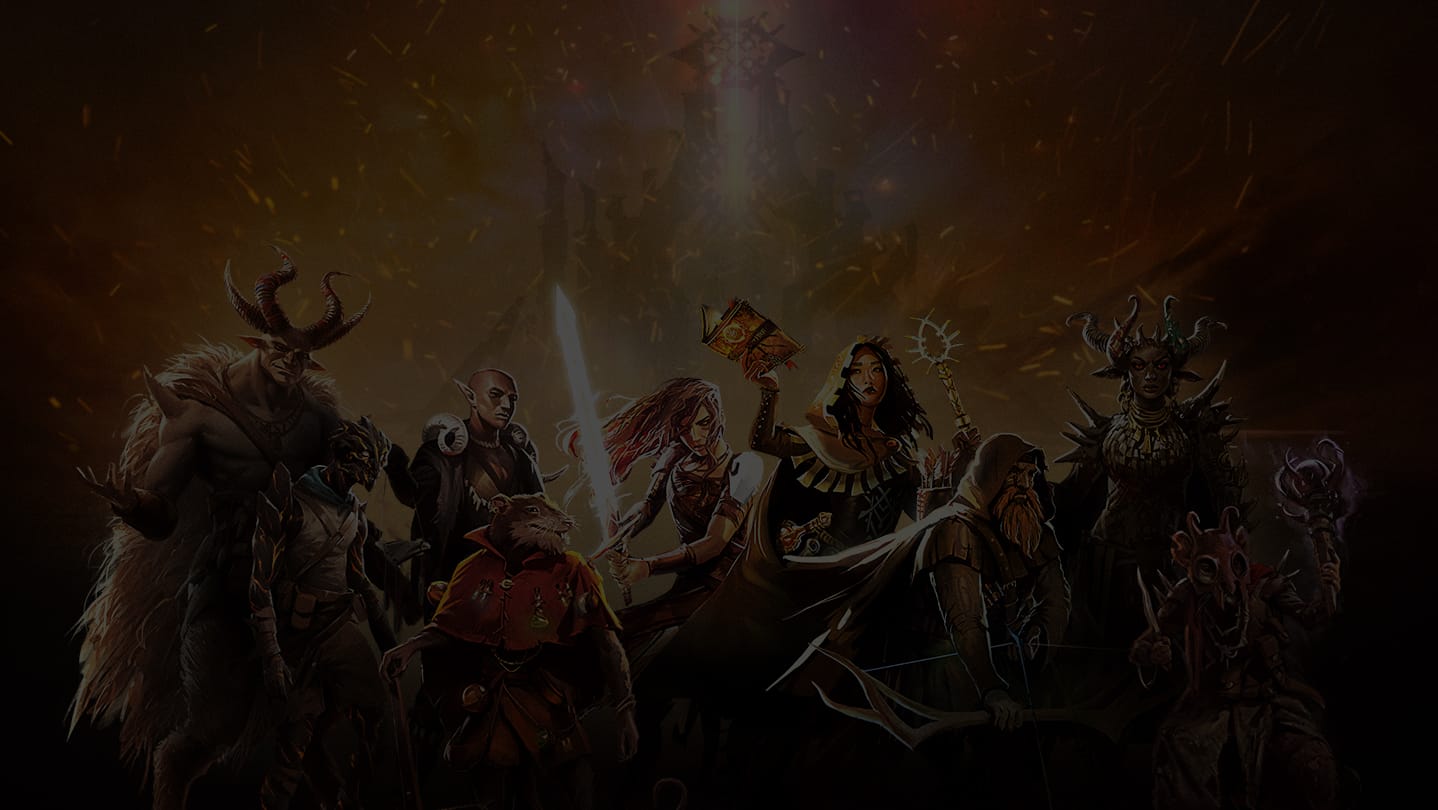


Bottom Line: Trials of Fire welds hex-grid tactics to deckbuilding with a shared party hand that makes every turn a resource-allocation puzzle, and it's smarter than almost anything in the genre. It's also stingy about explaining itself, and the first three hours will feel like reading a manual in a language you half-speak.
The Gameplay Loop
The core insight of Trials of Fire — the thing that justifies its existence next to a hundred other deckbuilders — is the shared hand.
Think about what that does. In a conventional party tactics game, each character is a discrete budget: this one gets two actions, that one gets two actions, spend them independently. Trials of Fire collapses all of it into one pot. Your hand contains cards belonging to all three heroes, and your resource pool is communal. So every round becomes a genuine allocation problem. Do you dump four resource into your Barbarian for a chained assault that clears the left flank, leaving your Ranger and your Ritualist standing flat-footed for the entire turn? Or do you spread it thin and accomplish three small things badly?
This creates a rhythm you won't find elsewhere. Some turns, one hero is a god and the other two are furniture. That's not a failure state — it's the design working. The tension between the hand you drew and the board you're standing on is the whole game, and it's why the hex grid isn't decorative. Cards specify range, direction, and target geometry. A devastating cleave requires enemies in adjacent hexes. Movement costs from the same pool as attacks, which means repositioning is never free and is frequently the correct play anyway.
The loot-as-deckbuilding system is the second pillar, and it's more radical than it first appears. Because your deck is your equipment, the game never lets you settle. In Slay the Spire, a build calcifies — you find your engine and you protect it. Here, you loot a superior chestpiece and discover it's swapped three defensive cards you were relying on for two aggressive ones you don't want. Upgrades are frequently downgrades in disguise, and evaluating them requires holding your entire party's card economy in your head simultaneously. It's genuinely hard. It's also the most interesting inventory system I've encountered in a roguelite, because it makes the loot screen a strategic space rather than a numbers-go-up dispensary.
Wrapped around combat is the overland layer: a supply-management crawl across procedural terrain with the sandstorm as a pace-setter. It works, mostly. Supplies deplete, settlements sell gear, ruins hide loot, and the storm ensures you can't grind. But this layer is the game's thinnest, and it's where the seams show. The judgement encounters — hand-written dilemmas with real consequences — are well-written and land more often than not, but they're islands in an otherwise mechanical sea. The narrative wrapper around Ashe is atmosphere, not story. If you came for a world to care about, you'll leave with a spreadsheet instead.
The Onboarding Problem
Now the part everyone complains about, and they're right to.
Trials of Fire has brutal onboarding friction. The tutorial gestures at the systems rather than teaching them. The UI presents an enormous amount of information — card costs, resource pools, hero states, enemy intent, terrain modifiers — in a dense, small-type layout that assumes you already know where to look. Iconography is opaque on first contact. Critical numbers hide in tooltips that require deliberate hovering.
The result is a predictable pattern in the Steam reviews: people bounce, come back, and then log 80 hours. The learning curve isn't a gentle slope; it's a wall with handholds you have to find yourself.
I'd defend some of this. Complexity is the product, and sanding it down would produce a worse game. But there's a difference between a deep system and a badly explained one, and Trials of Fire conflates them. Nothing about the shared-hand economy is impossible to communicate clearly — it's just not communicated clearly. That's a UX failure, not a design one, and it has cost this game an audience it deserved.
Difficulty and Variance
The other consistent criticism is RNG. Runs can end to a difficulty spike you couldn't have played around — a bad card draw against an enemy composition that punishes exactly the thing you drew. It happens less than detractors claim and more than the game's defenders will admit. Across four modes there's enough tuning range that you can find a comfortable altitude, but the roguelite promise of "you lost because you misplayed" isn't always honored here. Sometimes you lost because the deck said no.