
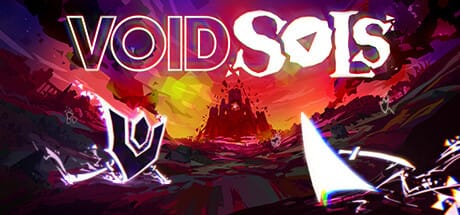



Bottom Line: Void Sols masterfully recontextualizes the punishing yet rewarding soulslike archetype into a stark, minimalist 2D canvas, proving that challenge and atmosphere needn't be rendered in polygons to be deeply compelling.
Void Sols doesn’t just borrow from the soulslike playbook; it thoughtfully remixes it, paring away excess to reveal the genre's essential, compelling bones. The game’s combat system is its beating heart, a testament to precision and deliberate action. Finite Reflection Studios has clearly invested heavily in making every dodge, every parry, every calculated swing feel impactful. There's no button-mashing here; success hinges on understanding enemy attack patterns, timing your defensive maneuvers with absolute exactitude, and managing your stamina bar as if your life—which it often is—depends on it. This emphasis on tight, responsive controls elevates encounters beyond simple reflexes, turning each confrontation into a miniature puzzle demanding tactical execution. Minor criticisms regarding overly punishing stamina management occasionally surface, but largely, players commend the system for its demanding yet fair nature.
The level design is another critical pillar supporting Void Sols' atmospheric weight. These aren't just pathways between boss fights; they are environments designed for meaningful exploration. Hidden nooks, secret passages, and alternative routes aren't just cosmetic additions; they often conceal crucial upgrades, lore fragments, or shortcuts that fundamentally alter the player's approach to subsequent challenges. This rewards patience and a keen eye, transforming simple traversal into an investigative endeavor. The game trusts the player to piece together its fragmented narrative, much like its esteemed inspirations, and the environment serves as the primary storyteller.
Accessibility, a concept often anathema to the "hardcore" soulslike community, is embraced here with intelligence. The inclusion of difficulty adjustments is a crucial design decision, broadening the game's appeal without diluting its core identity. This isn't an "easy mode" that trivializes the experience; it’s a calibrated scaling that allows players to engage with the compelling mechanics at a pace suitable for their individual skill ceiling. Newcomers can learn the intricate dance of combat and exploration without being immediately crushed, while veterans can crank up the challenge to test their mettle against the most unforgiving iterations. This thoughtful implementation highlights a developer confident enough in their vision to invite a wider audience into their meticulously crafted world. It demonstrates a maturity in design that understands the spirit of challenge can be preserved even when its parameters are flexible. The overall gameplay loop is cyclical: explore, encounter, adapt, die, learn, conquer. Each death serves as a lesson, refining player strategy and deepening their understanding of the game's intricate systems. This constant feedback loop is addictive, creating a powerful incentive for persistence.
User Experience Flow
The user experience in Void Sols is starkly utilitarian, mirroring its visual design. Onboarding is minimal; the game drops you into its world with little hand-holding, expecting players to learn by doing—and by failing. This can be initially jarring for those unaccustomed to the genre's learning curve, but it quickly establishes the game's demanding ethos. Interface elements are sparse, focusing only on essential combat information. This lack of clutter contributes to the immersive atmosphere, keeping the player focused on the immediate threats and environmental details rather than distracting UI overlays. The overwhelming positive reception suggests this design choice resonates deeply with its target audience.