
Overview
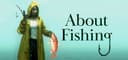
Twin Peaks opens with a man going fishing. Pete Martell never makes it to the water. He finds Laura Palmer’s body wrapped in plastic on the shore instead. More than three decades later, About Fishing asks what would happen if he’d kept walking, cast a line, and pulled the evidence up himself.
The game comes from The Water Museum, a small studio that wears its influences openly. The developers say they built it out of love for Shenmue and SEGA Bass Fishing, two Dreamcast-era touchstones that rarely appear in the same sentence. Shenmue gave the industry the idea of a town that runs on its own schedule, indifferent to the player. SEGA Bass Fishing distilled angling into pure arcade tension. About Fishing fuses the two, then pours a slow trickle of dread over the result.
Publisher Playstack, the label behind Balatro, is backing the PC (Steam) release, dated for January 1, 2026. The full game isn’t out. Treat this as a pre-launch assessment. It weighs the game’s design against what The Water Museum has shown and promised, not against a finished product.
The market positioning is shrewd. Dredge proved that a fishing loop could anchor a horror game and sell. A wave of cozy and retro fishing titles followed, and the PS1-revival scene has spent years teaching players to find menace in low-poly fog. About Fishing sits where all three trends meet. Its specific angle gives it a distinct identity: a murder mystery instead of cosmic horror, set in a town full of people with routines and secrets. Dredge’s terror came from the deep. About Fishing’s seems to come from the neighbors.
Key features
- Species-Specific Behavior: Each fish has its own patterns and habits. You have to study a species before you can land it reliably, so the game rewards observation over grinding.
- Catch-for-Gear Economy: You trade your haul to upgrade rods and equipment, which unlocks deeper waters. Progression is literally measured in depth.
- Fishing as Investigation: Certain catches surface clues to a long-forgotten mystery. The rod doubles as your magnifying glass.
- A Town on a Clock: A day-night cycle, shifting weather, and townspeople with their own daily routines give timing and location real weight.
- Unflinching Mature Content: The developers list fish blood and guts, plus murder. This is not a cozy game wearing a scary hat.
Analysis
The Gameplay Loop
The core loop is simple: fish, sell, upgrade, go deeper. Nearly every fishing game since the genre’s arcade days has used that skeleton, and on its own it’s unremarkable. About Fishing’s version is promising because it adds a knowledge gate on top of the gear gate. Each species has its own patterns and behaviors that you must learn before you can land it reliably, so progression depends on what you understand, not just what you’ve bought. A better rod gets you into deeper water. It doesn’t tell you what lives there or when it feeds.
That distinction matters. Pure gear-gated progression degenerates into grinding: catch fifty of the cheap fish to afford the better rod. Knowledge-gated progression turns the player into a naturalist. Done well, it delivers the satisfaction of Outer Wilds, where the world stays the same and you are the thing that changes. Done poorly, it becomes trial-and-error drudgery with a wiki open on a second monitor. The design has to hold that standard across a large roster of species, and nothing so far proves it will.
Fishing as Investigation
The smartest decision here is that fishing drives the story instead of interrupting it. Too many genre hybrids bolt a narrative onto a minigame and force you to alternate between “the fun part” and “the plot part.” About Fishing closes that gap, because some catches yield clues and fragments of the buried mystery. Every cast is a potential lead.
That framing changes how the quiet moments feel. A meditative activity becomes charged with anticipation, because any tug on the line could be dinner or evidence. The same tension made Twin Peaks’ small-town banality so unsettling, with the cherry pie and the corpse sharing the frame. If The Water Museum calibrates the frequency correctly, the mundane catches will make the meaningful ones land harder. Too many clues and the mystery feels like a checklist. Too few and the player stops believing the water holds anything but fish.
The Clock Is the Real Antagonist
Shenmue’s influence shows most clearly in the world clock. Time passes, the weather changes, and townspeople follow their own routines from day to day. When and where you fish therefore matters, both for which species are biting and, presumably, for which residents are around to see you, talk to you, or turn up somewhere they shouldn’t.
This feature has the highest ceiling and the highest risk. Scheduled NPCs and timed events create emergent stories. You notice someone at the docks at dawn who’s never there otherwise, and suddenly you’re a detective. Schedules also create onboarding friction. Shenmue’s own clock was famously divisive: waiting for a shop to open at 10 a.m. felt like immersion to some players and tedium to others. A mystery built on time-sensitive systems has an obvious failure mode. You miss the window, you miss the clue, and you wait another in-game day. The Water Museum needs generous affordances, such as a way to pass time and a journal that tracks what you’ve seen. Without them, the slow burn will tip into slow boredom. Whether those tools exist in the final build is still an open question.
Tone and Mature Content
The content warning is unusually candid: fish blood and guts, and murder. That candor matters. The “cozy horror” label has been stretched thin by games that gesture at darkness without committing to it. About Fishing promises visceral detail and a real crime at its center, which suggests a game willing to make players uncomfortable. The PS1-era look helps here. Low-poly gore reads as suggestive rather than gratuitous and lets imagination do the work, the way the era’s survival-horror games did.
The risk is tonal whiplash. Calm angling and creeping unease make a strong pairing when the dread arrives gradually. Shocks that come too fast or too loud will trample the calm that makes them effective. The developers describe a “slowly growing” unease, and holding that pace across a full campaign is the hardest craft problem the game faces.
Visuals & performance
The PS1-era 3D aesthetic is a deliberate choice, not a budget compromise, and it’s the right one. Low-poly geometry, crunchy textures, and short draw distances hidden behind fog have become the visual language of modern indie horror because they withhold information. You can’t quite read a face or see the far bank, and your brain fills the gaps with something worse. A look built on obscurity fits naturally in a mystery about what lies beneath. It also nods to SEGA Bass Fishing’s era without simply copying it.
The aesthetic carries a real cost in readability. Fishing games live and die on feedback: line tension, the fish’s direction, the moment to set the hook. Lo-fi visuals can muddy those signals unless the UI compensates with clean, high-contrast cues, and that balance is the main thing to watch at launch. The game ships with full English voice acting and subtitles. Voiced dialogue is a luxury for a small studio, and it does a lot for a character-driven mystery.
There’s no final build to benchmark yet. A low-poly game of this scope should be light on hardware, but steady frame pacing in the moments that matter — fighting a fish in a storm — can’t be judged until release.
Platform nuances
On Steam, About Fishing includes Steam Achievements and Steam Cloud saves. Cloud saves are useful for a slow-burn game you’ll likely play in many sessions, possibly on more than one machine.
Input is the more interesting question. Fishing games have always favored analog control, and SEGA Bass Fishing on Dreamcast even supported a dedicated rod-and-reel controller. A gamepad is very likely the intended way to play, and probably the best option on PC too. Mouse and keyboard will handle menus and walking around town. Reeling against a fighting fish calls for a trigger and a stick.
In theory, the low-poly look makes the game a strong candidate for handhelds like the Steam Deck. No official compatibility rating appears in the available material, though, so check the store page before you buy for that reason.
Final verdict
About Fishing has the best kind of pitch: specific, a little strange, and clearly made by people who love their sources. Its central idea is that the rod is an investigative tool and any catch might be a clue. That solves the genre hybrid’s oldest problem, because the game never splits into two halves. The Shenmue-style clock and species-specific behavior add systemic depth that most fishing games, cozy or creepy, never attempt.
The open questions are the ones that matter most, and right now they outweigh the promise. Can the mystery sustain a full campaign? Will the time-gating respect the player’s patience? Will the retro look stay readable when the line goes taut? None of that can be answered before the 2026 release, and until it is, we can’t recommend this for most people. The curious should wait for the full game and watch how those questions get answered.
Reviewed by the Rankeno RPG & Adventure Desk. Scores are out of 10; the overall score is the desk’s editorial judgement, informed by the four sub-scores above. How we review