

Overview
Every genre has its ossification moment. For roguelike deckbuilders, it arrived roughly eighteen months after Slay the Spire shipped, when the store pages started to blur together: three enemies in a row, a block number, an energy pip, a relic that says “at the start of your turn.” The formula worked so well that almost nobody was willing to break it. Most challengers competed on theme — cyberpunk cards, cowboy cards, cards about dating — while leaving the underlying combat model untouched. Static lanes. Fixed positions. A spreadsheet with a nice coat of paint.
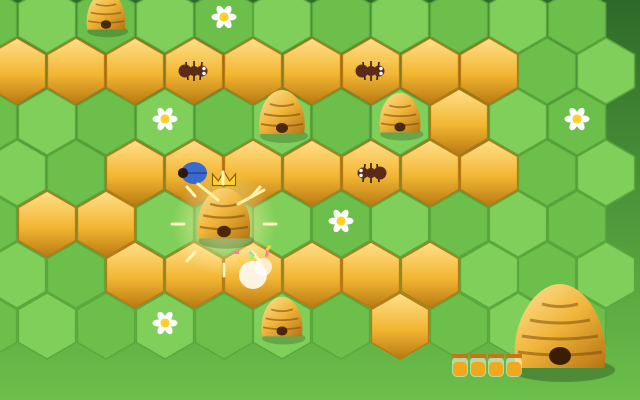
Alina of the Arena is the one that actually broke the model. PINIX, a small independent outfit, took the deckbuilding scaffold — branching run map, shops, elites, events, bosses, permadeath — and swapped the combat substrate for a hex grid. Alina is a gladiator sold into an arena, fighting for a crowd that wants blood, and the crowd itself becomes a mechanic: the ring of spectators is a wall you can slam enemies into. Cards don’t just deal damage; they step, dash, push, pull, and reposition. Suddenly the question isn’t only how much but from where.
The game launched on Steam on October 13, 2022, matured through a long tail of content updates, and later made the jump to Nintendo Switch — a natural fit for a game built around short, self-contained runs. It’s a paid release at $14.99, positioned well below the price of a AAA release and stuffed with dozens of cards, relic-style items, unlockable starting decks, and escalating difficulty tiers. It occupies the same shelf as Monster Train and Griftlands — the second wave of deckbuilders that had to justify their existence with a genuine mechanical thesis.
Alina has one. It’s the positioning.
Key features
- Hex-Grid Tactical Combat: Every fight is a small board, not a lineup. Movement, facing, and spacing are first-class resources. You can sidestep a telegraphed attack entirely and take zero damage — a defensive option no lane-based deckbuilder can offer.
- The Dual Equipment System: Two weapon slots, mixed freely — twin daggers, sword and shield, two-handers, whips, bows. Your loadout doesn’t just add cards; it changes how existing cards behave, so the same card reads differently depending on what’s in your hands.
- Environmental Kill Logic: Knockback into spikes, into walls, into other enemies. Enemy attacks that clip their own allies. The board fights alongside you if you set it up.
- Branching Run Structure: Arena battles, elites, shops, events, and bosses on a map you choose your way through, with permadeath and randomized encounters keeping runs short and re-runnable.
- Mastery Ladder: Unlockable starting decks and escalating difficulty tiers that meaningfully re-tune the run rather than just inflating enemy HP.
Analysis
The Gameplay Loop
Runs are built to be short and self-contained, and the pacing owes a clear debt to the genre standard. You pick a path node, you fight, you take a card, you occasionally buy something, you fight a boss. That skeleton is unremarkable and unapologetically borrowed. The interesting part happens the moment a fight starts.
In a conventional deckbuilder, your defensive verb is block. You spend energy to buy a number that soaks damage, and the arithmetic is closed: enemy telegraphs 14, you build 14, you take zero. It’s satisfying in the way a balanced ledger is satisfying. Alina’s defensive verb is leave. Enemies telegraph both damage and reach, and reach is a set of tiles. If you can get out of those tiles, the attack simply doesn’t happen. That single change cascades through everything.
It means movement cards are not filler — the dead weight of most tactical hybrids. A one-cost dash is a defensive card, an offensive card, and a setup card depending on the turn. It means the value of a card is contextual rather than fixed, which is exactly the property that makes a build interesting to assemble and a run interesting to replay. It also means that the classic deckbuilder failure state — drawing your hand and realizing the math simply doesn’t work — should be far rarer here. There’s almost always a line. Finding it is the game.
The enemy design earns real credit for this. Foes come with distinct threat geometries: melee bruisers that want adjacency, archers punishing open lines, chargers that commit to a direction and can be baited into their own allies. Because enemies damage each other, the highest-skill play is often to spend a turn dealing no damage at all — pulling a spear-wielder into an archer’s firing line and letting the arena do the work. Few deckbuilders make a zero-damage turn feel like a triumph.
The Equipment System Is the Real Hook
The dual weapon system is where Alina moves from clever to well-designed. Weapons don’t sit in a corner adding a passive bonus — they reshape your card pool and rewrite your existing cards. A slash card behaves one way with twin daggers and another with a two-hander. Bows push your entire spatial logic outward: you’re now playing a kiting game where every step backward is a resource. Sword and shield pulls you toward the anvil strategy, standing your ground and punishing whatever closes in. Whips occupy a strange, wonderful middle distance, yanking enemies into configurations you want.
The result is that archetypes emerge organically from equipment rather than being handed to you by a class-select screen. Two runs with a similar card list can play completely differently based on loadout, and the shop becomes a tense decision point: do you commit to the build you have, or pivot on a weapon that just appeared?
It is not perfectly balanced. The design clearly leaves certain builds stronger than others, particularly at higher difficulty tiers where the margin for error collapses. Some weapon combinations look built for a different, easier game. That’s a real flaw, though the forgivable kind: an ambitious system with sharp edges beats a flat one with none.
Difficulty and the Mastery Curve
The escalating difficulty tiers function like Spire‘s Ascension ladder, and they bite. The early tiers are a fair, teachable ramp. The upper tiers spike hard enough that the criticism that surfaces repeatedly in reviews is legitimate: the jump can feel less like refinement and more like a demand for specific answers to specific problems. If you’re not building toward a particular kind of engine, the ceiling arrives abruptly.
There’s also the long-tail concern that once you’ve internalized the card pool, runs start rhyming. This is true of virtually every game in the genre, and Alina resists it better than most because positioning generates novel situations that a fixed card list can’t. But it’s not immune. Over a long acquaintance with the card pool, the tactical puzzles begin to repeat their shapes.
Onboarding
Learning friction is moderate. If you’ve played a deckbuilder, you know two-thirds of this game immediately. The hex layer is legible on its own terms — attack ranges are highlighted, telegraphs are clear — but the interaction between the two systems takes several runs to click. The moment it does, usually the first time you win a fight by making two enemies kill each other, the game stops feeling derivative.
Visuals & performance
Here’s where the honesty has to come in: the art is the weakest thing about this game. The pixel work is competent and readable, with decent animation weight on hits, but it’s plain. Character sprites lack the personality that made Spire‘s enemies memorable, backgrounds do their job and nothing more, and the overall presentation reads as functional rather than authored. Set it beside Monster Train or Inscryption and the gap in visual ambition is immediate.
The UI is similarly utilitarian. It’s clear — clear enough to matter more than beauty in a game where misreading a range indicator loses a run — but it’s a grid of boxes and numbers with little craft in the typography or layout. Information density is well managed. Charm is absent.
Performance, by design, should be a non-issue. This is a small-scale 2D game of modest scope, light on hardware, and its structure — short nodes, instant restarts after death — is built for a genre where you’ll begin a new run within seconds of losing the last one. Low restart latency is a design feature, and Alina is built around it.
Platform nuances
Steam is the definitive version. Mouse-and-keyboard suits hex selection perfectly — you hover a card, the valid tiles light up, you click. Zero ambiguity, zero cursor-drift. Steam Deck is also a natural home; the short-session structure and low system demands make it close to ideal handheld fare, though see the readability note below.
Nintendo Switch is a sensible port with one persistent asterisk. The run-based structure is tailor-made for portable play — a full run fits a train commute. The controller mapping handles grid navigation acceptably, though selecting a specific hex with a stick will always be marginally slower than pointing at it. The real issue, echoed consistently in Switch reviews, is small text in handheld mode. Card descriptions and relic tooltips were designed for a monitor, and shrinking them to a 6.2-inch screen makes some of them a squint. Docked, the problem disappears. Undocked, it’s a genuine friction point on a platform where undocked is the point.
If you own both, buy it on Steam. If you want it as a commuter game and can tolerate leaning in, the Switch version still works.
Not For
- Players who buy primarily on art direction and presentation polish.
- Anyone who wants a relaxed, low-stakes card game — the upper tiers are demanding and unsentimental.
Final verdict
Alina of the Arena is proof that the deckbuilder genre wasn’t finished, only unimaginative. PINIX identified the single assumption everyone else inherited without questioning — that combat happens in fixed positions — and removed it, then did the much harder work of rebuilding cards, enemies, and equipment around the consequences. The result is a game where a movement card can be your best defensive tool, where a turn spent dealing no damage can win the fight, and where the same deck plays like a different build depending on what’s in your hands.
It’s held back by exactly what you’d expect from a small team: art that doesn’t match the ambition of the systems, a UI with no personality, balance that wobbles at the extremes, and a Switch port that forgot phones aren’t monitors. None of that touches the core, but together they keep it from the top tier of the genre. We rate it a solid Good: recommended without reservation to deckbuilder veterans and tactics fans, with the caveat that presentation-focused players should look elsewhere. Play it on a monitor if you can — and when you finally pull an axeman into a spearman’s charge path and watch them delete each other, the design thesis will make itself plain.
Reviewed by the Rankeno Strategy & Sim Desk. Scores are out of 10; the overall score is the desk’s editorial judgement, informed by the four sub-scores above. How we review