

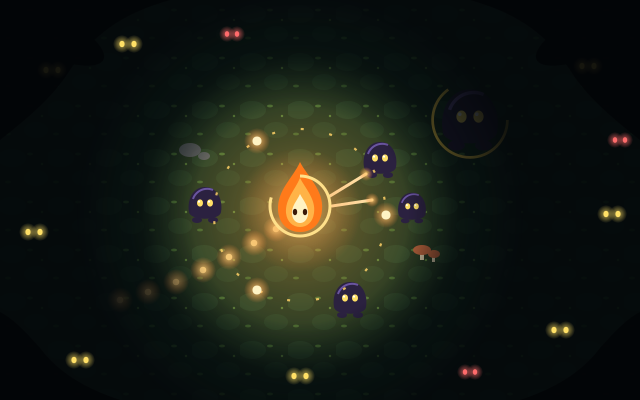
Overview
In a market saturated with “Slay the Spire” clones and uninspired deckbuilders, Brutal Orchestra arrives like a fever dream from a Renaissance painter who spent too much time in a dive bar. Developed by the duo of Talia bob Mair and Nicolás Delgado, published by Hellbent Games, and released on Steam in December 2021, this is a calculated descent into a cynical, Bosch-inspired Purgatory rather than another trip through a procedurally generated dungeon. You play as Nowak, a murdered skeleton with a grudge so petty it feels relatable, navigating a world that feels simultaneously ancient and avant-garde.
The game’s positioning is clear: it targets the “hardcore” crowd—those who find joy in the friction of complex systems and the looming threat of a run-ending mistake. From the moment Nowak makes his pact with the enigmatic Bosch, the player is thrust into a narrative and mechanical loop that rejects hand-holding. This is a game of “fools”—the motley crew members you recruit along your journey—each bringing a unique flavor of dysfunction to your party.
What separates Brutal Orchestra from its contemporaries is its sheer commitment to its identity. It doesn’t just use “grotesque” as a skin; it weaves the horrific and the absurd into the very fabric of its tactical encounters. It’s a title that demands respect for its internal logic, rewarding those who can look past the unsettling imagery to see the clockwork precision of its combat. Brutal Orchestra is a jagged, beautiful anomaly that proves there is still plenty of room for innovation in the turn-based strategy genre.
Key features
- The Pigment System: A resource mechanic where abilities are fueled by colored blood—Red, Blue, Yellow, and Purple—harvested directly from your enemies’ suffering.
- Pigment Overflow: A high-stakes balancing act where excess resources become toxic, dealing damage to your own party if not managed with surgical precision.
- Hieronymus Bosch Aesthetics: A striking visual direction that translates 15th-century surrealism into a modern, gritty pixel-art nightmare.
- Large Character & Item Pool: A substantial roster of unlockable “fools” and a vast array of insidious items that ensure no two runs through Purgatory feel identical.
Analysis
The Pigment Engine: More Than Just Mana
Most strategy games treat “mana” or “action points” as a static pool. Brutal Orchestra treats its resources like an unstable chemical reaction. The Pigment System is the game’s beating heart. You don’t start a turn with a full tank; you generate pigment by hitting enemies. This creates a fascinating aggressive-defensive tension. You need to hurt them to gain the “blood” required to heal yourself or deploy more complex tactics.
The color-coding isn’t arbitrary. Red pigment might fuel your heavy hitters, while Yellow handles your utility or movement. This forces a layer of party composition that most roguelikes ignore. If your party is “Blue-heavy” but you aren’t generating Blue pigment from the specific enemies you’re facing, your strategy collapses. Then there is Pigment Overflow. Most games punish you for having too little; here, having too much is a death sentence. It’s a brilliant piece of design that prevents the player from ever feeling truly safe, even when they are winning. It turns the act of resource gathering into a game of “hot potato,” where you are constantly trying to spend your blood before it boils over.
Tactical Positioning and the “Fools”
Movement in Brutal Orchestra is not a luxury; it is a requirement. Combat takes place on a lane-based grid where positioning dictates everything from who gets hit to how much pigment is generated. The “fools” you recruit are specialized tools rather than stat blocks. They are specialized tools. Some thrive on the front lines, while others are essentially “glass cannons” that require constant shifting to survive.
The onboarding friction here is real. The game doesn’t explain the nuances of every status effect or the specific synergies between its many characters immediately. You learn through failure. You learn that a specific item might be “insidious”—offering a massive boon at a terrible cost. This creates a “just one more run” loop that is fueled by genuine discovery rather than just incremental stat increases. The writing, which is sharp, cynical, and surprisingly witty, provides the necessary levity to keep the grim setting from becoming oppressive. It makes the struggle feel personal.
The Rhythms of Purgatory
The gameplay loop follows a standard roguelike path—map nodes, encounters, shops—but the “feel” is entirely different. There is a weight to the decision-making. Because items are often double-edged swords, long-term planning actually matters. You have to decide if a power spike now is worth a debilitating handicap in the final boss fight. The atmospheric soundtrack is essential here. It grounds the surreal visuals, providing a rhythmic, haunting backdrop that sharpens the tension of every encounter. It is part of the game’s soul, not background noise.
Visuals & performance
Visually, Brutal Orchestra is a triumph of art direction over raw graphical fidelity. Drawing from Hieronymus Bosch is an inspired choice, giving the game a “medieval bad trip” aesthetic that is wholly unique. The character designs are grotesque yet oddly charismatic. A cynical skeleton leading a group of distorted fools across a wasteland shouldn’t work as well as it does.
Technically, a 2D game of this scope is light on hardware, and the design leans into clarity rather than spectacle. The UI is clean and functional, though it is built for players who have internalized its systems and can feel overwhelmed by the amount of information on screen at first. Once the color-coded language of the pigment system clicks, the “chaos” of the screen resolves into a readable, high-stakes dashboard.
Platform nuances
On Steam, mouse and keyboard is the intended experience, providing the precision needed for the lane-based movement and pigment management. The drag-and-drop interface for skills is well suited to that setup. While it hasn’t been explicitly marketed for the Steam Deck, its turn-based nature and clear visual icons make it a strong candidate for handheld play, provided the text scaling remains readable on smaller screens.
Final verdict
Brutal Orchestra is a rare beast: a game that is as smart as it is strange. By tethering its resource management to the violence of the battlefield and punishing the player for both scarcity and abundance, Talia bob Mair and Nicolás Delgado have built something genuinely distinctive. It is a grueling, grotesque, and deeply rewarding experience that refuses to play by the rules. We rate it highly and recommend it without hesitation to anyone with the stomach for its visuals and the patience for its systems—it is one of the most innovative strategy games in years, with real reservations reserved mostly for its steep learning curve and occasionally punishing RNG.
Reviewed by the Rankeno Strategy & Sim Desk. Scores are out of 10; the overall score is the desk’s editorial judgement, informed by the four sub-scores above. How we review