
Overview
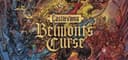
Castlevania has spent years watching other studios refine the genre that bears half its name. Castlevania: Belmont’s Curse, released October 14, 2026, is Konami’s answer: a 2D action-exploration game developed by KONAMI and Evil Empire, and published by KONAMI on PC via Steam and Nintendo Switch.
The setting is a deliberate break from Transylvanian castles. Paris burns in 1499, and monsters have overrun the city. The protagonist is Rose Belmont, daughter of Trevor Belmont, which ties the game to one of the series’ oldest storylines without requiring anyone to have played it. It is a smart piece of positioning: a new lead, a new city, and an old surname to anchor both.
Mechanically, the pitch rests on a few systems. The whip doubles as a traversal tool, so stages are built for swinging and pouncing as much as for walking. Multiple weapon categories and collectible Relics feed a build system. And defeated bosses, including Death, Medusa, Carmilla and Joan of Arc, become Arcana cards that grant spells and special actions.
Reception is positive but not unanimous. Nintendo World Report cited uneven design elements, and GamingBolt felt it fell short as a Metroidvania. Steam reception is broadly positive, though not without dissent. The criticism is specific and worth hearing: the action is the draw, and the map design is where opinions divide.
At $29.99, Konami has priced this as a mid-tier release, not a premium event. That decision shapes the whole value argument.
Key features
- Whip as weapon and traversal tool: Rose swings through stages like a trapeze artist and pounces on enemies from above, so movement and combat run on the same input.
- Multiple weapon categories: The whip anchors the kit, but the armoury is broad enough to support distinct approaches to a fight.
- Relics: Collectibles with offensive and defensive effects that combine with weapons into custom playstyles.
- Arcana cards: Defeated bosses convert into cards that grant spells and special actions, so each major fight pays out a new tool.
- Boss roster: Death, Medusa and Carmilla return from series tradition; Joan of Arc joins as a pointedly French addition.
- Paris, 1499: Gothic-inspired maps that mix new features with elements from classic Castlevania games.
- Paid release: $29.99 Standard Edition.
Analysis
The Whip as Verb
The most important design decision here is the refusal to separate movement from combat. In most games of this type, traversal upgrades and weapons live in different menus and serve different moments: one gets the player to the fight, the other wins it. Belmont’s Curse collapses the two. The whip that strikes an enemy is the same whip that carries Rose across a gap, and the pounce from above turns altitude into damage.
That fusion matters because it changes what a room is. A corridor with enemies in it is a combat encounter. A corridor with enemies and anchor points is a choice: fight from the ground, or take the high line and drop in. The design rewards momentum, and it gives the series’ signature weapon a purpose beyond reach and nostalgia. For a franchise whose whip has often felt like an inherited obligation, this is a sensible fix.
The risk is equally clear. A game built around aerial flow asks more of its level design than a grounded one does, because every stage must work both as a swing course and as an arena. When Nintendo World Report cites uneven design elements, that tension is the likeliest pressure point.
Builds: Weapons, Relics, Arcana
Layers of customisation sit on top of the whip. Multiple weapon categories set the baseline. Relics modify it with offensive and defensive effects. Arcana cards add spells and special actions on top.
The structure is sound because each layer has a different source. Weapons and Relics come from collection; Arcana come only from beating bosses. That gives the build system a spine: the most distinctive abilities are earned in the hardest fights, and each boss victory changes what the player can do next. Turning Death or Carmilla into a card is also a neat thematic move, since the trophy becomes a tool.
Whether the weapon categories are a strength depends on how distinct they are in practice. Breadth on a feature list is cheap; categories that demand different spacing and timing are not. The promise of custom playstyles holds only if Relic combinations produce different decisions and not just bigger numbers. Positive reception suggests the system has substance, but buyers who want deep theorycrafting should treat the build layer as supporting the action, not replacing it.
Structure and the Metroidvania Question
Konami describes the game as “action-exploration”, and the order of those words is telling. The systems that get the emphasis are the whip, the weapons and the boss-derived Arcana. The maps mix new features with elements from classic Castlevania games.
GamingBolt’s complaint that it falls short as a Metroidvania fits this picture. A game tuned for speed and aerial combat tends to favour forward motion over the slow, looping backtracking that defines the genre’s purists’ favourites. Players who measure these games by map density and the pleasure of a locked door finally opening may find the exploration half thinner than the action half.
We consider that a reasonable trade-off, though it narrows the audience. The series has an interconnected-castle template that many other games have already imitated; what it lacked was a modern combat identity. Belmont’s Curse chooses to build that identity first.
The Boss Roster
Death, Medusa and Carmilla are expected names. Joan of Arc is the bold one. Placing a French national icon in the boss roster of a game set in burning Paris is the kind of specific, local choice that the setting demands, and it signals that Paris is doing more than reskinning a castle. The Arcana system then gives each of these encounters mechanical weight beyond the fight itself.
Visuals & performance
The art direction has a clear brief: gothic architecture, a city on fire, and a heroine who spends much of her time in the air. Paris in 1499 is a strong canvas for that. Cathedral spires and rooftops justify vertical stages in a way a single castle interior cannot, and fire gives the palette a contrast to the series’ usual blues and greys. The decision to blend new features with elements from classic Castlevania games suggests a visual language that leans on recognition without depending on it.
Readability is the real test for this style. A game about swinging and pouncing needs anchor points, enemy silhouettes and hazards to read at speed against busy gothic backdrops. That is a design constraint the art must serve, and it is the first place a detailed 2D style can work against play.
A 2D game of this scope is likely to be light on hardware; buyers with specific technical requirements should check platform listings.
Platform nuances
Steam: A whip-swinging action game is designed for a controller; analogue movement and face-button combat suit it far better than keyboard and mouse, so PC players should plan to plug one in.
Nintendo Switch: A 2D action game is a natural fit for handheld play, and the stage-based swinging suits shorter sessions. The Switch version drew the coolest notable criticism: Nintendo World Report cited uneven design elements. That criticism targets design, not the port, so it applies to every platform.
Pricing and platforms: The Standard Edition costs $29.99. The game is available on Steam and Nintendo Switch.
Final verdict
Belmont’s Curse makes one big bet and mostly lands it. Turning the whip into the engine for both combat and movement gives the series a mechanical identity it has not had in years, and the Arcana system ties progression to the boss fights that have always been its showpieces. Reception points in the same direction, though not unanimously.
The reservations are real and narrow. The exploration side does not satisfy everyone, and at least one outlet found the design uneven. Neither undoes the central achievement, and neither is hidden by the price: at $29.99, the Standard Edition is a reasonable recommendation for the right audience. Buyers who want a map-first Metroidvania should adjust expectations.
We rate it a solid anniversary-adjacent action game first and a competent exploration game second: good, not essential.
Reviewed by the Rankeno RPG & Adventure Desk. Scores are out of 10; the overall score is the desk’s editorial judgement, informed by the four sub-scores above. How we review