
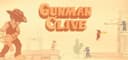

Overview
Most retro-styled platformers sell nostalgia. Gunman Clive sells discipline, which is harder to fake. Bertil Hörberg made it more or less alone under the Hörberg Productions name, and Hörberg Productions released it on Steam on January 3, 2014 at $1.99. It is a side-scrolling run-and-gun set in a cartoon Old West in the year “18XX”. That date is a wink at Mega Man’s “20XX”, and the reference tells you a lot about what the game wants to be.
The setup is thin on purpose. Bandits have kidnapped Mayor Johnson’s daughter, outlaws have taken over the frontier, and the gunslinger Clive rides out to fix it. That’s the whole story. The game’s real ambitions are in its level design: 16 short, hand-built stages of jumping, shooting and dodging, full of moving platforms, mine carts, rafts, collapsing bridges and hazards that kill in one hit.
Its place in the market is clear and a bit unusual. Gunman Clive is a budget title that never pretended to be anything else. It made its name on the Nintendo 3DS before arriving on PC. The response there has been largely positive, with the controls, the bosses and the art drawing praise and the length drawing the complaints.
That puts the game against a tough comparison. It isn’t competing with sprawling metroidvanias that ask for forty hours. It’s competing with the 8- and 16-bit cartridges it copies, games that were short, hard and meant to be played many times. Judged on those terms, Gunman Clive mostly succeeds. Judged as an evening’s entertainment for a modern PC owner, it’s a snack — a well-made one, but a snack.
The question is whether a snack-sized game can be more than a curiosity. In a few specific ways, it can.
Key features
- Classic run-and-gun platforming: Precise jumping and shooting in the style of Mega Man and Contra, with one-hit environmental hazards and enemies placed with care.
- 16 handcrafted stages: Each level adds a new idea: mine carts, rafts, collapsing bridges, moving platforms. Few ideas get reused.
- Multi-phase boss fights: Large, mechanical set-piece bosses that change patterns partway through and test what each stage taught.
- Weapon upgrades: Pickups such as a spread shot change the options mid-level, Contra-style.
- Sketchbook 2.5D art: Full 3D models on a 2D plane, shaded to look like sepia pencil drawings on parchment.
- Alternate characters: Ms. Johnson, who floats down slowly using her dress, or a duck. Both change how the levels are played.
- Multiple difficulty settings: Built for replays and speedruns, not a single run.
Analysis
The Gameplay Loop
The basic verbs are run, jump and shoot. The quality is in the tuning. Clive’s jump has the right amount of commitment: mid-air steering exists, but not so much that bad timing gets forgiven. His shots travel at a readable speed. Enemies appear where they can be seen coming. That matters more than it sounds, because in a game where many hazards kill in one hit, fairness depends on clear telegraphing. Gunman Clive mostly telegraphs well.
The loop is the classic one: learn the layout, die, memorize, then come back and play it cleanly. Stages are short enough that dying doesn’t cost much, and checkpoints keep the loop moving — the design rarely puts a player more than a minute or two from where a run failed. For a game this willing to kill, that pacing is the right call.
Level Design: One Idea, Then Move On
This is where Gunman Clive separates itself from most retro-styled indies. Every stage is built around a distinct gimmick, and the game drops each gimmick before it gets stale. A mine-cart level asks the player to read the track ahead while enemies shoot. A raft stage turns the screen into a slow scroll that can’t be controlled. Collapsing bridges punish hesitation. The enemy roster keeps pace: cowboys, cannons, mechanical contraptions, and ducks, which are funnier than they have any right to be.
The upside is variety packed tightly into a small game. Nothing feels padded. The downside is the other side of that coin. Because each idea gets one level, almost none of them get developed. A great mine-cart stage ends before it can build to a harder second act. It’s easy to leave a level wishing it had a sequel — and in a sense it did, because Hörberg went on to make Gunman Clive 2.
Bosses
The bosses carry the game. They’re big, they’re mechanical, and they come in multiple phases that change the attack pattern just as things get comfortable. The best of them are memory tests dressed up as spectacle: the second phase takes a few attempts, its rhythm is learnable, and beating it feels earned. They are the clearest evidence that this is the work of someone who studied Capcom’s NES-era bosses closely instead of just admiring them.
Difficulty and Its Friction
The common criticism holds up on inspection. Difficulty spikes exist, and one-hit hazards can feel cheap when a platform’s edge or a falling object isn’t perfectly readable against the sketch-style art. The game is never unfair in a systemic way, but it has moments where a death looks like the art’s fault rather than the player’s. The multiple difficulty settings soften this a lot. Newcomers can drop down a level, and veterans can go up to find the game the speedrunners play.
Alternate Characters: Real Replay Value
Ms. Johnson and the duck could have been throwaway costumes. They aren’t. Ms. Johnson’s slow, floating descent changes how gaps and vertical sections get approached, and some precision jumps become simple while others get trickier, because floating means less control over where a landing goes. That’s the right kind of replay feature. It changes how the same levels read, rather than just changing the sprite.
Length
The credits arrive in a single short sitting — roughly an hour for most players. That’s a fact, not an exaggeration, and it’s the first thing anyone mentions about the game. Whether it counts as a flaw depends on how it’s played. Played once and shelved, Gunman Clive feels thin, even at $1.99. Replayed on higher difficulties, with other characters, or against one’s own best times, the short runtime becomes the point. A one-sitting game can be learned completely, and mastery is what this genre has always been about.
Visuals & performance
The look is the game’s calling card, and it holds up. Hörberg uses full 3D models drawn on a 2D plane, then shades everything to look like sepia pencil sketches on parchment. The result reads like a Western dime novel come to life. It’s distinctive, consistent, and sets the game apart in a crowded field where nearly every competitor uses pixel art.
The cost is readability. A nearly single-color palette makes it harder to separate foreground hazards from background detail, and the art usually solves this with careful use of contrast. Usually, not always — a few hazards sit right on that line. Bosses and enemies, on the other hand, are designed to stand out clearly against the backgrounds.
As for performance, a 2D game of this scope is light on hardware, and its simple menus and quick restarts suit a game meant to be replayed.
Platform nuances
On Steam, Gunman Clive is a PC port of a game that found its audience on a handheld, and in places it shows. Keyboard controls work, but this is a game designed for a d-pad and face buttons. Plug in a controller if one is available. The precise jumps and quick direction changes are built for a gamepad.
The PC version’s big advantage is the screen. The sketch-style art benefits from a larger display, where its line work and shading hold up better than on a small handheld screen. The tradeoff is that the format fits the platform less naturally. A 3DS game finished in an hour on the couch fits that handheld perfectly. On a desktop, the same sitting can feel slight unless there’s a reason to come back for replays. At $1.99, it’s an easy impulse buy, which takes most of the sting out of that.
Final verdict
Gunman Clive knows exactly what it is and does most of it well. The controls are tight, the bosses are memorable, the art is distinctive, and it moves through its ideas without wasting time. Its weaknesses come from the same choices as its strengths. Brevity keeps it focused but means few ideas get developed, and the sketchbook art gives it a strong identity but sometimes hides the hazards that kill.
At $1.99, it’s a solid buy for anyone who grew up on 8-bit platformers or wants to understand why people still miss them — and a harder sell for anyone who plays a game once and moves on. Don’t expect a long game. Expect a short one that rewards replaying.
Reviewed by the Rankeno Action Desk. Scores are out of 10; the overall score is the desk’s editorial judgement, informed by the four sub-scores above. How we review