


Bottom Line: Bytten Studio built a Zelda-like that shuffles its own dungeons and lets reality rot in real time — a genuinely clever structural experiment that produces more filler corridors than it should. Buy it for the premise and the personality, not for the level design.
The Gameplay Loop
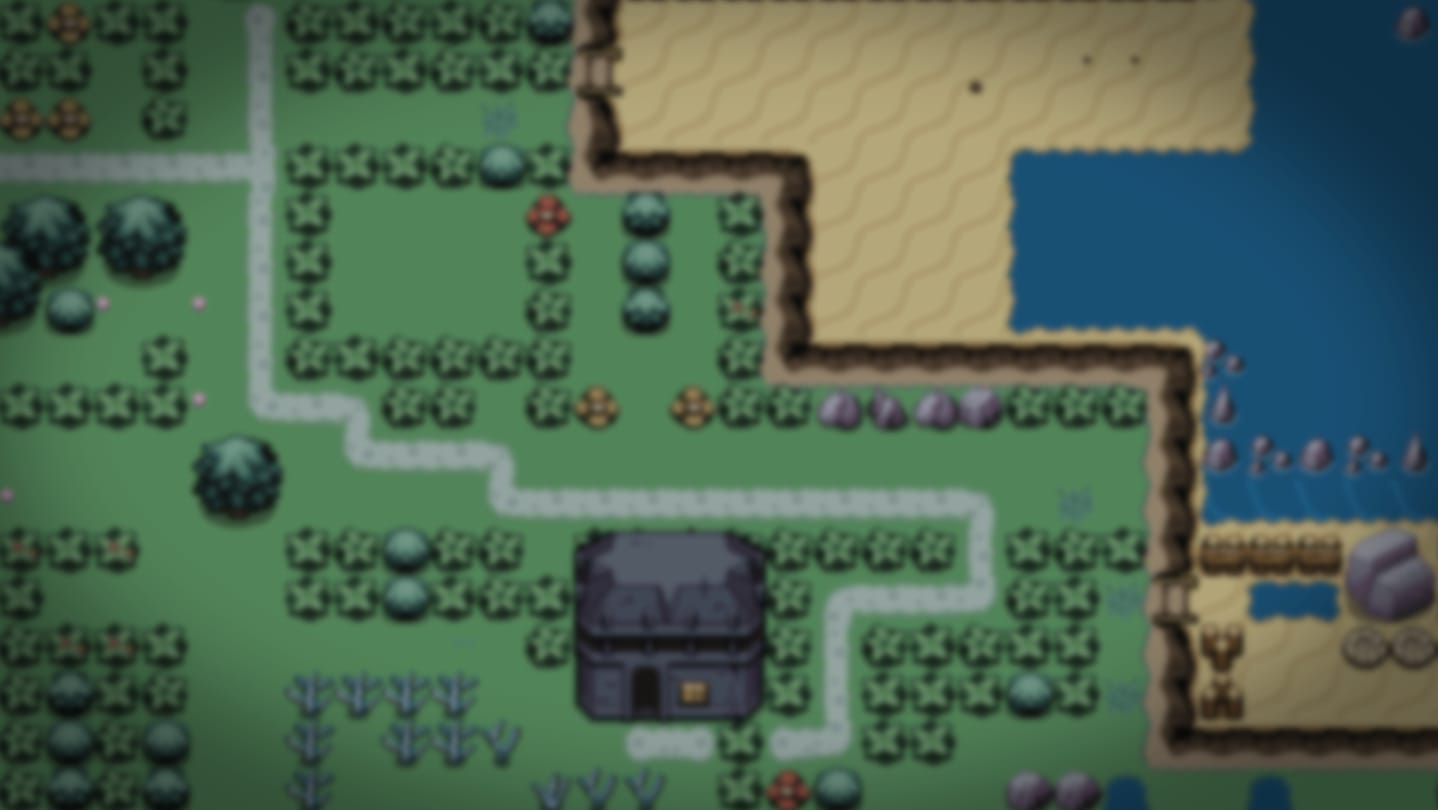
The moment-to-moment is orthodox and competent. You explore a top-down island, you fight in real time, you find a tool, the tool unlocks terrain, the terrain leads to the next dungeon. Anyone who has played a 2D Zelda will be fluent inside five minutes. Bytten understands the grammar — item-as-key, item-as-weapon, item-as-traversal — and the arsenal does honest double duty rather than splitting into "puzzle items" and "combat items," which is the lazy split most tributes fall into.
Where it diverges is structure. Because the game shuffles which dungeon holds which tool, it cannot assume you have any particular item when you walk through any particular door. That constraint is the whole story of this game, and it cuts both ways.
The upside is real. Progression becomes a genuine routing problem. You are not following a designer's staircase; you are reading what you have and figuring out what it opens. On a good seed, that produces the specific pleasure of a well-built randomizer — the sense that you and the game are negotiating rather than reciting.
The downside is that generative systems can only be as good as their most generic output, and this one leans generic often. The most consistent complaint in the Steam reviews is the right one: a large share of dungeon rooms feel like connective tissue. Blank arenas. A few enemies. A switch. In a hand-crafted Zelda-like, a mediocre room is a designer's mistake and there are maybe three of them in the game. Here, mediocre rooms are a statistical certainty, and they arrive in clusters. The puzzles suffer the most. Because no puzzle can depend on an item you might not have, the design ceiling drops — you get lever-and-block logic instead of the layered, multi-tool set pieces that make the genre's best dungeons memorable.
Combat and Bosses
The bosses are the strongest thing here, and it is not close. They are pattern-read encounters — telegraph, window, punish — and they demand you actually watch them rather than mash through. They are also, tellingly, the most hand-authored content in the game. That is the review in miniature: when a human designed it, it sings; when the algorithm designed it, it shrugs.
Standard combat is decent but under-supplied. Enemy variety is thin, and thin variety is exponentially more punishing in a procedural game than a linear one, because the generator keeps redealing from a small deck. By the middle stretch you have seen every hand.
The Corruption Mechanic
The glitch conceit is the most interesting thing Bytten does with theme, and it is more than dressing. Corruption escalates as you progress, warping tiles, enemies, and geometry — so the game gets visually louder and mechanically nastier in the same gesture. Difficulty curve and story beat, fused. Most games that use "glitch" as an aesthetic are cosplaying broken software. This one commits: the degradation is systemic, it compounds, and it changes how you read a room.
It also, by many players' accounts, goes too far at the end. The final dungeon draws sustained criticism for being confusing and unfairly hard — the point where corruption stops being expressive and starts being obstruction. When your readability mechanic is also your antagonist, you need a very careful hand on the dial in the last hour. That hand slips.
Writing and Onboarding
The writing is a legitimate highlight and the reason a lot of the goodwill exists. It is witty, self-aware without being smug, and the cast is genuinely likeable — Lenna's total unsuitability for heroism is played for real character rather than one joke repeated for eight hours. The four companions meaningfully reroute dialogue, which gives the multiple endings something to attach to beyond a checklist.
Onboarding friction is low. The game trusts you, explains little, and mostly gets away with it — though the shuffled progression occasionally leaves you wandering without a clear read on what you can currently open, which is the tax you pay for the whole design.