

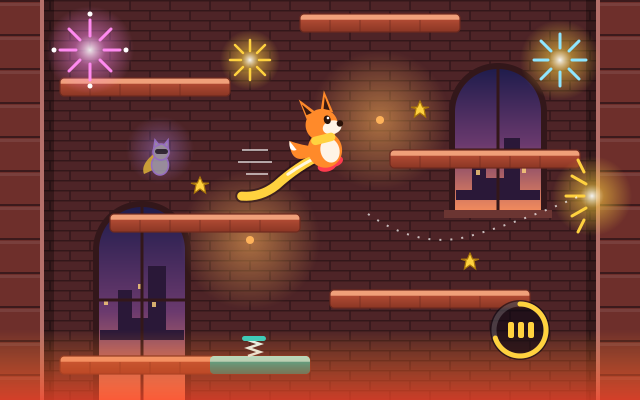
Overview
The year 2090 is a neon-soaked nightmare, but not the sterile, polished version we usually see in modern cyberpunk. This is the 2090 imagined by a 1987 OVA director on a caffeine bender. Developed by HAMMER95 and published by Epopeia Games, Mullet Mad Jack targets the part of the brain that misses the grainy texture of a rented VHS tape and the uncompromising difficulty of 16-bit arcade cabinets.
You play as Jack Banhammer, a “Moderator” with a mullet that defies the laws of physics and a digital dependency that would make a Silicon Valley executive blush. In this future, humanity is tethered to the internet, and Jack is literally dying for likes. To survive his ascent of a skyscraper filled with “Robillionaires” and rescue a kidnapped influencer princess, he needs dopamine. The only way to get it? Kinetic, stylish, and unrelenting violence.
From a market perspective, Mullet Mad Jack occupies a fascinating niche. It’s a bridge between the “boomer shooter” revival and the “ultra-kill” stylish action genre, all wrapped in a roguelite structure. While many indie titles attempt to mimic the 80s aesthetic, few understand the soul of the era as well as this. It captures the specific, slightly distorted energy of shows like Cyber City Oedo 808 or Genocyber, where the violence is as much a part of the art as the line work. It’s a bold positioning that bets entirely on the player’s desire for high-stakes, high-speed loops over sprawling, open-world filler.
Key features
- The Dopamine Timer: A literal 10-second countdown to death. Every execution adds precious seconds back to the clock, turning the entire game into a frantic, forward-moving sprint.
- Roguelite Progression: Over 50 power-ups allow for deep build customization between floors, turning Jack from a desperate survivor into a god-tier killing machine.
- VHS-Era Aesthetic: Fully animated cutscenes and a synthwave soundtrack built to feel authentic to the 90s “straight-to-video” anime boom.
Analysis
The Dopamine Loop
The core mechanic of Mullet Mad Jack is a clever piece of psychological design. By giving the player a literal 10-second lifespan, HAMMER95 eliminates the “stealthy archer” or “cautious peeking” habits that plague most modern shooters. You cannot wait. You cannot hide. To stop moving is to die. This creates a state of “flow” that is rare in the genre. Every kill adds to the score and buys another gasp of air.
The gunplay is designed to be crisp and heavily prioritized toward headshots and environmental interactions. Kicking a robot into an industrial fan or sliding through a door to blast a group of corporate goons is built to feel heavy and impactful. The game understands the “power trip” better than most AAA titles, largely because it makes that power feel earned through speed and precision.
Roguelite Synergies
While the arcade action is the hook, the roguelite strategy is the sinker. After each floor, you choose from a randomized set of upgrades. This is where the depth reveals itself. You might build a character focused on melee kicks and speed, or one that turns Jack into a long-range marksman who gains extra dopamine for distance kills. Some power-ups introduce trade-offs—increased damage at the cost of a faster timer—forcing you to weigh your mechanical skill against your survival instincts.
The synergy between these upgrades prevents the game from becoming a repetitive slog. One run might feel like a frantic struggle, while the next turns into a “broken” build where you are essentially teleporting across the screen in a blur of neon and lead.
Interface & Pacing
The UI is a chaotic explosion of 90s skeuomorphism and digital noise, yet it remains readable in the heat of battle. The timer is always front and center, pulsing as it nears zero, acting as the game’s heartbeat. However, the pacing is the real hero here. Floors are short, usually lasting under a minute, which mitigates the frustration of death. You’re never more than a few seconds away from jumping back into the fray.
The inclusion of a “No Timer” mode is a thoughtful, if slightly blasphemous, addition. It allows those who find the pressure too intense to simply enjoy the artistry of the environments. But make no mistake: the timer is the intended experience. Without the ticking clock, the game loses its teeth.
Visuals & performance
Visually, the game is a win for art direction over raw graphical fidelity. The use of vibrant purples, hot pinks, and CRT filters creates a world that feels “alive” in a way that ray-traced photorealism often misses. The character designs for the Robillionaires and the princess are archetypal in the best way possible, leaning into the tropes of the era with genuine affection. And a game of this retro-styled scope is light on hardware by design—a smart choice for a shooter where a single frame of latency can mean the difference between a headshot and a “Game Over” screen.
Platform nuances
On Steam, the game is built for precision. Mouse and keyboard provide the surgical accuracy the higher difficulty tiers and “Endless Mode” demand, and the flick-shots required to keep the timer alive are a natural fit for that setup.
On the Nintendo Switch, the design involves more of a trade-off. The game’s vibrant colors are suited to an OLED screen, but analog sticks lack the snap of a high-end gaming mouse. Still, as a handheld title, the “one more run” structure makes it a natural companion for short bursts of play. If the drop in precision is acceptable, the portability is a significant plus.
Final verdict
Mullet Mad Jack is a middle finger to modern gaming’s obsession with bloat. It is a lean, mean, and incredibly loud experience that knows exactly what it wants to be: a 10-second rush of pure adrenaline. While the campaign may wrap up sooner than some would like, the mechanical depth and stylistic confidence make it an easy recommendation for anyone who misses when games were about reflexes, mullets, and a pulse-pounding beat. It doesn’t just change the loop; it sharpens it.
Reviewed by the Rankeno Action Desk. Scores are out of 10; the overall score is the desk’s editorial judgement, informed by the four sub-scores above. How we review