
Bottom Line: Ozymandias strips the 4X genre down to its load-bearing walls and delivers a complete rise-and-fall arc in under an hour — a genuinely smart piece of design that runs out of things to teach you faster than its 52-empire roster suggests. Essential on Steam and Switch, compromised on a phone screen.
The Gameplay Loop
The rhythm here is almost aggressive in its clarity. Expand your borders. Found cities where the terrain defends you or the land feeds you. Push technology. Raise armies. Turn ends. Repeat, forty or fifty times, and it's over.
What makes this work is that every turn has weight because every turn has a cost you can feel. In a conventional 4X, a mediocre turn costs you nothing — you queue a builder, hit end turn, and the game politely waits. Here, the opportunity card system means a mediocre turn actively costs you the three other things you could have done instead. You get several options. You take one. The rest evaporate.
That single constraint does an enormous amount of structural work. It generates tension without adding complexity, which is the hardest trick in systems design. Most games manufacture difficulty by piling on subsystems; Ozymandias manufactures it by removing your ability to do everything. You are permanently behind on something. You are always choosing which fire to let burn. Forty minutes of that is genuinely taxing in the way a good strategy game should be.
Combat Without a Battlefield
The Power system will be the sticking point for genre purists, and I want to defend it more strongly than its own marketing does.
Abstracting combat isn't laziness — it's a deliberate reallocation of the player's attention. Tactical combat layers in 4X games are notorious time sinks that reward mechanical fluency over strategic judgment. You win because you know how to kite ranged units, not because you correctly assessed whether this war was worth fighting. Ozymandias throws that out. You commit forces, you accept the math, you live with the result. War becomes a question of timing and commitment rather than execution.
It is not without cost. There's no moment of tactical brilliance available to you, no clawing back a losing battle through cleverness. When the numbers are against you, they're against you. Some players want that friction. This game has decided, correctly for its own purposes, that they can find it elsewhere.
Where the Design Runs Thin
Now the criticism, and it's real.
Diplomacy is undercooked. For a game set in a period defined by tribute, dynastic marriage, and the intricate letter-writing of the Amarna correspondence, the diplomatic layer is thin to the point of being decorative. In a game this brief, every system needs to justify its screen space, and this one mostly doesn't. It reads as a system the developers knew they needed but couldn't fit into the compression scheme.
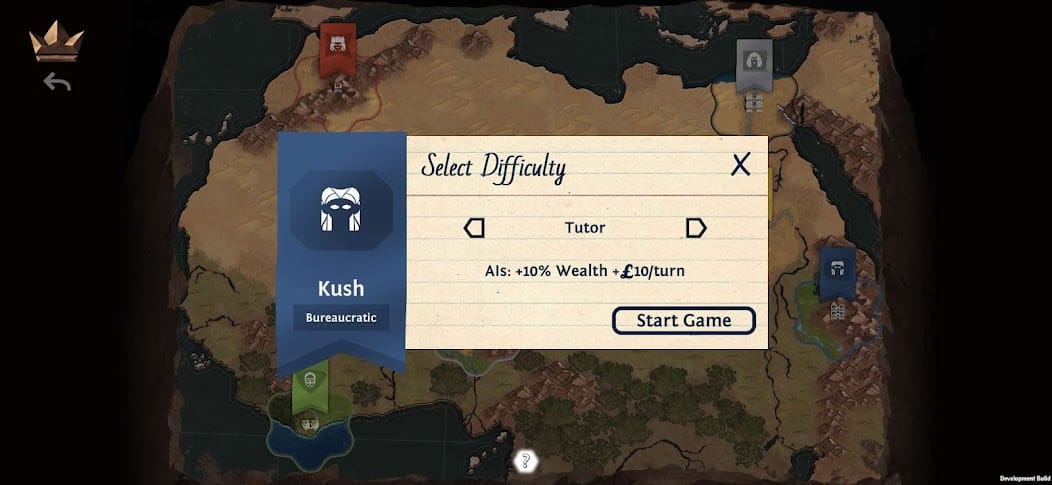
The AI ceiling arrives early. Building a non-cheating, data-driven opponent is the ethical choice and the harder engineering problem, and The Secret Games Company deserves credit for refusing the standard trick of handing the AI free resources on hard difficulty. But an honest AI is only as good as its decision model, and this one stops surprising experienced players somewhere north of the mid-difficulty tiers. Once you've internalized the card priorities and the expansion math, the ladder stops being a ladder. The escalating difficulty tiers pile on pressure without adding genuine cunning.
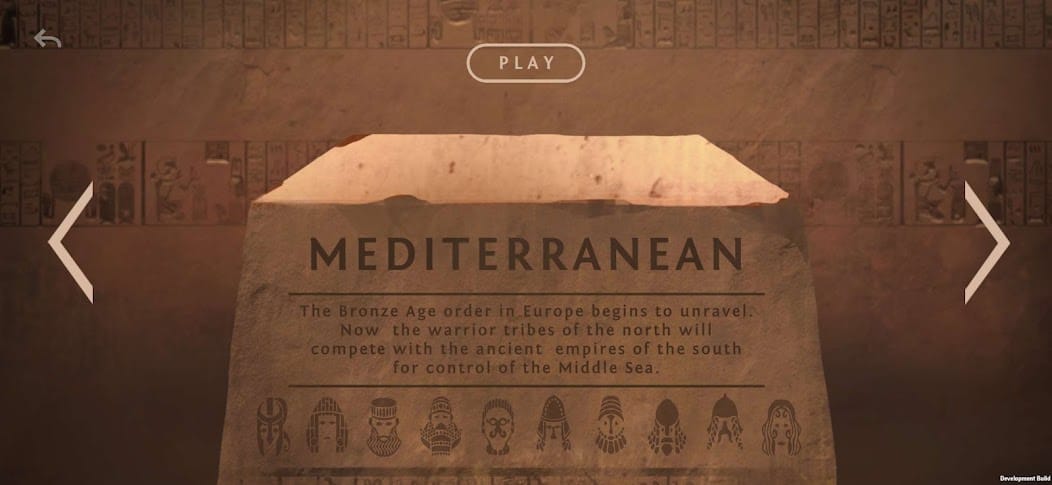
Mastery arrives faster than the content library implies. Fifty-two empires and eight maps sounds like a hundred hours. It isn't, because the empires are variations on an opening — a trait, a starting position, a nudge toward a strategy — rather than distinct rulesets. Once you've solved the core loop, the differences between run twenty and run sixty are largely cosmetic. The randomized victory conditions fight this valiantly and partially succeed, since chasing an unexpected objective forces you off your preferred line. Partially.
This is the honest shape of the thing: Ozymandias is a superb thirty-hour game wearing the content-count of a two-hundred-hour one. Thirty hours from a compact indie strategy title is an excellent outcome. Just know the shape of the curve before you buy, because the community complaints about repetition aren't wrong — they're the sound of people who ran out of game and were annoyed about it, which is a better problem than the alternative.
Onboarding
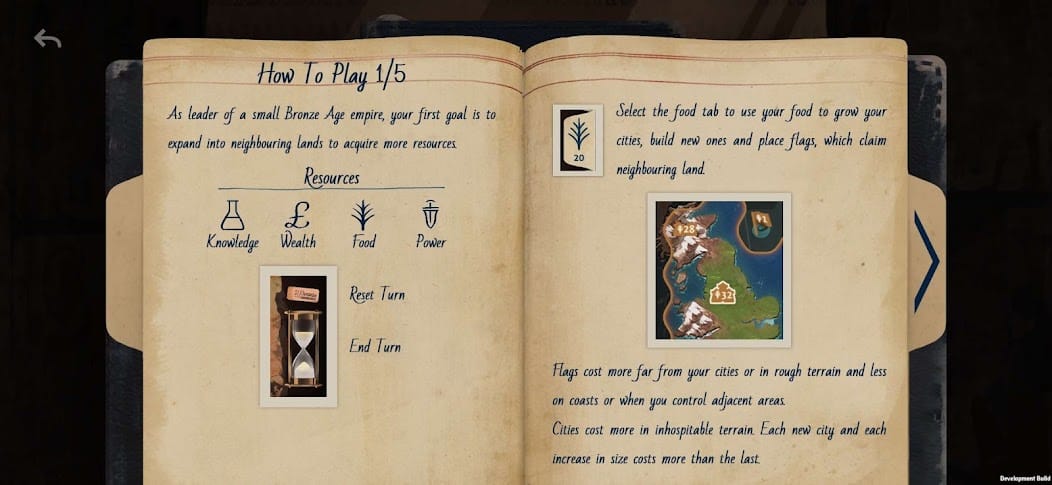
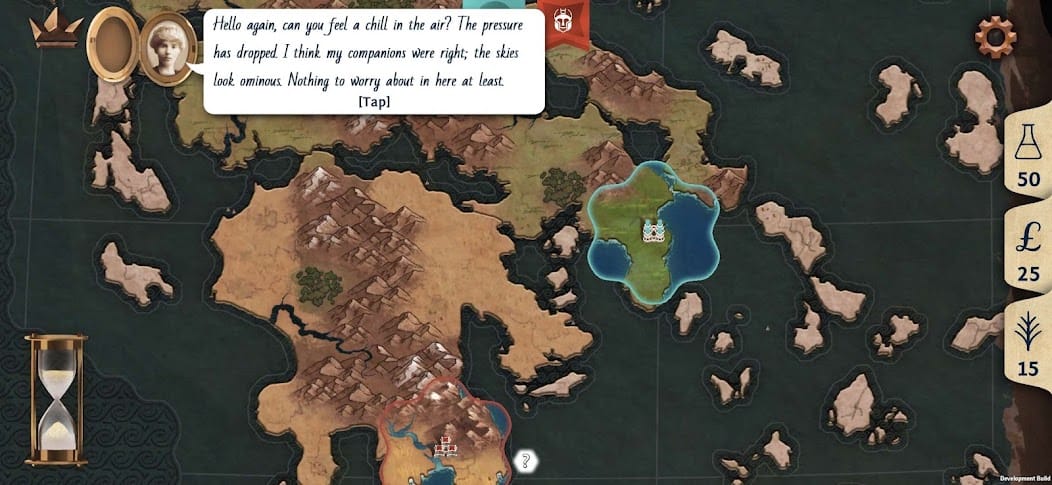
The Gertrude Bell tutorial campaign is the smartest content decision in the package. Rather than a tooltip gauntlet, it wraps the mechanics in a narrative frame, and new players absorb the systems as story beats instead of homework. It cuts onboarding friction hard for a genre that badly needs it.
It's also, I'd note, a fascinatingly loaded choice. Bell was an archaeologist and political officer whose fieldwork and mapmaking helped draw the borders of modern Iraq — an architect of a twentieth-century imperial settlement, now narrating a game named for a poem about imperial vanity. Whether that irony is intentional or accidental, it's more thematically interesting than anything most 4X games attempt.