


Bottom Line: Kaizen Game Works has built a genuinely strange, genuinely moving crime drama about the emotional labor of running a small business, wrapped in a floaty open world that isn't nearly as good as the writing it's carrying. Buy it for the mascots. Forgive it for the truck.
The Gameplay Loop
The core loop is a triangle: drive → recruit/assign → resolve crisis → reinvest. You take the truck out, you find junk and people, you convert people into Hero Cards and mascots into revenue, and you spend the revenue on making the truck better at finding more people. It's clean on paper. In practice it's lopsided, and the lopsidedness is worth being specific about.
The recruitment and assignment layer is where the game is sharpest. Mascots aren't units — they're employees, with the neuroses that implies. One is terrified of children. One has a substance problem. One is a walking piece of industrial equipment with a stalled career and a superiority complex about it. Assigning a mascot to the wrong job doesn't just produce a stat penalty; it produces a small, specific humiliation that the game remembers. Kaizen has made the management sim's least examined idea — that your resources have interior lives — into its central mechanic, and it changes how you play. I found myself benching a profitable mascot because they'd had a rough week. No management game has made me do that before.
The Hero Card system is the clever structural bridge. Befriending a townsperson yields a card; cards get spent in the rescue encounters that punctuate every job. So the open world's social content feeds directly into the crisis resolution content, which feeds back into agency reputation. It's a tidy economy of relationships, and for the first ten hours or so it's a strong hook — every conversation is potentially a resource.
Then it starts to sag. The rescue minigame has a shallow decision space: you're matching card attributes against incident requirements, managing a stamina-ish cost, and hoping the RNG cooperates. Once you've built a deep enough deck, the tension evaporates. This is the game's most repeated interaction and its least interesting one, and across a long runtime that math turns punishing. By the back third I was clearing rescues on autopilot to get back to dialogue. That's a design failure — the connective tissue shouldn't be the part you're waiting out.
Traversal and the Open World
The kei truck is a problem, and I want to be fair about what kind of problem it is. It's not broken. It's loose — floaty in the air, imprecise on landings, with a weight model that never quite communicates where the vehicle will end up. On a straight road it's fine. The moment the game asks for precision, especially after you've bolted on glider wings and nitro, it becomes a negotiation rather than a skill expression. Critics have hammered this consistently and they're right.
What complicates the criticism is that the looseness is partly the point. The truck is supposed to be a piece of junk held together by ambition. There's real comedy in launching a rust-bucket off a hillside and watching it commit to physics it clearly wasn't built for. But comedy doesn't excuse the collection routes and secret-hunting that ask you to control the thing carefully. Kaizen wanted a joke vehicle and a traversal system, and those two goals fight each other for the whole game.
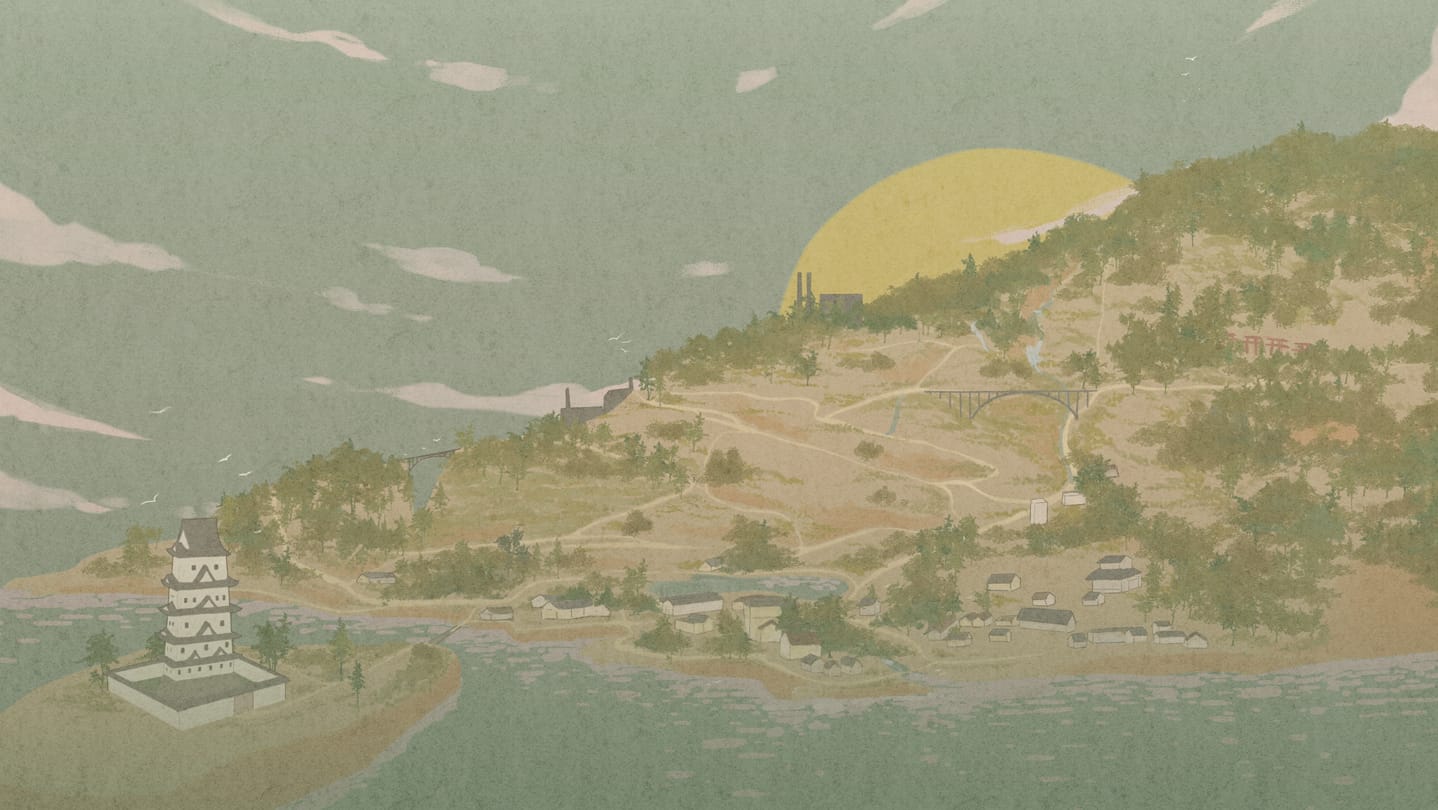
Kaso-Machi itself is beautifully realized as a place and mediocre as a playground. It's decaying, specific, and full of the visual grammar of Japanese rural depopulation — shuttered storefronts, weeds through concrete, shrines nobody tends. Between story beats, though, it can go inert. The density of things worth driving toward doesn't scale with the size of the map, and the scavenging exists mostly to give the truck something to do. If you're a player who needs the open world to justify itself independently, this one won't.
Writing and Pacing
The script is the product. It's funny in a way that's genuinely hard to engineer — the humor comes from characters taking ridiculous circumstances completely seriously — and the noir plot underneath is properly constructed, with a reveal that recontextualizes Michi's exile rather than just explaining it. The voice cast sells material that would collapse under flatter delivery.
The pacing is uneven. There are stretches, particularly mid-game, where the management sim is running on rails and the mystery goes quiet, and the game hands you an open world it hasn't given you a reason to care about that hour. A tighter edit would have made this a much easier recommendation. It's a game that's roughly 20% too long for its systems and exactly the right length for its story, which is an uncomfortable place to land.