
Overview
The shoot ‘em up is a genre with a memory problem. Every few years, someone “reinvents” it, and the result is either a roguelite wearing a shmup’s skin or a nostalgic wad of pixel art aimed exclusively at people who remember feeding quarters into a Raiden cabinet. Sky Force Reloaded, from Poland’s Infinite Dreams, does neither. Instead, it does something almost more radical: it takes the mid-2000s arcade shooter—stars cascading from exploded enemies, medals for playing well, a slowly ascending difficulty curve—and renders it with the visual fidelity of a modern console title.
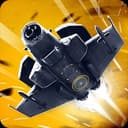
The game is a sequel in spirit to 2004’s Sky Force and 2011’s Sky Force Anniversary, but “Reloaded” is where the formula crystallized. You fly a plane down a scrolling vertical gauntlet of tanks, turrets, helicopters, and finally colossal end-of-stage bosses, mopping up enemy fire patterns and hoovering gold stars off the screen. Those stars are the currency of everything: upgrade your hull, your shields, your magnet, your sidekicks, and eventually buy entirely new aircraft. Around that spine, Infinite Dreams has layered a startling amount of content—15 stages across multiple difficulties, nine unlockable planes, rescued crew members, hidden collectibles, medals, local co-op, and a Weekend Tournament endless mode with global leaderboards.
The game’s store rating sits at 4.8 out of 5 from 11,434 ratings. The recurring complaint isn’t about the shooting. It’s about the economy. But more on that below.
Key features
- 15 stages, multiple difficulties: Each stage supports Normal, Hard, and Insane tiers, with score and medal incentives for replaying.
- 9 unlockable planes: Distinct hulls with unique stats and playstyles, from the balanced starter craft to heavy-hitting late-game unlockables.
- Deep upgrade economy: Stars collected in runs feed a persistent upgrade tree covering firepower, shields, magnets, missiles, and wingmen.
- Medals and objectives: Per-stage challenge medals (rescue all crew, kill 100% of enemies, finish without dying) provide structure beyond score-chasing.
- Local co-op: A second player drops in on the same screen—a rare and welcome feature in the genre.
- Weekend Tournament: Endless stages with rotating conditions and global leaderboards.
- Production values: Professional voiceover, an excellent electronic soundtrack, and lavish particle-heavy visuals.
Analysis
Gameplay Loop
Sky Force Reloaded’s central trick is that its loop is a closed economic system, and it understands the psychology of that system. A typical run proceeds in three phases. First, you fly the stage, surviving, killing, and collecting. Second, you’re rewarded—not just with a score, but with stars in quantities calibrated to your performance. Third, you spend those stars on upgrades that make the next run measurably more successful. This is the dopamine loop of an idle game welded to the skill ceiling of an arcade shooter, and on paper it’s a potent combination.
Here’s the honest tension, though: the loop is calibrated so that a skilled player on a fresh account will still fail. Not because of reflexes—because of numbers. Your starting plane is underpowered against bosses that expect a partially-upgraded craft, which means the design quietly mandates early replays of stages you’ve already beaten. This is the genre’s version of onboarding friction, and it’s a deliberate design choice. On the free-to-play mobile builds, that friction funnels toward IAP star packs. On the premium Steam and Switch versions, the same grind exists but pays out in patience rather than cash. The design is identical; the monetization changes its moral valence entirely.
To Infinite Dreams’ credit, the grind is always productive. You’re never replaying a stage for nothing—there’s a crew member you missed, a medal you didn’t earn, a hidden bonus chest tucked behind a cliff face. The medal system deserves particular praise: earning “kill every enemy” or “rescue all crew” forces you to engage with stages in ways pure survival never would. It turns the game from a linear gauntlet into a collectathon without ever sacrificing the core shooting.
Difficulty and Co-op
The three-tier difficulty structure is smartly implemented. Hard and Insane don’t just add health to enemies; they change bullet density and patterns in ways that reward pattern memorization—the classic shmup skill. Insane difficulty is clearly tuned for the leaderboard crowd.
Local co-op is the sleeper feature. On a shared screen, one player’s magnet and one player’s firepower create genuine tactical texture—who grabs the stars, who covers the flanks. It’s couch multiplayer in a genre that had largely abandoned it, and it’s the strongest argument for owning this on a TV rather than a phone.
Interface
The UI is clean and readable mid-action, which is the only test that matters for a bullet-hell adjacent game. Danger is communicated through color and animation rather than HUD clutter, and the upgrade menus—while deep—organize themselves into digestible iconography. The menus are built for a large catalog of upgrades, though, and that depth means newcomers face a wall of icons before they know what any of it does.
Visuals & Sound
This is a gorgeous game, full stop. The stages read as miniature dioramas—deserts with real parallax depth, industrial complexes with animated conveyor machinery, ocean levels with convincing water simulation underneath your aircraft. Explosions are meaty and layered, with debris, shockwaves, and screen shake deployed with restraint. Bosses are the showpieces: screen-filling mechanical beasts with destructible components and multi-phase fights that feel authored rather than generated.
The electronic soundtrack is a highlight—driving, professionally produced, and mixed so it never fights the action for attention. The voiceover is serviceable-to-good, adding arcade flavor without becoming grating. As a 2D game of this scope, it’s light on hardware by design, and the art direction is built to stay readable even when the screen is at its densest.
Platform nuances
- iOS / Android: Touch controls are the natural fit for the format—the finger-as-plane scheme is as old as the App Store and remains the genre’s best mobile control scheme. The catch is that these builds carry the free-to-play monetization structure (wait timers, star purchases), which undercuts an otherwise premium-feeling experience. On mobile, this game demands patience or a wallet.
- Steam: Mouse and gamepad support give desktop players options, and the premium price removes the grind’s financial sting entirely. The best value proposition, particularly during sales.
- Nintendo Switch: Arguably the definitive version. Handheld touch controls plus docked co-op on a TV means the best of both form factors. Local co-op on a couch is where this game sings.
Final verdict
Sky Force Reloaded is a rare resurrection that improves on the original without apologizing for it. Infinite Dreams understood that the economy of mastery—die, earn, upgrade, return stronger, and finally clear the run that beat you—was what made arcade shooters great. The star grind is a real flaw, and on mobile it’s a flaw with a price tag attached. Buy the premium version on Steam or Switch, and what you get is a generous, beautiful, mechanically dense shooter that we recommend to genre fans with the patience for its economy. The arcade never died. It just upgraded its engines.
Reviewed by the Rankeno Action Desk. Scores are out of 10; the overall score is the desk’s editorial judgement, informed by the four sub-scores above. How we review