

Overview
Most puzzle games ask you to find the answer. Stacking asks how many answers you can find, and whether any of them can involve a well-timed burp.
Stacking comes from Double Fine Productions, the San Francisco studio run by Tim Schafer. It grew out of the studio’s internal Amnesia Fortnight prototyping sessions, when Double Fine moved away from big-budget retail games and towards smaller, stranger, downloadable projects. It sits in that lineage with the same confident weirdness, and it is among the more complete games of that period.
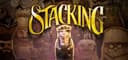
The premise is pure storybook. The world is populated entirely by Russian nesting dolls, dressed in the look of an early-1900s silent film. You play Charlie Blackmore, the smallest member of a family of chimney sweeps. When an industrialist known only as “the Baron” forces Charlie’s siblings into child labor, the tiniest doll in the world sets out to free them and break the Baron’s grip on society. The Dickensian setup is played half for pathos and half for slapstick, and the writing handles both registers with more grace than you’d expect from a game about wooden figurines.
In today’s market, Stacking is a budget-priced, evergreen curiosity: a short adventure that sells on personality rather than scale. Its Steam reception has stayed positive long after launch, and that durability matters. Plenty of games from the early-2010s download boom looked novel at the time and now feel like tech demos. Stacking still feels like a finished thought.
It is not a hardcore puzzler, and it doesn’t pretend to be one. It is closer to a playful sandbox dressed up as an adventure game, and it rewards people who poke at its systems more than people who race to the credits.
Key features
- The Stacking Mechanic: Charlie can hop into any doll exactly one size larger, take control of it, then chain upward into bigger dolls. Each stack keeps the smaller dolls inside, and whichever doll is outermost sets your abilities.
- Ability-Driven Puzzles: Every doll type has one unique action. A fan-wielding lady blows people over, a mechanic repairs machinery, a valet opens locked doors, and a lower tier of comic dolls slap, burp or otherwise misbehave.
- Multiple Solutions per Challenge: Most puzzles support several valid solutions, and the game tracks which ones you’ve found, which quietly invites you to go back and try again.
- Collectibles and “Hi-jinks”: Optional goals include completing rare doll sets and performing “hi-jinks,” comic stunts pulled off by using abilities in unexpected contexts.
- Varied Locations: The adventure moves through train stations, a zeppelin and a cruise ship, and each works as a compact, dense puzzle hub.
- Silent-Film Presentation: Intertitle cards, a piano-led period soundtrack and handcrafted-looking environments give the whole thing a storybook texture.
Analysis
The Core Loop: Possession as Puzzle Language
Stacking’s central idea is simple enough to explain in one sentence, and it holds up for an entire game. You are small. Small is useless. So you get bigger by climbing inside someone else.
The size constraint is the clever part. Because Charlie can only enter a doll one size up, every desirable ability sits behind a small logistics problem. You spot the doll you need, a porter perhaps, and then work backward. Which doll is one size smaller than the porter? Where is it standing? Can you reach it from here? These chains turn every level into a light resource-routing puzzle before the “real” puzzle even starts, and they make simply walking around the hub feel like reconnaissance.
Once you’re inside the right doll, the abilities do the talking. Double Fine gives each doll one action and no more, and that restraint is the smartest design decision in the game. There are no skill trees, no upgrades and no inventory clutter. You have a vocabulary of verbs spread across a crowd of characters, and the puzzle is working out which sentence to write.
Multiple Solutions: The Game’s Real Hook
Most adventure games suffer from moon logic, where the designer has one answer in mind and your job is to read their mind. Stacking sidesteps this almost entirely. Its challenges have several valid solutions, and a checklist logs each one you find.
That structure changes the feel of the game. The design keeps a solution almost always near at hand, so dead ends are uncommon. The more interesting pull comes after you’ve solved something, when the tracker hints that three more approaches exist. Do you distract the guard with charm, knock him over with a gust of wind or cause a scene so embarrassing he abandons his post? The best solutions tend to be the funniest ones, and the game clearly knows this.
This is also where the hi-jinks system earns its keep. These are optional gags, such as using a particular ability on enough people or in a specific context. At their best they reward experimentation and produce genuine laughs. At their worst they become checklist busywork.
Difficulty and Pacing: The Honest Problem
This is the main criticism, and it’s a real one. Stacking is easy. Anyone who only wants to see Charlie’s story through will find the first solution to most puzzles with little resistance, and the credits are only a short adventure away.
For some players that’s a feature. The game never frustrates and never gates progress behind obtuse logic, which makes it an unusually gentle introduction to the adventure genre. But players expecting the brain-bending density of a classic point-and-click will find the critical path thin. Most of the game’s depth is optional, and if you don’t engage with alternate solutions, it will feel slight.
The optional layer has its own fatigue built in. Hunting down rare dolls to complete sets means sweeping the same hub areas repeatedly and scanning crowds for one specific figure. Some hi-jinks require doing the same comic action over and over until a counter ticks over. A slap gag is not built to survive that many repetitions. The completionist loop is noticeably weaker than the core puzzle loop, and it’s where the game’s small budget shows most.
Writing and Tone
The Double Fine house style is visible everywhere. Doll descriptions are wry, NPC chatter is dry, and the Baron is a satisfyingly mustache-twirling villain. The silent-film framing forces economy on the writing. Dialogue arrives in intertitle cards rather than voice acting, so jokes have to land in a sentence or two. That constraint sharpens the comedy instead of limiting it.
Underneath the gags is a surprisingly sincere story about family and exploited labor. It never gets heavy-handed, but it gives Charlie’s quest just enough emotional stakes to carry the lightweight puzzle structure.
Visuals & performance
Stacking’s art direction is its strongest asset, and it ages better than most games of its generation of downloadable titles. The dolls look like painted wood, with glossy lacquer, visible seams and slightly imperfect patterns, and the environments feel built from toy-shop materials like fabric, cardboard, brass and paper. The whole world has a tactile, handcrafted miniature quality, as if a craftsman built it on a workbench rather than a modeler in a 3D suite.
The silent-film layer ties it together. Title cards break up scenes, cutscenes lean into early-cinema staging, and the piano-heavy soundtrack borrows from period classical and ragtime to supply a constant, jaunty undercurrent. It’s a cohesive audiovisual identity. Few games commit this completely to a single aesthetic idea.
The UI is minimal and mostly stays out of the way. Solution trackers and collection screens are clean and legible, though the collection menus are built for browsing and get clunky once your sets and finds pile up.
Technically, Stacking is modest by modern standards, and that works in its favor. The stylized art hides its age, and a 3D game of this scope is light on hardware. Low-poly geometry that would look dated in a realistic game reads here as intentional toy-like simplicity.
Platform nuances
On Steam, Stacking is a PC port of a game originally designed around a gamepad, and it shows. The control scheme plays best with a controller: the camera, the stacking inputs and the one-button abilities all map naturally to a pad, and the relaxed pace suits couch play on a TV.
Mouse and keyboard work, but they add nothing, and the control scheme is not as natural as it is on a pad. An older port of this vintage carries occasional controller-recognition and resolution quirks — typical rough edges rather than dealbreakers. Plan on a few minutes of settings adjustment for high-resolution or ultrawide displays, and on some setups, expect that you might need Steam Input configuration to get everything behaving.
Its low hardware demands make it a good match for older laptops and handheld PCs, where a short, pick-up-and-play adventure with forgiving puzzles fits naturally.
Final verdict
Stacking is a reminder that one great mechanic, explored carefully, beats a dozen half-built ones. Double Fine takes a toy-box premise, dolls inside dolls, and turns it into a puzzle language that is easy to learn and fun to play with. The multiple-solution design is the real achievement. It changes the feel of a puzzle game from “find the answer” to “find your answer,” and then quietly dares you to find the rest.
Its limits are clear. It’s brief, it rarely pushes back, and its completionist extras lean on repetition. The art direction, writing and core loop are good enough that those flaws feel like the edges of a small game rather than failures of a big one — but they keep it from greatness. At a budget price, Stacking is a worthwhile pick for players who value wit and experimentation over challenge, and it remains one of the more distinctive things Double Fine has made.
Reviewed by the Rankeno RPG & Adventure Desk. Scores are out of 10; the overall score is the desk’s editorial judgement, informed by the four sub-scores above. How we review