
Overview
Stacklands, from the prolific Sokpop Collective, radically reimagines how a simulation can be interacted with. The game poses a compelling question: what if every element of a complex simulation—every resource, every person, every structure—was represented by a single, tangible card? The answer is an innovative, addictive, and frequently overwhelming experience that proves simplicity on the surface can mask immense depth. Players begin with a handful of villagers and an empty tableau, quickly discovering that the world of Stacklands unfolds not through menus or complex UI, but through the intuitive, tactile process of dragging and dropping cards. Combining a ‘Villager’ with a ‘Stone’ card might yield ‘Flint’, while two ‘Wood’ cards could construct a ‘Shelter’. This ingenious system transforms traditional resource gathering and crafting into a spatial puzzle, forcing players to manage their limited board space as diligently as their burgeoning economy. It’s a game that demands constant attention, strategic foresight, and a willingness to embrace chaos, offering a fresh perspective on what a simulation can be by stripping away layers of abstraction and presenting raw mechanics in a digestible, yet endlessly challenging, format. This minimalist approach extends to its charming visual style, making it accessible while simultaneously demanding deep strategic engagement.
Key features
- Card-Based Creation: The fundamental mechanic revolves around stacking cards to trigger actions, produce new items, and evolve your village. Combining disparate elements like a ‘Villager’ and a ‘Berry Bush’ to produce ‘Berries’ feels inherently logical and deeply satisfying. This system underpins all progression, from raw resource extraction to advanced crafting and even combat.
- Dynamic Economy: Players are building an economy as they survive. Surplus cards can be sold for ‘Coins’, which are then reinvested into ‘Card Packs’. These packs are the primary vector for introducing new villagers, resources, technologies, and challenges, ensuring a constant influx of novel strategic decisions and expanding the game’s scope incrementally.
- Strategic Resource Management: Success in Stacklands hinges on maintaining a delicate balance. Food production, material harvesting, and population growth must be carefully juggled against the ever-present threat of starvation, resource depletion, and hostile creatures. The finite nature of board space and the real-time demands of managing dozens of active cards create a constant, engaging tension.
Analysis
Stacklands is a model of elegant system design. Its core gameplay loop is simple: observe, combine, produce, expand, repeat. Yet, within this straightforward framework lies a strategic labyrinth that quickly escalates from tranquil resource gathering to a frantic symphony of micro-management. The early game is a period of pure discovery; the game deliberately offers a minimalist tutorial, pushing players into an experimental sandbox. This “learn by doing” approach is both a strength and a potential source of early friction. Every successful combination, every new card unearthed from a freshly purchased pack, feels like a hard-won revelation, reinforcing the innovative nature of its mechanics.
The true strength of Stacklands resides in how it leverages its card-stacking paradigm to inject fresh life into established simulation tropes. Managing villagers means physically moving their cards, often in rapid succession, to gather food, mine stone, or fell trees. When a wolf card appears, combat-ready villagers must be swiftly stacked upon it, transforming a passive resource game into an active, real-time tactical engagement. This constant state of flux, where cards are perpetually being created, consumed, and repositioned, forces players to think spatially and react quickly.
However, this inherent dynamism is also the source of the game’s most significant challenge. As the village grows, so does the sheer volume of cards requiring attention. The mid-to-late game can quickly devolve into a dizzying ballet of dragging and dropping, where a single missed food production cycle or a neglected combat interaction can spiral into catastrophic village collapse. This micro-management intensity becomes the game’s ultimate test, pushing the player’s capacity for parallel processing and rapid decision-making to its limit. While immensely engaging for those who thrive under pressure, it can become overwhelming for players seeking a more leisurely pace. The elegant simplicity of the early game gives way to a dense, sometimes exhausting volume of information and interaction, demanding a high degree of player investment to truly master. The constant threat of resource depletion, coupled with emergent combat scenarios, means there’s rarely a moment to breathe—a design choice that both fuels its addictive quality and contributes to its demanding nature. The innovation here lies in how the card metaphor is rigorously applied to create a distinct and memorable experience.
Visuals & performance
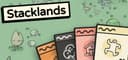
Stacklands embraces a charming, minimalist visual style that is both aesthetically pleasing and functionally brilliant. The card designs are clean, clear, and immediately recognizable, ensuring that even amidst a flurry of activity, players can quickly identify critical elements. This visual clarity is paramount, given the game’s reliance on swift card manipulation. There are no superfluous animations or distracting effects; every visual element serves a purpose, contributing to an efficient, uncluttered interface. And a 2D game of this scope is light on hardware, a sensible match for a design built around dozens of cards moving at once.
Platform nuances
Stacklands is best suited to platforms that facilitate precise, rapid input. On Steam, the mouse-and-keyboard setup is the natural interface. The ability to quickly click, drag, and drop cards with pixel-perfect accuracy makes navigating the escalating chaos of a sprawling village a manageable, albeit challenging, endeavor. The fluidity of mouse input is inherently suited to the game’s core mechanics.
The story on Nintendo, however, is more complicated. While the game’s charm translates well to the portable format, console controls are inherently less precise than a mouse. The accuracy required for efficient card stacking and rapid reactions is harder to achieve with joystick or D-pad navigation, particularly when the game’s intensity ramps up. The game is certainly playable on console, but the input method introduces an additional layer of friction that PC players avoid, underscoring the importance of input fidelity for games with such an active, spatial interface.
Final verdict
Stacklands proves that even the most established genres can be revitalized with a smart mechanic and a relentless commitment to its implications. While its hands-off tutorial and escalating demands will test the patience of some, those who embrace its unique language will find a strategic gem—a wonderfully tactile, absorbing, and distinctive simulation that adds another strong entry to Sokpop Collective’s experimental catalog. It’s a game that asks for your full attention and rewards it with satisfying strategic depth, and one we recommend with real reservations about its late-game intensity and console input.
Reviewed by the Rankeno Strategy & Sim Desk. Scores are out of 10; the overall score is the desk’s editorial judgement, informed by the four sub-scores above. How we review