
Bottom Line: Sunderfolk turns four phones into four character sheets and, in doing so, builds the most convincing digital board game night ever shipped. It's brilliant with friends, tepid alone, and its one-copy-for-four-players model is the most generous thing a publisher has done for co-op in years.
The Gameplay Loop
Strip away the hardware novelty and Sunderfolk is a competent, legible tactics game. That word — legible — is doing real work. Turn-based tactics live or die on whether players can read the board and predict outcomes, and the hex grid, the telegraphed enemy intents, and the card-based ability economy all serve clarity over complexity. Each turn you're choosing which card to spend from a limited hand, where to stand, and how your move sets up the person going next. There's no fog of rules. There's just the decision.
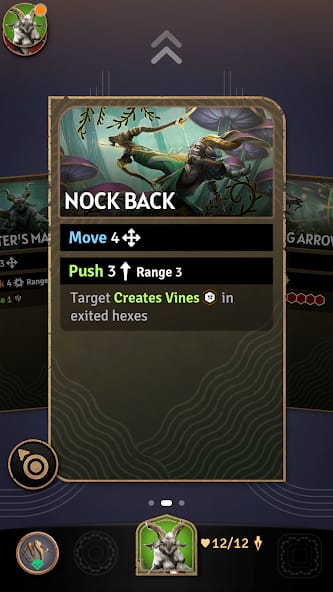
What elevates it is the information asymmetry. Because your cards live on your phone, nobody else can see your hand unless you tell them. That single design choice reconstitutes the most valuable dynamic in tabletop gaming: the table talk. Somebody has to say out loud, "I can pull two of them into a cluster if someone can burn them after." Somebody else has to volunteer. On a shared TV with four gamepads, all that information is already visible, and coordination degrades into four people silently optimizing in parallel. Here, coordination is verbal, social, and occasionally argumentative. That is not a UI decision. That's a game design decision executed through UI.
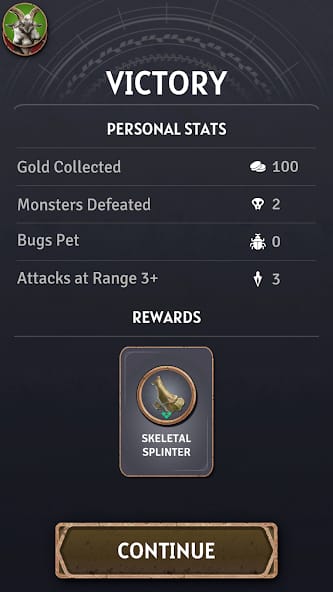
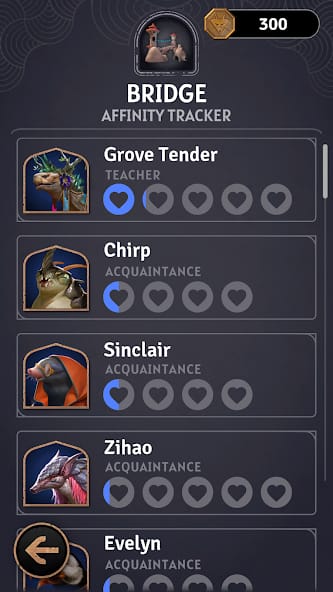
The village of Arden closes the loop. Missions generate resources; resources upgrade Arden; upgraded Arden makes missions easier. It's a well-worn structure, and Sunderfolk doesn't reinvent it. What it does well is pace it — the hub is short enough to feel like a breather rather than a chore, and the relationship-building with townsfolk gives players a reason to care about a place rather than a stat line.
The Interface
This is the best second-screen implementation I have used, and I've used a lot of bad ones. Wii U asymmetry, the PS Vita's Remote Play era, the whole graveyard of companion apps. Those failed because the second screen was supplementary — a map, a menu, something you could ignore. Here it's primary. Your phone is where you play. The TV is where you watch. Once you internalize that inversion, the whole thing clicks.
The app is fast. Card selection has minimal latency, targeting is precise, and the skeuomorphic card-hand presentation reads instantly to anyone who has held playing cards. Crucially, the rulebook is in the app, contextual and searchable, which quietly eliminates the single biggest barrier to tabletop tactics: the person who has to keep asking what an ability does. Nobody has to be the rules lawyer. The rules lawyer is in everyone's pocket.
Onboarding is the app's weakest stretch. The tutorial is thorough on first run and unskippable on subsequent ones, which is fine for your first session and genuinely irritating when you're teaching your fourth friend and have to sit through it again. Players have asked for a skip. They're right to.
Where It Breaks
Play Sunderfolk alone and you get a mediocre tactics game. This isn't a nitpick — it's the central caveat, and it appears in nearly every critical account of the game. Controlling four characters through four phone interfaces by yourself is administratively tedious and thematically pointless. The information asymmetry that makes the multiplayer sing becomes friction when there's nobody to hide cards from. If you're buying this to play solo, buy something else.
The story is charming and light. The writing has warmth, the anthropomorphic cast is well realized, and Anjali Bhimani's narration is the standout production element in the entire package — she carries the campaign's tone almost single-handedly, doing the work a good game master does at a real table. But the narrative pitches younger than the tactical layer does, and adults hunting for thematic weight will find pleasant rather than profound.
Online sessions are the technical soft spot. Disconnects happen, and the rejoin flow is clumsier than it should be for a game whose entire premise is frictionless joining. When a phone drops mid-encounter, getting back in is not the thirty-second experience the QR code promised. For a launch-window co-op title this is forgivable; a year on, it's the thing most in need of engineering attention. Class balance also draws consistent, if mild, complaints, and the campaign's length leaves committed groups wanting more.