Overview
The Excavation of Hob’s Barrow is a sharp reminder of why the point-and-click genre refuses to stay buried. Developed by Cloak and Dagger Games and published by Wadjet Eye Games, it eschews the familiar tropes of high fantasy or sci-fi for something far more grounded and unsettling: rural Victorian folk horror. Players step into the boots of Thomasina Bateman, an antiquarian whose academic interest in burial mounds draws her to the desolate, fog-choked village of Bewlay. What follows is a well-paced descent into paranoia.
The premise relies heavily on isolation. Thomasina’s contact is missing, and the locals are a hostile, secretive bunch who view outsiders with barely concealed contempt. This hostility is the core mechanical thrust. Every interaction is laced with hidden meaning, asking players to navigate a social minefield before they even reach the titular barrow.
In a market saturated with bloated open worlds and live-service treadmills, Hob’s Barrow offers a razor-focused, narrative-driven experience. It respects the player’s time and intelligence. Cloak and Dagger Games clearly understands the fatal flaw of vintage adventure games—the dreaded “moon logic” that halts momentum—and works to dismantle it. The puzzles here are grounded in the reality of the world. Players aren’t combining a rubber chicken with a pulley to bypass a guard; they are manipulating Victorian tools to navigate structural obstacles. It’s a subtle shift, but one that anchors the creeping horror in a tangible, believable reality.
Key features
- Logical Puzzle Design: Solutions require observation and deduction, firmly grounding the mechanics in reality rather than abstract absurdity.
- Modern QoL Implementations: A fast-travel map and an auto-updating journal remove the tedious backtracking and note-taking that historically plagued the genre.
- Strong Voice Acting: Samantha Béart’s commanding performance as Thomasina Bateman carries the emotional weight of the narrative.
Analysis
The Architecture of Tension
Hob’s Barrow succeeds primarily through its deliberate pacing. The horror here is not manifested in sudden jump scares or grotesque monsters chasing players down corridors. Instead, it is a slow, methodical tightening of the screws. The early hours are spent on seemingly mundane tasks: interviewing wary villagers, securing lodgings, and researching local lore. This deliberate pacing establishes a baseline of normalcy, which the game then systematically corrupts.
The narrative architecture relies heavily on Thomasina’s characterization. She is not a passive victim; she is a capable, rational Victorian scholar. Her logical worldview fracturing under the weight of Bewlay’s dark folklore provides the emotional anchor. When the supernatural elements finally bleed into the foreground, they feel earned. The climax delivers a pronounced tonal shift. Its suddenness may divide opinion, but it lands hard and demands discussion long after the credits roll.
Mechanics Without the Madness
The point-and-click genre is notorious for pacing-killing bottlenecks. The old drill: clicking every item in the inventory against every pixel on the screen in a desperate bid to trigger the next sequence. Hob’s Barrow is designed to eliminate this friction.
The puzzles are inherently logical. They require deduction rather than brute-force trial and error. Obstacles are usually telegraphed through dialogue or environmental clues, provided the player is paying attention. This design philosophy keeps the narrative momentum moving forward. Players are rarely stuck for long, which is crucial for maintaining the oppressive atmosphere. Frustration kills fear, and the developers clearly know this.
Further smoothing the friction are vital quality-of-life additions. A robust fast-travel system eliminates tedious backtracking across the moors. A detailed, auto-updating journal keeps track of objectives and essential clues, so the thread is never lost after a few days away from the game. These are not revolutionary features, but their execution here is confident, creating a user experience that serves the story rather than obstructing it.
Visuals & performance
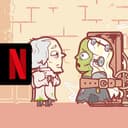
The aesthetic direction is a study in constraint. The pixel art is beautifully bleak, utilizing a muted palette of browns, greys, and sickly greens to capture the damp, oppressive gloom of the English moors. The character portraits are highly expressive, conveying a wealth of emotion and subtle menace that the low-resolution environment sprites cannot.
Audio is where Hob’s Barrow excels. The haunting, minimalist soundtrack swells to punctuate moments of revelation or dread. The standout technical element is the voice acting. The supporting cast delivers thick, authentic regional accents that add dense layers of texture to the setting. On the performance front, a game of this scope, built on a lightweight, retro-inspired engine, is light on hardware by design.
Platform nuances
On Steam, the traditional mouse-driven interface feels native. The precision of a cursor is the foundational language of this genre. The Nintendo Switch port handles the transition well, mapping the cursor to the analog sticks and utilizing the touchscreen for undocked play. By design, the touchscreen is the better fit on Switch, mimicking the directness of a mouse. Stick controls, while functional, inherently introduce a slight drag to the exploration process.
Final verdict
The Excavation of Hob’s Barrow is a well-executed piece of focused game design. By stripping away the frustrating mechanics that often hold classic adventure games back, Cloak and Dagger Games has crafted a clean vehicle for psychological horror. It uses its bleak aesthetic and strong audio to pull players into a world that feels aggressively hostile, rewarding curiosity with a mystery that is as compelling as it is disturbing. We recommend it to anyone who appreciates the dark, quiet corners of storytelling — with the caveat that its slow opening and abrupt ending ask something of the player in return.
Reviewed by the Rankeno RPG & Adventure Desk. Scores are out of 10; the overall score is the desk’s editorial judgement, informed by the four sub-scores above. How we review