

Overview
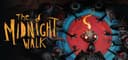
Amid high-fidelity graphics and procedurally generated worlds, “The Midnight Walk” is a defiantly artisanal project. Developed by MoonHood and published by Fast Travel Games, it launched May 8, 2025 on Steam at $13.49, and presents itself as an interactive, living piece of art. Its positioning is clear: a dark fantasy adventure for those who crave narrative depth, thoughtful exploration, and genuinely unique visual storytelling over fast-paced action. Every character, creature, and environment is handcrafted from real clay and animated through stop-motion techniques. The result is a ‘Burtonesque’ and ‘artfully grotesque’ visual vernacular that gives the world a tactile, almost unsettling presence. Players inhabit the role of ‘The Burnt One,’ a figure navigating a mysterious, shadowy realm. Their constant companion is Potboy, a loyal lantern creature whose illuminating flame is a critical gameplay mechanic. “The Midnight Walk” distinguishes itself by eschewing conventional combat, instead demanding intellectual engagement through environmental puzzles and strategic monster evasion. It’s a game designed to respect the player’s intelligence, asking them to observe, deduce, and adapt. With both standard and virtual reality modes, the game offers five distinct tales steeped in fire and darkness, each promising rich narrative threads and expansive exploration. It’s a deliberate, unhurried journey, and a strong argument for artistry and thoughtful game design in an increasingly homogenized digital landscape.
Key features
- Unique Claymation Aesthetic: Every visual element, from character models to sprawling landscapes, is sculpted from real clay and animated frame-by-frame via stop-motion. This choice yields a tactile, ‘Burtonesque’ visual identity that immediately sets the game apart from its peers, fostering an atmosphere of artistry and unsettling beauty.
- Narrative-Driven Exploration & Puzzles: “The Midnight Walk” prioritizes rich storytelling, intricate environmental puzzles, and clever monster evasion over traditional combat. Players must use observation, deduction, and Potboy’s illumination to navigate complex paths, unravel mysteries, and strategically bypass threats, providing deep, cerebral engagement.
- Dual Standard and VR Modes: The game supports both conventional gameplay and a fully immersive virtual reality experience. This dual functionality expands its accessibility, allowing players to choose their preferred method of interaction while the unique visual style and atmospheric tension carry across platforms.
Analysis
“The Midnight Walk” does not simply exist; it asserts itself. From the moment Potboy’s flickering glow cuts through the omnipresent gloom, it becomes evident that MoonHood has crafted something uncommon. The game’s core loop—exploration, puzzle-solving, evasion—is tightly designed. You are deciphering the environments as much as traversing them. The ambient storytelling is a highlight, weaving its dark fantasy narrative not through verbose exposition, but through the evocative visual language of its clay-forged world and the subtle interactions between ‘The Burnt One’ and Potboy.
The puzzle design is where “The Midnight Walk” shines. These aren’t abstract logic gates; they are organic extensions of the environment itself. A misplaced beam of light, a cleverly angled shadow, or an understanding of a creature’s patrol patterns becomes the key to progression. This demands a slower, more deliberate pace, a refreshing departure from the instant gratification often found in modern titles. The lack of combat might deter some, but for those weary of repetitive button mashing, it’s a welcome change. Evasion is a strategic dance with shadows and light, leveraging Potboy’s illuminating flame to both reveal paths and deter unseen horrors. This system is built to foster a sense of vulnerability and resourcefulness, making every successful navigation feel earned.
The decision to offer a VR mode alongside a standard experience is a bold one that appears to pay dividends. In VR, the fine detail of the clay models and the subtle nuances of stop-motion animation are amplified, drawing players further into its ‘artfully grotesque’ world. The sense of scale, the eerie quiet broken only by ambient sounds, and the direct control of Potboy’s light are, by design, transformative. This isn’t a tacked-on feature; it’s an intrinsic extension of the game’s core atmospheric strengths, making the environments feel less like a backdrop and more like a visceral presence. The narrative, delivered through environmental cues and subtle character interactions, rewards patient observation, building a lore that feels ancient and deeply unsettling. “The Midnight Walk” is a journey into a crafted nightmare, executed with uncompromising vision and precise mechanical design.
Visuals & performance
The visual direction of “The Midnight Walk” is its centerpiece. The claymation and stop-motion aesthetic isn’t a gimmick; it’s foundational to the game’s identity. The ‘Burtonesque’ quality isn’t an approximation; it’s an achievement, manifesting in exaggerated forms, melancholic palettes, and a tangible sense of handcrafted imperfection that somehow feels more authentic than photorealism. Character animations possess a peculiar, charming jerkiness inherent to stop-motion, which paradoxically enhances their expressiveness and contributes to the overall unsettling atmosphere. A 2D-styled game of this scope is light on hardware demands, and the design suggests the artistic ambition was matched with technical care. The atmospheric lighting, particularly the interaction of Potboy’s flame with the clay environments, is dynamically implemented, enhancing both the aesthetic and the gameplay. This is a game where visual style goes beyond surface appeal; it dictates the player’s interaction with the world.
Platform nuances
On Steam, “The Midnight Walk” leverages the platform’s broad reach to deliver its unique vision to a diverse audience. The option for both standard desktop play and virtual reality ensures flexibility. The desktop experience offers precise control over ‘The Burnt One’ and Potboy’s flame, while the VR mode transforms the game from an adventure witnessed to an adventure experienced. Interacting with the clay world in VR adds a layer of presence that traditional flat-screen gaming cannot replicate, making environmental puzzles feel more immediate and the looming threats more imposing. Input via standard controllers or keyboard/mouse for the desktop version, or motion controllers for VR, appears well-considered, catering to different player preferences without compromising the core gameplay.
Final verdict
“The Midnight Walk” is a strong achievement of artistic vision meeting careful game design. It carves out a niche entirely its own, proving that genuine innovation in interactive entertainment still exists. MoonHood has delivered a memorable, ‘Burtonesque’ journey into a clay-animated netherworld that lingers long after Potboy’s flame has extinguished. It’s an easy recommendation for anyone drawn to interactive art — with the caveat that its deliberate pace and grotesque streak won’t be for everyone.
Reviewed by the Rankeno RPG & Adventure Desk. Scores are out of 10; the overall score is the desk’s editorial judgement, informed by the four sub-scores above. How we review