
Bottom Line: Urnique Studio built a stealth game where you don't react — you author. Timelie's scrubbable timeline is the rarest thing in puzzle design: a mechanic that's genuinely new, fully understood by its own creators, and executed without a single wasted level. It's over in five hours, and you'll be thinking about it for months.
The Gameplay Loop
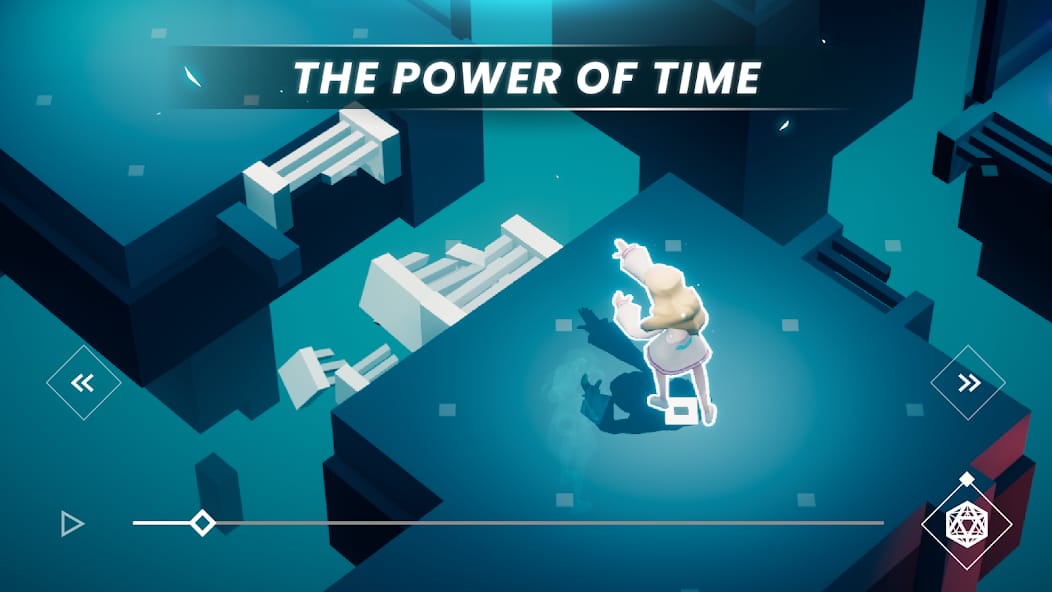
Here's what makes Timelie special, and it's a design distinction most reviews flatten: this is not a game with a rewind mechanic. It's a game where planning and execution occupy the same physical control.
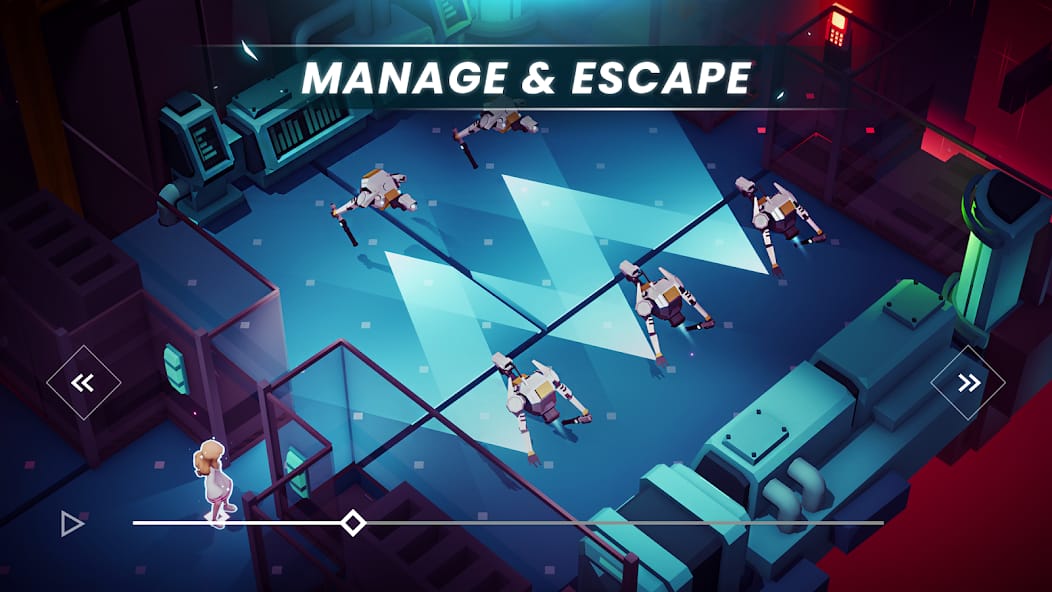
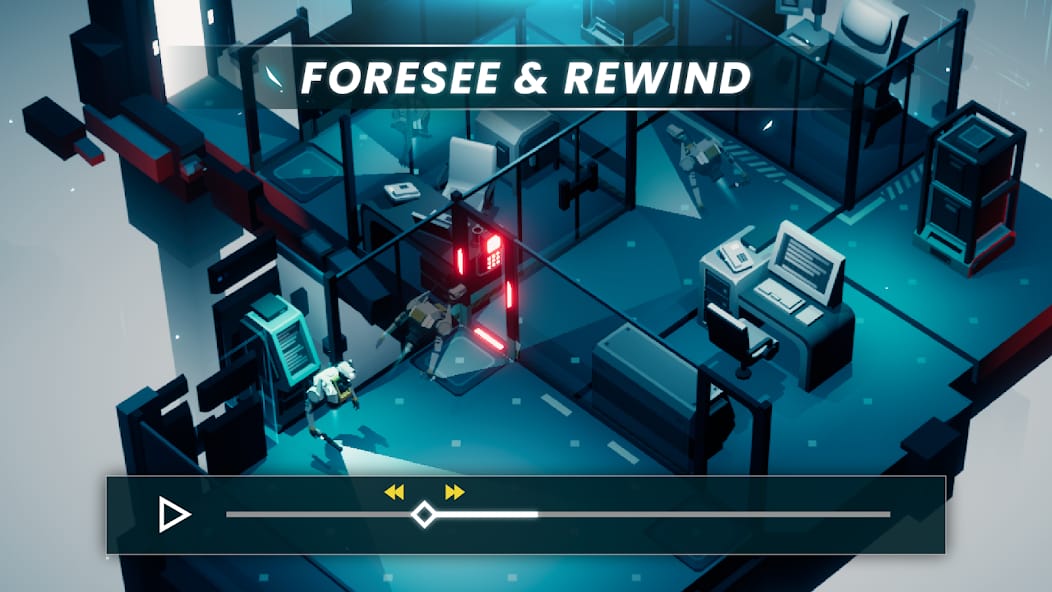
Compare it to Braid, the obvious ancestor. In Braid, you play in real time and rewind to correct errors — the timeline is a mulligan. In Superhot, time moves when you do — the timeline is a metronome. Timelie does something structurally different. You scrub ahead to observe a robot's patrol, note that it turns left at the four-second mark, scrub back to zero, plot the girl's path to exploit that window, then scrub forward again to watch your plan collide with reality. The level is a timeline you're editing. The playthrough is a render.
That reframing has a real consequence: failure stops costing you anything emotionally. There's no restart screen, no punishing reload, no lost progress. A robot spots you, the screen pulses, and you drag two seconds to the left and try a different line. The friction of failure — the thing that makes traditional stealth exhausting — has been engineered out. What's left is pure problem-solving, and the flow is extraordinary. I lost ninety minutes in a sitting without once feeling frustrated, only stuck.
The Two-Body Problem
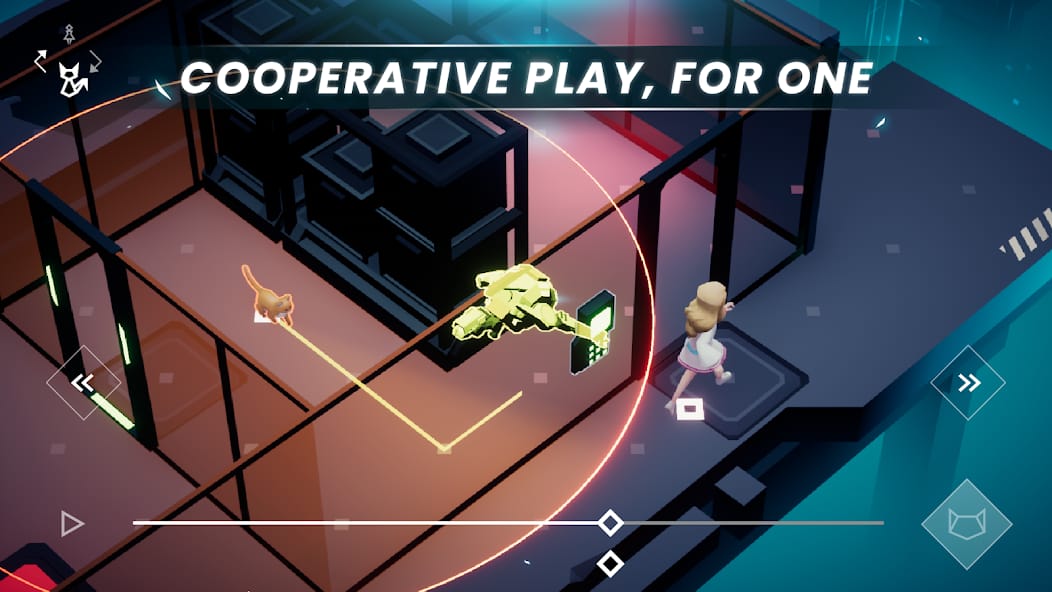
The cat is the design masterstroke, and it's where Timelie escalates from clever to genuinely hard.
Controlling one character on a timeline is a routing problem. Controlling two is a synchronization problem, and the difficulty curve of the entire game is really just the widening gap between those two skills. Early stages let you solve the girl's path first, then find something for the cat to do. By the midgame that no longer works. You'll route the cat into a room specifically to draw a patrol six seconds before the girl needs that corridor clear — meaning you have to reason backwards from a future state to a present action, for two agents at once.
That's a legitimately demanding cognitive load, and Timelie's UI carries it with almost no clutter: character markers on the scrub bar, ghosted paths, and clean visual telegraphing of robot vision. It's some of the most disciplined information design in the genre. The interface never explains itself and never needs to.
Where It Frays
I'll be direct, because the game deserves a real critique rather than applause. The back third loses some of its nerve.
The late chapters introduce robot types and hazards that narrow the solution space rather than open it up — you stop asking "what's the clever route?" and start asking "which of these four routes is the one the designer sanctioned?" Several stages tip into trial-and-error, and the scrub bar, ironically, enables that: because retrying is frictionless, the game occasionally lets you brute-force a solution you never actually understood. That's the shadow side of removing failure cost. The best puzzles here produce a click of comprehension. A handful of the later ones just produce a green light.
The story is the other honest sticking point. The wordless presentation is beautiful and I'd defend the choice, but "ambiguous" and "underwritten" can look identical from the outside. The ending lands hard if you've been building your own reading of the imagery, and lands like nothing at all if you haven't. Urnique bet everything on the player meeting them halfway. That bet mostly pays — but it is a bet, and the sizable minority of players calling the narrative opaque aren't wrong.
Total runtime is four to six hours. That's not a flaw by itself; it's a mechanic with a natural expiration date, and I'd rather have five tight hours than twelve padded ones. But it's a real factor in what you should expect to pay.