

Overview
Survival horror did not go away after the late 1990s. It changed. The fixed camera angles, the pre-framed rooms and the anxious count of every shotgun shell gave way to over-the-shoulder cameras, then first-person, then big-budget remakes that kept the mansion and dropped the old grammar. Tormented Souls, from Chilean studio Dual Effect and Abstract Digital and published by PQube, argues that the old grammar was never the problem.
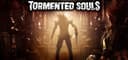
The setup is pure genre. Caroline Walker gets an anonymous photograph of twin girls who disappeared from Winterlake Mansion, an old estate that was converted into a hospital. She goes to investigate and wakes up naked in a bathtub, hooked up to medical tubing, with her right eye gone. From there the game uses the classic structure: a locked building with hidden wings, basements and an otherworld to map, unlock and survive. A strange priest and a reality-bending alternate dimension carry the mystery, and several endings reward players who dig further.
It sits in a clear niche. This is not a remake of an existing franchise, and it is not a retro parody either. It is a sincere, mid-budget recreation of the original Resident Evil and Alone in the Dark rhythm, rendered with modern lighting and aimed at players who miss that kind of friction. Its Metacritic score of 75 lands where the design aims: a game that serves its audience well and asks everyone else to meet it halfway.
That trade-off is the whole review. Tormented Souls is strong at the parts of 1990s survival horror that aged well: spatial puzzles, scarcity and dread. It is stubbornly faithful to the parts that didn’t.
Key features
- Cinematic Fixed-Camera Exploration: Every room is framed like a shot from a film. The camera works both as mood lighting and as a threat, because the angle decides what you can and cannot see coming.
- Layered Mechanical and Logic Puzzles: Keys, clues and combinable objects form a web of gates across the mansion. Most puzzles need you to remember something from three rooms back, not just find the item that fits a slot.
- Tape-Reel Save System: You can only save at tape recorders, and every save uses up a limited reel of tape. That turns saving into a resource decision and not a reflex.
- Darkness as a Mechanic: The lighter is a survival tool, not just a light source. Staying in the dark is dangerous in its own right, which adds a steady low-level pressure to exploration.
- Scarce Arsenal: The nail gun, shotgun and other weapons run on ammunition you will never have enough of, and healing items are rare. Avoiding fights is often the right call.
- Dual Control Schemes: Classic tank controls sit alongside a modern, camera-relative option, so you choose how much authenticity you want.
- Multiple Endings: The branching conclusions tie into the priest and otherworld mystery and give completionists a reason to go back to Winterlake.
Analysis
The Gameplay Loop: Map, Gate, Key, Repeat
Tormented Souls runs on the same engine as its inspirations: the locked door as a unit of progress. You find a door you can’t open. You find an object that doesn’t make sense yet. Twenty minutes later, in a room on the other side of the mansion, the two connect. Good survival horror has always done this, and Dual Effect does it with confidence.
The puzzles are the strongest part of the game. They are not the sliding-tile busywork that filled the genre’s weaker entries. Many are multi-stage mechanical puzzles that ask you to read the environment, cross-reference documents and combine inventory items in ways that feel physical and plausible. That quality comes from the game trusting you to hold a mental model of the building, not from it pointing you at a solution.
This design also creates onboarding friction, and the game does nothing to reduce it. There is no objective marker and not much hand-holding. Miss a note or a detail in the background of a fixed shot, and the game allows long stretches of wandering. Genre veterans will see that as the point. Newcomers will see it as padding. Both are partly right.
Scarcity and the Economics of Fear
Survival horror is really a resource-management game dressed up as horror, and Tormented Souls understands that. Ammunition is scarce, healing is scarce, and saves are scarce. Together they make every encounter an economic question: is this creature worth three nails, or is there a way around it?
The tape-reel save system is the sharpest of these pressures. Because saving costs you something, the design pushes you to hold off, and holding off means each unsaved minute adds risk. Reaching a recorder after a bad stretch is meant to land as real relief. It is an old design, and it still works because it turns the player’s own caution into tension.
The darkness mechanic adds a quieter layer. Having to keep your lighter ready makes light itself a tactical concern and gives exploration a pulse even when no enemy is on screen. It is a smart way to keep dread going through the long stretches between fights.
Combat and the Camera Problem
This is where the faithfulness starts to cost the game. Fixed cameras are great for composition and poor for combat readability. Too often, an enemy attacks from outside the frame, or a camera cut in the middle of a corridor flips your sense of direction just as you need to back away. A small amount of that disorientation is intentional. Some of it is simply unfair.
The limited enemy variety makes things worse. Once the handful of creature types is learned, fights stop being frightening and become routine: a matter of timing and ammunition. The game’s real horror lives in its spaces, not its monsters, and the bestiary never catches up with the architecture.
Controls: Authenticity Versus Usability
Including a modern control scheme next to classic tank controls is the most important usability decision in the game. It is also only a partial fix. Tank controls are fully authentic and still awkward under pressure. They stay coherent across camera cuts, which is their one real advantage. The modern option feels more natural moment to moment, but it can fight the fixed angles when the camera changes perspective in the middle of a movement. Neither option is completely comfortable. Try both early and stick with whichever frustrates you less.
Narrative and Performance
The story is ambitious and hard to follow: missing twins, a converted hospital, a sinister priest and an otherworld. The ambition is a strength. The delivery is not. The voice acting is stiff and the dialogue is often flat, which undercuts scenes that should hit harder. Some of that stiltedness fits the B-movie spirit of the games that inspired it, but here it reads as a limitation, not a stylistic choice. The world-building in documents and environmental detail does more narrative work than any cutscene does.
Visuals & performance
The art direction is the game’s calling card. Winterlake Mansion is rendered in rich, heavy detail: gothic woodwork decaying into clinical hospital fittings, pools of lamplight fighting against heavy shadow. The mansion-turned-hospital idea is a smart one, because it lets the game mix period grandeur with medical horror in the same corridor, and the environment art commits to both.
Fixed cameras help here too. Because every shot is authored, the team controls composition and lighting in each room, and many frames look like they were designed as stills first and playable spaces second. That is a compliment, although it sometimes explains the readability problems in combat.
Character models and animation are clearly less polished than the environments, which is common for a studio this size. The UI is functional and period-appropriate: the inventory screen and item combination system are easy to read, even if they will never impress anyone. A game this environmentally focused and camera-constrained is light on hardware by design, which suits a mid-budget release.
Platform nuances
Steam is the default recommendation. A controller is effectively required, because tank controls on a keyboard are a special kind of penance. Stronger PC hardware also gives you the best view of the lighting, and in a game where darkness is a mechanic, that matters.
Nintendo Switch is the more interesting fit on paper. Fixed-camera survival horror played well on handhelds in the past, and short save-to-save sessions suit portable play. The trade-off is visual. This is a game built on shadow and fine environmental detail, and a smaller, dimmer handheld screen makes dark rooms harder to read and inventory text harder to see. If you plan to play mostly handheld, raise the brightness and expect to squint.
Final verdict
Tormented Souls knows exactly what it is, and that clarity is its biggest asset. Dual Effect and Abstract Digital have built a survival horror game that understands why the 1990s formula worked. The mansion is a puzzle box, scarcity drives fear, and saving the game is itself a tense decision. The puzzles are clever, the setting is well realized, and the tape-reel economy still delivers the anxiety it did decades ago.
The same devotion also brings back the genre’s worst habits: combat that the camera sabotages, controls that fight you, and voice work that drains the tension from its own story. The game does not innovate so much as restore. For its target audience that is enough. For everyone else, it is a well-made reminder of why the genre changed.
If a mansion full of locked doors appeals to you, go to Winterlake and keep your lighter close.
Reviewed by the Rankeno Action Desk. Scores are out of 10; the overall score is the desk’s editorial judgement, informed by the four sub-scores above. How we review