

Overview
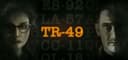
Detective games live or die on one question: does the player do the thinking, or does the game? TR-49 answers it from a church basement. inkle Ltd, the studio behind Heaven’s Vault, Overboard! and A Highland Song, casts the player as operator of a WWII-era computer built in secret by Bletchley Park engineers Cecil Caulderly and Beatrice Dooler. The machine’s purpose is absurdly grand: to crack the code of reality. The immediate job is smaller and more urgent. A voice on the intercom wants a stolen book found, and the only instrument available is the machine’s archive of obscure books, letters and journals.
Everything runs through that archive. Entries open with codes in which the letters usually stand for an author and the numbers give a year of publication. The player reads a fragment, infers who wrote it and when, enters the code, and a new document opens with fresh names and dates to chase. The handler on the intercom can be addressed at any time, and the drama shifts according to how the archive gets explored. The end goal sits at the bottom of the stack: find and destroy the book buried in the machine before time runs out.
The production is compact but well cast. Rebekah McLoughlin, Paul Warren and Phillipe Bosher voice the story, and Laurence Chapman composed the original score. The single-player mystery is compact. It is a paid game on Steam, iOS and Nintendo Switch, released January 21, 2026.
This is an authored, tightly scoped mystery for players who value a well-placed clue over content volume. The store rating is 4.5 out of 5 from 37 ratings, and Metacritic sits at 82. Platform fit shapes our recommendation.
Key features
- Catalog-code archive: Every document sits behind a code built from an author designation and a publication year. The archive serves as map, inventory and puzzle at once.
- Inference as progression: The archive is the only tool. Attributing a fragment to a writer and dating it is the sole way forward.
- Linked texts and hidden sources: Documents point to one another, so progress means following references and mapping out sources the archive does not openly surface.
- Interactive audio drama: A handler on the intercom is available at any moment, and the story responds to the order and manner of exploration.
- A ticking clock: The book must be found and destroyed before time runs out, giving the investigation a hard deadline.
- Full voice cast and original score: Performances from Rebekah McLoughlin, Paul Warren and Phillipe Bosher, with music by Laurence Chapman.
- Tight runtime: A compact single-player mystery.
Analysis
The Code Is the Controller
The smartest decision in TR-49 is to make bibliographic metadata the input device. Most narrative games hand players a cursor and a set of hotspots. This one hands them a format. Once the rule clicks (letters for an author, numbers for a year), every document becomes a source of potential codes. In a system built this way, a passing mention of another writer’s work is a lead, and so is any detail that pins a text to a particular year. The player’s job is to turn prose into coordinates.
That structure produces the cleanest kind of deduction loop: hypothesis, test, feedback. A code either opens something or it does not, and confirmation arrives as new text, which seeds the next round of hypotheses. No item combination, no pixel hunting, no dialogue tree standing between the idea and its verification.
The word “usually” in the rule set carries real weight. Codes that break the author-and-year pattern force the player to question the system itself, and that dovetails with a premise about a machine built to decode reality. The mechanic and the fiction rhyme. The meta-narrative themes grow directly from that alignment: a game about a code-breaking machine that the player operates by breaking its codes.
Deduction Versus Guesswork
The same openness that makes the system elegant also makes it porous. Codes are short combinations of letters and numbers, and a player with a likely author in mind can sweep through a span of years until something opens. Brute-forcing is a real risk, and the criticism lands. Every successful guess that skips the reasoning cheapens the exact moment the game is built around. Deduction games stay honest by making guessing costlier than thinking, and a code space this compact leaves that door ajar. The ticking clock adds narrative pressure, but it cannot repair a loop that rewards persistence as readily as insight.
The opposite failure is the brick wall. inkle leans into deliberate vagueness, and the documents do not always point clearly to the next code. For players who enjoy sitting with ambiguity, that restraint is the point: the satisfaction of a deduction scales with how little the game gave away. For everyone else, a dead end in a short game is a heavy tax on momentum.
The two complaints pull in opposite directions (too easy to guess, too hard to reason), and that tells us something useful. The difficulty curve is uneven rather than tuned too high or too low. Some threads resolve by brute force while others resist honest reasoning, and a tighter design would close both gaps.
A Drama That Listens
The always-available handler is the design’s safety valve and its emotional anchor. A voice that can be addressed at any point gives the player someone to think out loud with, and it reframes the archive from a database into a conversation with stakes. Because the drama reacts to exploration, the order of discoveries shapes what gets said and when, so two players working through the same archive can arrive at its revelations in a different sequence.
Writing and voice acting have to carry the story. With the player fixed in one basement, three performers carry the entire sense of place, threat and history. That is a radio-play discipline, and inkle commits to it.
The weakness is repetition. Voiceover prompts are liable to recur, and in an audio drama a repeated line is the equivalent of a visibly tiling texture: it reminds the audience they are inside a system. That is a known cost of reactive dialogue, but here it cuts directly against the illusion of a handler who is listening.
Structure and Pacing
A short runtime is the right length for this concept. A code-driven archive risks fatigue once the rules are internalized, and a compact runtime ends the experience before novelty sours into routine. The deadline gives the investigation a spine: finding the book is not enough, it has to be destroyed before time expires, which converts a library crawl into a thriller. The result is a structure closer to a stage play than a sprawling mystery, voice-led and built around a single escalating objective.
Visuals & performance
TR-49 is a game about reading and listening, and its presentation follows suit. The interface is framed as the machine itself, with the archive’s documents as the primary visual surface. That diegetic approach is skeuomorphism with a purpose: code entry reads as operating period equipment rather than navigating software, and the fiction never has to step aside for the UI. The trade-off is that a game made of letters and journals stands or falls on legibility. Readable fragments matter more here than any visual flourish, and that pressure grows as screens shrink.
Sound does the heavy lifting that spectacle does elsewhere. The voice cast and Laurence Chapman’s score carry the atmosphere, which makes the limited soundtrack more than a footnote. When audio replaces visuals as the main channel of mood, a thin score is a real cost.
On performance, a text-and-audio game with a single static setting is light on hardware by design, and on Steam that should translate to modest demands. The Switch version complicates the picture: controller input is the least natural fit for a code-entry game, and the console release is the weakest way in.
Platform nuances
The concept travels well. The conversions are where the versions separate.
- Steam: Released January 21, 2026. Keyboard and mouse suit the core mechanic best: typing codes on a physical keyboard is fast, and a desktop display gives dense documents room to breathe. This is the version we recommend first.
- iOS: Released January 21, 2026. A touchscreen suits a reading-heavy game, but code entry through a virtual keyboard adds friction to a loop built on rapid hypothesis testing, and phone screens compress long passages of period prose. The store rating is 4.5 out of 5 from 37 ratings, a small sample.
- Nintendo Switch: Controller input is the least natural fit for a mechanic built on entering codes. Portable play suits a single-room mystery, but this is the version to approach with caution.
Final verdict
TR-49 succeeds where it matters most: it makes the player do the thinking. The catalog-code system turns reading into a toolset, the handler turns a database into a relationship, and the fiction about a machine built to decode reality gives every deduction a second meaning. The writing and performances carry a story confined to one basement, and the runtime ends before the format wears thin.
The flaws are specific and real. A compact code format invites guessing, deliberate vagueness can strand players at a wall, repeated voice prompts puncture the illusion of a listening handler, and the score is thinner than an audio-led game deserves. The Switch version is the weakest way in.
We rate TR-49 as Good and recommend the Steam or iOS version to anyone who enjoys mysteries where the clues are written down and the answers are not. It is an imperfect puzzle but an original one, and in this genre originality is scarcer than polish.
Reviewed by the Rankeno Puzzle & Casual Desk. Scores are out of 10; the overall score is the desk’s editorial judgement, informed by the four sub-scores above. How we review