
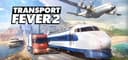

Overview
Every tycoon game promises two things: the joy of building and the tension of managing money. Very few deliver both. Transport Fever 2, from Swiss studio Urban Games and published by Good Shepherd Entertainment, delivers the first so completely that the second mostly gets skipped.
This is the third game in a lineage that began with Train Fever and continued with Transport Fever. Urban Games has spent that time improving one idea: a living map where roads, rails, waterways and air routes grow alongside the cities they serve. You start in 1850 with horse carts and early steam engines and play forward to the present day. Across that span you move passengers and cargo between towns and industries, and you connect production chains that turn raw materials into goods that cities consume.
In the market, Transport Fever 2 sits between classic tycoon games like OpenTTD and modern city builders like Cities: Skylines. It has more spatial and visual ambition than the first and far less economic complexity than a serious management sim. Its real rivals are the model railway and the sandbox. People play it the way others tend bonsai trees: slowly, carefully, for the pleasure of watching something they built work.
The game’s reception backs up that reading. It holds a Metacritic score of 76, solid rather than stellar, and the criticism that keeps it there — the economy, the learning curve, late-game performance — is the same criticism this review makes.
Key features
- 175 Years of History: The game runs from 1850 to today, and new vehicles, road types and technology unlock as the eras pass. Watching the same valley move from horse-drawn wagons to high-speed rail is the game’s main hook.
- More Than 200 Real-World Vehicles: Trains, buses, trucks, trams, ships and aircraft are modelled on real European, American and Asian machines. Each has its own capacity, speed and running costs.
- Modular Stations, Airports and Harbors: You expand terminals piece by piece, adding platforms, entrances, cargo bays and runways, instead of placing one fixed building.
- Three Continental Campaigns: Scenario play set on different continents adds up to more than 20 hours of directed goals.
- Configurable Free Play: You choose map size, terrain type (moderate, dry or tropical) and economy settings for open-ended sandbox building.
- Full Editor Suite: Terrain, map and game editors are included, and they are the same kind of tools the community uses to make its content.
- Steam Workshop Integration: Thousands of community vehicles, buildings and maps are one click away.
- Reactive Cities: Towns grow or stall depending on how well your network serves them.
Analysis
The Gameplay Loop
The core loop is simple and hard to put down. You find two things that want to be connected, such as a coal mine and a steel mill or two towns across a river. You build the route, buy vehicles, assign a line and watch money come in. Then you notice the bottleneck, the town that is outgrowing its bus service, or the new locomotive that has just unlocked, and you start again.
The pull comes from physical, visible cause and effect. Cargo does not vanish into a spreadsheet. It loads, travels and unloads on screen. Passengers walk to stops. Trucks queue at a crowded intersection you placed badly. When a line works, the game shows it working. When it fails, the cause is usually visible too, and that makes debugging a network strangely enjoyable. Every problem is spatial, so every fix is too.
The historical progression keeps that loop fresh for a long time. Early routes are short and cheap, because slow vehicles and costly construction make ambitious lines a gamble. By the mid-20th century, faster trains and trucks let you rebuild the whole map’s logic: longer routes, bigger stations, new ways of moving freight. Aging vehicles pay for themselves at first, then turn into maintenance liabilities, so the fleet keeps demanding upgrades instead of being set once and forgotten.
Construction: The Crown Jewel
This is where Transport Fever 2 beats the rest of the genre. Laying track is tactile and forgiving. Curves follow the terrain naturally, bridges and tunnels are generated where you need them, and the game reshapes the ground around your work in ways that look planned rather than stamped down. The modular station system is the standout. A village halt can start as two platforms and, decades later, grow into a multi-level terminal with extra tracks, entrances and connections without bulldozing everything.
The problem is precision. The same system that makes sweeping curves feel natural makes exact work fiddly. Tight junctions, parallel tracks and dense signalling can take several tries, and the snapping behaviour is not always predictable. Tools this good should not make you fight them over the last 10%.
The Economy: Where the Illusion Thins
This is the game’s biggest weakness. The economy and city-growth model is shallow compared with dedicated tycoon games. Towns do respond to service, and good networks do produce busy, growing cities, which is worth something. But it doesn’t take long to see how simple it is underneath. Once you understand the basic supply chains and route profitability, money stops being a constraint and becomes just a score. There are no competitors, no meaningful market swings and very little risk.
For many players that’s fine, because the sandbox is the point. If you came from economic strategy expecting to fight rival companies or manage debt through a recession, you will run out of challenge after a few eras. The game is a builder dressed as a business sim, and it should be judged that way.
Onboarding Friction
Transport Fever 2 is poor at teaching itself. The campaigns ease you in a little, but core ideas such as how signals behave, why a line isn’t making money, and how cargo demand spreads through a town get very little explanation in the game. Much of what a new player needs to know lives in wikis, forums and YouTube instead. Veterans of the series won’t mind. New players may bounce off a game that would have rewarded them if it had spent 30 minutes explaining itself.
Longevity and Mods
The Steam Workshop makes a very good game much longer-lasting. Community vehicles fill regional gaps in the base roster, custom buildings improve the look of cities, and user maps provide endless new layouts. The included editors show that Urban Games treats the community as a partner rather than an afterthought, and the mod scene is a large part of the game’s lasting appeal.
Visuals & performance
Transport Fever 2 looks great, especially up close. Vehicles are modelled with a real enthusiast’s care. Terrain types have their own palettes, from green temperate valleys to sun-bleached dry plains to dense tropical coasts. The follow camera, which rides along with a single train or bus, is the best advertisement for the game. Few sights in strategy gaming beat a steam engine crossing a viaduct at dusk.
The UI is functional but dense. Line management, vehicle purchasing and station overviews are all present. They are just not always easy to read, and important information sits a click or two deeper than it should.
Performance is the other structural concern. The simulation is built to handle thousands of vehicles, big cities and complex networks, and that load grows heaviest on large maps in the late game — exactly when your network is most impressive. Heavy use of Workshop content adds to the load, so players building empires should expect to trade some fidelity or map size for smoothness. A 3D simulation of this scope is demanding by design, and the hardware requirements reflect that.
Platform nuances
On Steam, Transport Fever 2 is in its natural home. Mouse and keyboard suit a game built on precise placement, camera control and busy management panels, so this is the version to play. It runs on Windows, macOS and Linux, which gives it broader desktop reach than most of its genre.
The biggest advantage of the Steam version is the Workshop. The mod scene is fully built into the store, and subscribing to content is close to effortless. A Console Edition exists on PlayStation and Xbox, but the PC release remains the definitive version because of its control precision and modding access.
Final verdict
Transport Fever 2 knows what it is, even if its store page doesn’t. As a transport-network builder it is among the strongest available: careful, beautiful and absorbing enough to swallow an evening whole. Its construction tools, historical progression and modding support give it a lot of depth and replay value.
Its flaws are real. The economy offers little challenge, the onboarding is poor, and large late-game maps put serious load on the simulation. None of them breaks the core fantasy, which is building something complex and watching it run. Go in expecting a digital train set with a light layer of business on top, and Transport Fever 2 will reward you for a long time. Go in expecting a demanding business sim, and you’ll be disappointed.
Reviewed by the Rankeno Strategy & Sim Desk. Scores are out of 10; the overall score is the desk’s editorial judgement, informed by the four sub-scores above. How we review