

Overview
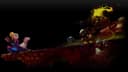
There’s a specific kind of ambition that almost never survives contact with a game budget: animating every single frame by hand. Not “hand-drawn assets, tweened in engine.” Not “2D sprites with some nice keyframes.” Actual traditional, frame-by-frame 2D animation, the way it was done before anyone shipped a puppet rig. OhNoo Studio — a small Polish team, working with Smile — did it anyway, and TSIOQUE is the result: a Kickstarter-era passion project that took years to finish and looks like nothing else on Steam.
The setup is fairy-tale boilerplate on purpose. You are Tsioque, a young princess locked inside her own castle after an Evil Wizard takes it while her mother, the Queen, is off fighting a war. What the game does with that premise is where it earns its keep. Every puzzle solution, every failure, every room transition plays as a complete animated sequence. Fail, and you get a gag. Succeed, and you get a small piece of choreography. The castle itself sits under a shifting spell, so rooms rearrange and change state as the story moves — the enchantment doubles as level design.
Its market position is unusual and, frankly, a little precarious. Steam users have rated it Overwhelmingly Positive, while professional critics have landed notably lower. That gap isn’t noise. It’s the whole story of this game. Players who came for a beautiful, warm, short experience got exactly that and loved it. Critics grading it against Thimbleweed Park or the Daedalic catalogue found a three-hour adventure whose puzzles rarely resist you and whose “slightly post-modern fairy tale,” as one reviewer put it, doesn’t cut very deep.
Both camps have a point. What matters is knowing which one you’re in before you pay.
Key features
- 100% frame-by-frame traditional animation: Not a stylistic flourish — the entire production model. Backgrounds are hand-painted, characters are hand-inked, and interactions resolve as full cartoon beats rather than a static screen with an inventory pop.
- Mischief as a verb set: Progress means breaking, distracting, or annoying something. Tsioque is a chaos-maker, and the design leans into it instead of handing you the genre’s usual rusty-key-and-oil-can logic chains.
- A castle that rewrites itself: The Wizard’s spell reorders and re-skins rooms as the plot advances, making the environment a moving target and the magic a mechanic rather than set dressing.
- Death that costs you nothing but a laugh: You can die — rare for a modern adventure. Failures are staged as short animated gags that rewind you a beat instead of gating progress behind a save-scum ritual.
- Fully voiced cast and a reactive score: Every line is performed, and the soundtrack shifts with on-screen action rather than looping indifferently in the background.
Analysis
The Gameplay Loop
TSIOQUE’s loop is deliberately shallow, and that’s a description before it’s a criticism. You enter a room. You look at it — really look, because the art rewards it. You spot the two or three interactive elements. You try them in the order a clever eight-year-old would try them. Something funny happens. You move on.
There is almost no item-combination puzzling here. The inventory exists, but it’s thin, and the game never asks you to duct-tape a chicken to a pulley. Instead, the design leans on three pillars: timing, observation, and mischief. A guard has a patrol rhythm you need to read. A contraption has a moving part you need to catch at the right instant. A monster has a temper you need to exploit. These are arcade-adjacent instincts grafted onto an adventure-game skeleton, and when they land, they land well — because the payoff isn’t a click acknowledgment, it’s twenty frames of animation you haven’t seen before.
That’s the engine driving the whole experience. TSIOQUE converts curiosity into spectacle. Poke the thing, get a cartoon. It’s an effective reward schedule for the first two hours.
The problem is that the reward schedule is the only schedule. Veteran adventure players — the people most likely to seek out a hand-drawn point-and-click in the first place — will find the friction curve nearly flat. Nothing here is built to stop them. There’s no wall to hit, no notebook to open, none of the thing genre fans secretly love, where you walk away from a puzzle, do the dishes, and solve it in your head over a sink. There’s no moment of earned deduction, only a steady drip of “oh, cute.” For some players that’s a feature. For anyone who measures an adventure by the quality of its hardest puzzle, it’s a real limitation, and it’s the clearest explanation for the cooler critical reception.
Failure as Choreography
The death system deserves specific credit, because it’s the smartest structural decision in the game. Sierra-era adventures killed you constantly and punished you brutally — reload, replay, resent. LucasArts fixed that by making death impossible and, in the process, drained a lot of tension out of the genre. TSIOQUE threads the needle: you die, you watch a short gag, you resume a beat earlier. The penalty is time measured in seconds, and the compensation is content you wouldn’t otherwise see.
This flips the incentive entirely. Dying becomes something to be mildly curious about rather than something to route around — the failure animations are worth seeking out on their own terms.
The catch is the timing sequences. When a puzzle depends on catching a window rather than understanding a system, a miss feels less like a mistake and more like a tax. A handful of players have flagged these as mildly frustrating, and the criticism holds up — not because they’re hard, but because they briefly change the game’s genre without warning. You go from “read the room” to “hit the beat,” and the mouse is not a great instrument for the second one.
Pacing and Story
Three hours. That’s the number, and it’s non-negotiable — there’s no meaningful replay hook, no branching, no collectible sweep. The story moves at a clip because it has to, and it’s structured as a series of escalating set pieces rather than a slow-building arc.
The plot swings for a few twists, and the cast is written with more moral texture than the fairy-tale frame suggests — humans, animals and monsters who aren’t sorted into tidy piles. It’s charming rather than affecting. The post-modern winks at fairy-tale convention are gentle enough that they don’t sting, which means the game never quite earns the emotional weight its final act reaches for. Tsioque herself is the exception: a genuinely well-realized protagonist whose personality is communicated almost entirely through animation, not dialogue. Watch how she stands when she’s bored. That’s the writing.
Visuals & performance
This is the reason to buy the game, so let’s be precise about it.
The comparison everyone reaches for is Don Bluth — The Secret of NIMH, Dragon’s Lair — and it’s the right one, though TSIOQUE is warmer and less grotesque than Bluth at his peak. The hand-painted backgrounds have a watercolor softness that a vector pipeline physically cannot fake. Character animation carries real weight and squash: Tsioque’s run has follow-through, her reactions have anticipation frames, and the Wizard’s presence is sold through silhouette long before any line of dialogue explains him.
The reactive soundtrack is the underrated technical achievement. It responds to on-screen action rather than crossfading between ambient loops, and the effect is closer to a scored animated short than a game’s audio layer. The full voice cast is solid throughout, with Tsioque’s performance in particular avoiding the shrill-child trap that sinks most animated-game leads.
Technically, it should be undemanding in the best way. A 2D adventure of this scope is light on hardware, and the minimal interface — a cursor, a small inventory, almost no HUD furniture — is the correct call when every pixel of the screen is a drawing someone made by hand.
Platform nuances
TSIOQUE is a Steam release, and it’s mouse-native in a way that matters. The single-click, no-verb-coin interface means you’re never hunting for the right interaction mode; hover, click, watch. That’s the whole vocabulary, and it’s frictionless.
Where the platform shows its seams is in the timing-dependent sequences. Mouse precision is fine, but mouse cadence — clicking on a rhythm — is a worse fit than a gamepad or touch would be, and those moments are the only ones where the input layer intrudes on the animation. Controller support is not the point here and shouldn’t be your reason to buy.
The Steam context also shapes expectations in a way worth naming: at full price, three hours of content invites a harsher accounting than it deserves. On sale, the math stops being a conversation.
Final verdict
TSIOQUE is a small feat of production discipline dressed up as a modest little adventure game. The animation isn’t a selling point layered onto a game — it is the game, and the design has been sanded down until nothing gets between you and the next drawing. That’s a coherent, defensible choice, and it produces something no competitor can copy without spending years at a light table.
But it means the puzzles were never going to be the reason you’re here, and OhNoo Studio knows it. What you’re buying is a three-hour animated feature with a cursor, and judged as that, it delivers. Judged as an adventure game, it’s slight — and the divide between the warm player reception and the cooler critical one isn’t a controversy, just two different questions getting two honest answers.
We rate it for the craft and the right audience. Don’t expect it to fight back.
Reviewed by the Rankeno RPG & Adventure Desk. Scores are out of 10; the overall score is the desk’s editorial judgement, informed by the four sub-scores above. How we review