


Bottom Line: Hakababunko has made the most visually arresting adventure game of the year — a neon-sick, deeply humane occult procedural that understands modern loneliness better than most prestige dramas. Just don't come expecting a detective game that fights back.
The Gameplay Loop
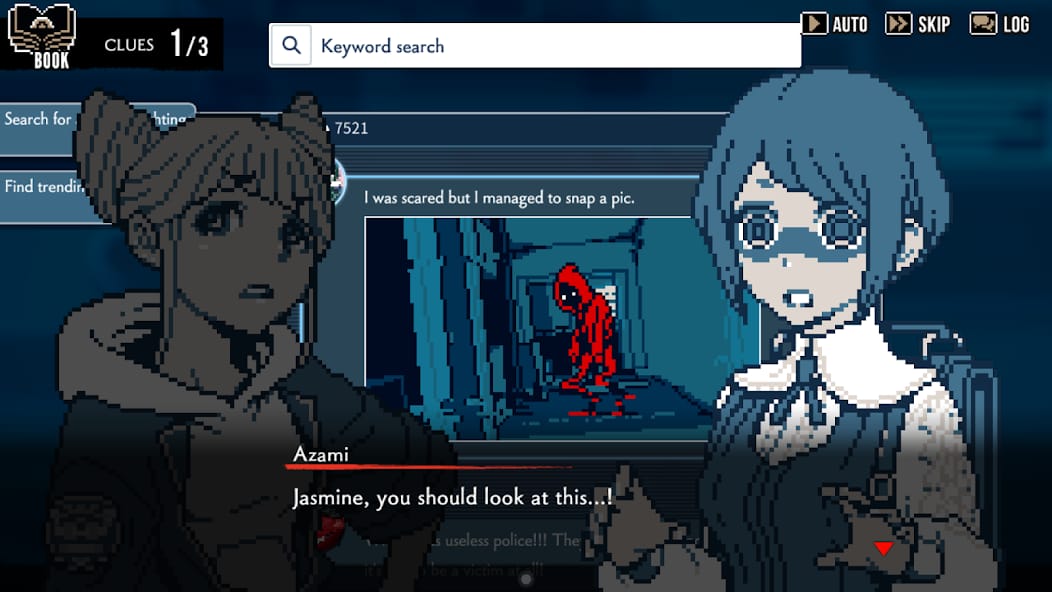
The structure is a metronome, and it works. You arrive at a location. You sweep it. You find objects that hum. You read the memories inside them. You go back to the office, open the social network, and start pulling threads — a username that appears in two unrelated posts, a timestamp that doesn't square with a client's account, a photo posted from a building that shouldn't have been standing. Then you open the case file and start snapping evidence to testimony until the picture locks.
What Hakababunko understands, and what a lot of mystery games get catastrophically wrong, is that the pleasure of deduction is mostly the pleasure of recognition. The moment your brain goes oh — oh no is the payload. Everything else is delivery mechanism. So the game strips out the punishment layer almost entirely. You rarely fail. There's no health bar of wrong guesses draining toward a game over screen. When you link the wrong evidence, the game shrugs and lets you try again.
This is a genuine design position, not laziness, and I want to defend it before I criticize it. Hard mystery games have a chronic failure mode: the friction of proving what you already know. You solved the case in chapter two and then spent forty minutes fighting a parser. Urban Myth Dissolution Center refuses that. The result is a pace that never stalls, and horror writing that lands with its timing intact — because nothing kills dread like a fifteen-minute puzzle interruption between the setup and the reveal.
But defending the intent doesn't mean the execution is beyond reproach. The deduction layer is too soft. Not "accessible" — soft. In most chapters, the correct evidence-to-testimony link is the only one that's semantically plausible, which means the systemic challenge collapses into a reading-comprehension check. You are frequently not deducing. You are transcribing. The game hands you three keys and one lock, and asks you to feel clever about it.
The social network trawling is where that softness stings most, because the underlying idea is so good. Cross-referencing user-generated noise against physical evidence is a genuinely modern investigation fantasy — it's what actual open-source research feels like — and the game builds a convincing little ecosystem of shitposters, grief accounts, and true-crime hobbyists to sift through. Then it flags the relevant post for you. The haystack is beautifully rendered. The needle is glowing.
Writing and Structure
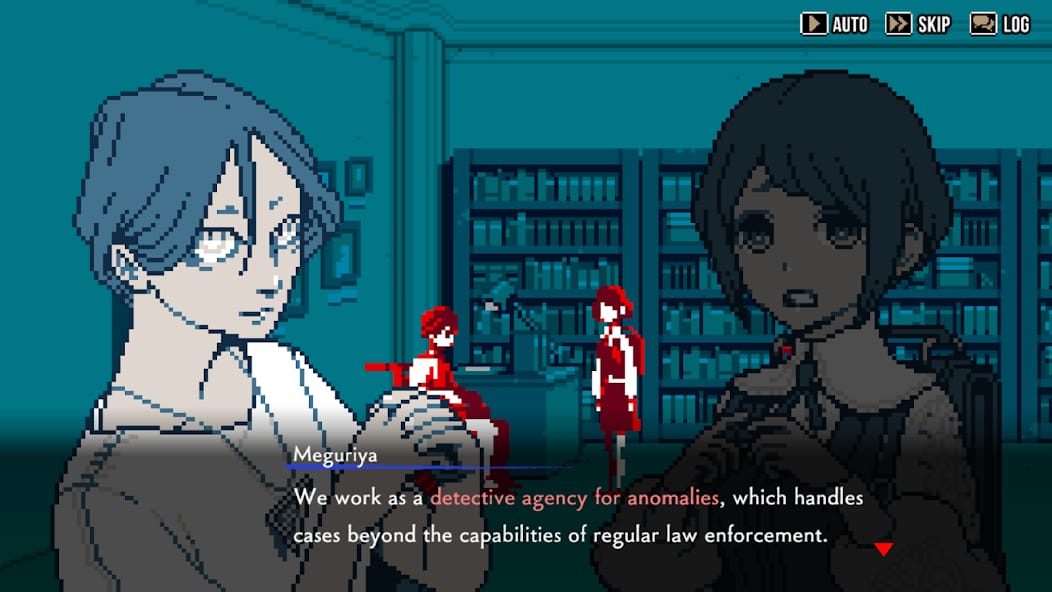
Here's the thing that redeems the whole enterprise: the writing is excellent. Case-by-case, the horror is specific, mean, and unsentimental about how people get hurt. A haunted rental isn't scary because of the ghost; it's scary because someone signed the lease knowing what was in it. The episodic frame — legend in, human story out — could have become formula by hour six. It doesn't, largely because the cast carries it. Azami's flat affect reads as damage rather than quirk. Meguriya's authority is real and unexplained in a way that stays interesting. Jasmine provides warmth without becoming the comic-relief valve.
The cases also escalate structurally rather than tonally. Later chapters start braiding threads across earlier ones, and the final act reframes the agency itself. That's craft.
Where the Design Strains
Ten to fifteen hours is short, and I'd argue the game is aware of it — the pacing is tight enough that padding would have wrecked it. But the price-to-hours ratio is going to be a real conversation for some buyers, and the mechanical thinness means there's very little pull for a second run. Achievements aside, once you've read it, you've read it. This is a novel with a very good interface, and it should be evaluated as one.