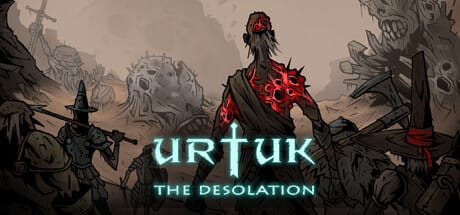

Bottom Line: One developer built a tactical RPG that out-thinks studios twenty times his size, then wrapped it in an interface that actively resents you. Push through the first three hours and you'll find one of the smartest combat systems on Steam.
The Gameplay Loop
Urtuk's loop is a pressure system. You enter a region with a warband, limited supplies, and a rough sense of how strong the local encounters are. You pick fights you think you can survive. You win, you extract traits, you patch up your wounded at a camp — and then you look at your supply counter and realize you can't afford to be choosy about the next one.
This is where the game separates itself from its peers. Battle Brothers punishes you economically; Darkest Dungeon punishes you psychologically. Urtuk punishes you structurally. Wounds persist. Bodies wear out. A veteran who's survived twelve battles is carrying accumulated damage that makes the thirteenth genuinely dangerous, and the game refuses to let you grind your way out of trouble because grinding costs supplies you don't have. The result is a campaign that feels like a controlled slide downhill — you're not building toward inevitable dominance, you're managing the rate of your own decline and hoping the finish line arrives first.
Combat Is the Whole Argument
Strip away everything else and the combat would still be worth the money.
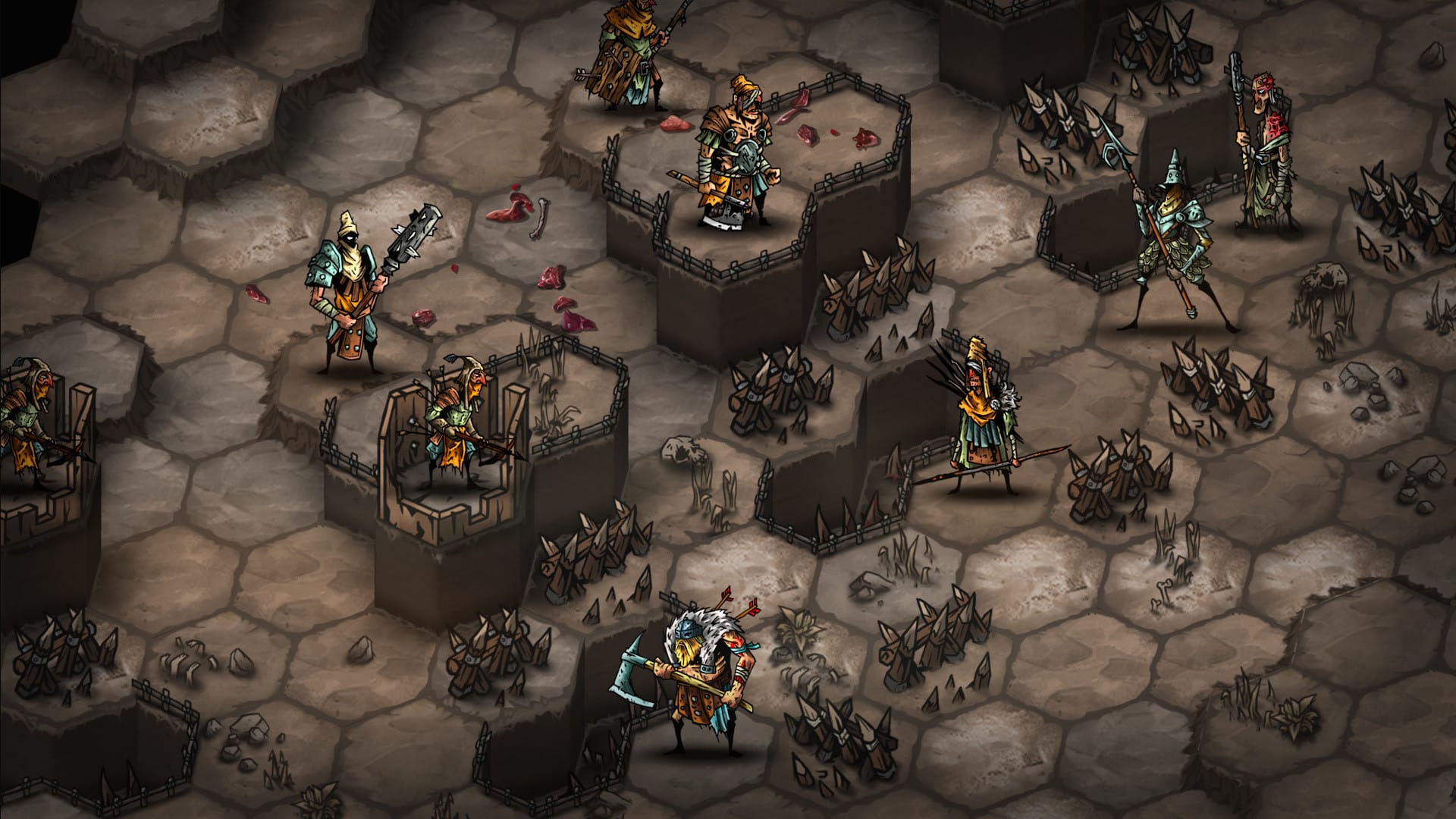
Most tactical RPGs resolve to arithmetic. You compare hit chances, you take the better number, you move on. Urtuk resolves to geometry. The battlefield is littered with spikes, ledges, chasms and hazards, and the strongest play in almost any given turn is not "attack" — it's "reposition the enemy into something that hurts." Ramming a heavily armored knight into a spike wall bypasses his armor entirely. Shoving an archer off elevation strips his advantage and his health simultaneously. Pulling a unit out of a counterattack chain matters more than the damage you'd have done by swinging.
Layer trait extraction on top and the system gets genuinely generative. Every enemy archetype you kill is a potential component. You start assembling fighters who don't resemble any class the game shipped with — a bleeding-focused skirmisher with a mutation that heals on kill, a shield-bearer who counterattacks twice and reflects damage. This is the mechanic that earns Urtuk its reputation, because it converts combat from a cost into an investment. Losing a fight hurts. Losing a fight where you almost extracted the trait you needed hurts differently.
Onboarding Friction, and There's a Lot of It
Now the annoying part. Urtuk's tutorial is inadequate and its interface is worse.
The game surfaces an enormous amount of information — status effects, terrain modifiers, counterattack ranges, trait interactions — through dense tooltips, small icons and menus that were clearly designed by someone who already understood the systems perfectly. Critical mechanics go unexplained. The distinction between mechanics that seem similar isn't communicated. New players routinely lose their first two campaigns not to tactical error but to information error — they didn't know a rule existed.
This is the single most common criticism in user reviews and it is entirely fair. The onboarding friction here is not stylistic difficulty; it's a UX failure. A game this mechanically rich needs a mechanically rich explanation layer, and Urtuk shipped without one. Expect to consult a wiki. Expect to restart once you finally understand what you were doing wrong.
Where the Design Thins Out
Two other complaints hold up under scrutiny. The overworld gets repetitive. The procedural generation produces variety in arrangement, not in kind, and by your third long campaign the map nodes read as a checklist rather than a journey. Encounters carry the game; the space between them doesn't.
Difficulty spikes are real and occasionally unfair. Some encounter compositions arrive meaningfully above the local curve, and because supplies constrain your ability to retreat and rebuild, an unlucky draw can effectively end a run that was going fine. There's a difference between a hard game and a game with variance you can't plan around. Urtuk crosses that line more often than it should.