
Bottom Line: Kuro Games built the sharpest real-time combat in the free-to-play action-RPG space and wrapped it in an open world that finally trusts you to move. The gacha economy and the Echo grind are the toll you pay for it — and that toll is real.
The Gameplay Loop
The core loop is conventional on paper — explore, fight, farm, build, repeat — and the difference is entirely in the execution of step two.
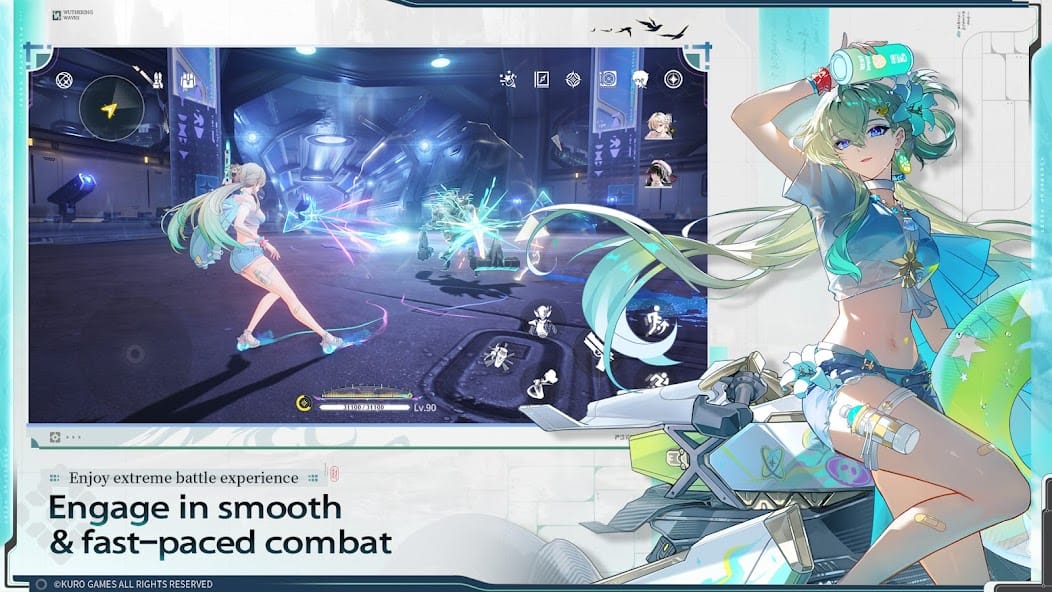
Combat here is animation-committed and input-honest. When you press dodge, you dodge; the window is narrow enough to punish button-mashing and forgiving enough that mastery is learnable. Extreme Evasion rewards you for waiting until the last possible frame, which flips the psychology of the genre: instead of retreating from telegraphed attacks, you're leaning into them. Parries add a second axis. Dodge Counters add a third. Stack Concerto swaps on top and a well-executed fight becomes a continuous string across three characters with no dead air — the swap animation is the combo continuation.
This is the design decision that separates Wuthering Waves from its peers, and I want to be precise about why. In most gacha action RPGs, the team of three is a resource rotation: you swap to apply a buff, swap to trigger a reaction, swap back. It's spreadsheet play with a coat of paint. Here, the swap is a mechanical action with its own timing and payoff. Players don't build teams that synergize on a damage chart; they build teams whose animations interlock. That's a fundamentally different skill being tested, and it's why the community consistently calls this best-in-class for the free-to-play space. They're right.
The cost is onboarding friction, and it's steep. The first several hours throw Concerto, Resonance Liberation, Outro Skills, Intro Skills, Echo sonatas and Forte gauges at you in overlapping tutorial popups. Players coming from more forgiving games hit a wall where the combat isn't hard so much as illegible — you're losing not because your timing is bad but because you don't yet know which of your six buttons matters. Kuro has smoothed this over successive patches, but the learning curve remains the single most common complaint after monetization, and no amount of tooltip revision fully solves a system this dense.
Traversal, and the Stamina Argument
Removing the stamina meter sounds like a small quality-of-life choice. It isn't. It rewrites the relationship between the player and the map.
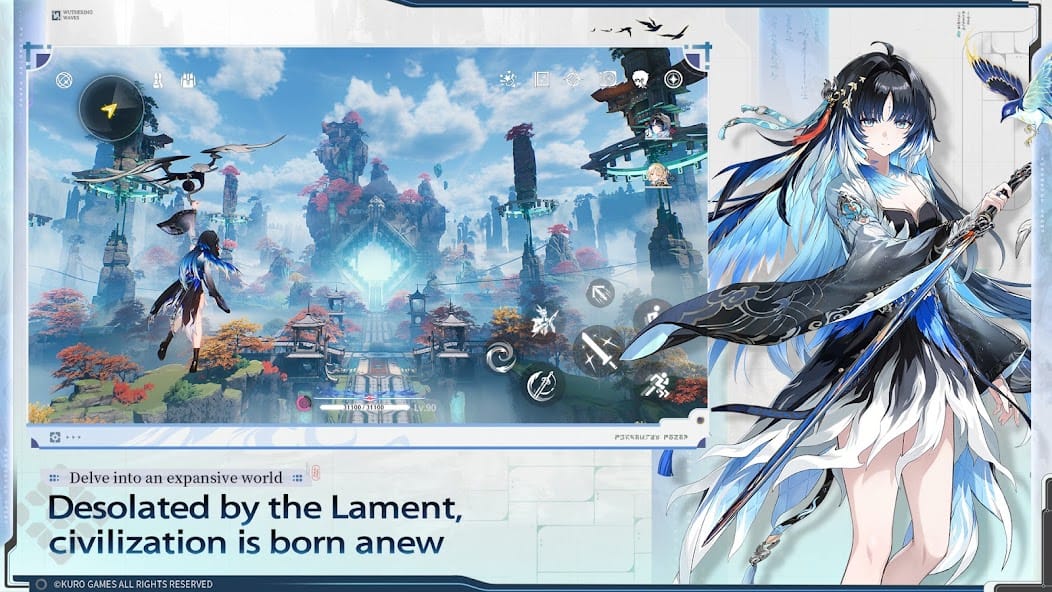
When climbing is rationed, a mountain is a puzzle about resource management — you plan ledges, you carry food, you take the switchback. When it isn't, a mountain is just a mountain, and you go over it. Wuthering Waves layers wall-running and a grappling hook on top, and the result is that the shortest path between two points is usually the one you improvised. The expedition motorbike handles the long hauls between landmarks. I'd call this the most underrated design win in the game: it converts open-world traversal from a tax into a toy.
The trade-off, and it's a fair criticism, is that frictionless movement makes the world feel smaller. Regions that took twenty minutes to cross in a stamina-gated design take four here. Kuro compensates with vertical density and hidden-content layering, but there are stretches where the map reads more like a combat arena delivery system than a place.
The Echo Grind
Here's where the design gets honest about being a live-service product. The Echo system is elegant in concept — the monster you just beat becomes both your summon and your gear — and grinding in practice. You farm Echoes, then farm the right Echo, then roll for RNG substats that decide whether the Echo is usable or vendor trash. The tuning layer added over time helps. It does not change the underlying math: endgame build optimization is a slot machine with extra steps, and long-term players say so loudly.
This is the same critique leveled at every artifact system in the genre, which is precisely the problem. The team that rethought combat from first principles imported the progression grind wholesale.
Story and Structure
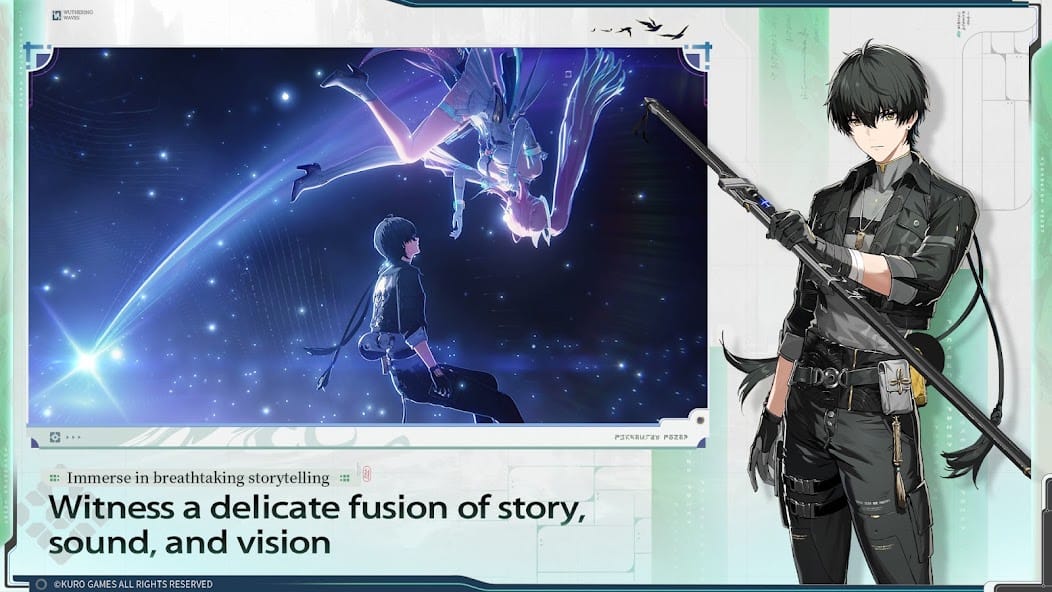
The narrative had a bad start — early chapters were paced awkwardly and the English localization at launch ranged from stilted to actively confusing. Both have improved substantially, and the later chapters land with real cinematic weight and legitimately good voice performance. But the first impression is the one most players get, and Wuthering Waves is still working off a debt it incurred in week one. If you bounced in 2024, the story is not the game you left.
Supporting content — world bosses, roguelike modes, challenge towers, seasonal events — is the standard live-service scaffolding, competently built. The roguelike mode in particular is where the combat system gets room to show off.