

Overview
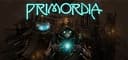
There’s a moment early in Primordia when Horatio Nullbuilt — a rust-flecked android living in the carcass of a crashed airship — quotes scripture from the Book of Man with the reverence of a monk. Humanity is gone. The machines that remain worship us as gods. That premise alone would carry a lesser game; here, it’s merely the foundation.
Primordia comes from Wormwood Studios, a tiny team assembled around designer-writer Mark Yohalem and artist Victor Pflug, and it was published by Wadjet Eye Games, the New York outfit that spent the 2010s keeping the classic adventure genre alive. Wadjet Eye’s catalog (Gemini Rue, the Blackwell series) established a house style: low-res pixel art, full voice acting, serious themes. Primordia is a strong entry in that catalog, and its reception supports the claim — a 4.6 out of 5 rating on the iOS App Store.
The setup is elegant in its simplicity. A rogue robot steals the power core keeping Horatio and his floating, insufferable, indispensable sidekick Crispin alive. Recovering it means crossing a poisoned desert to Metropolis, a glittering machine city with a rotten political heart. What begins as a fetch quest becomes an archaeology of humanity’s extinction — and a genuinely thorny ethical drama with multiple endings that hinge on choices designed to make players agonize.
Originally a PC release on December 5, 2012, it now lives on Steam, iOS, and Nintendo Switch, which changes its character more than you’d expect. More on that below.
Key features
- Branching narrative with multiple endings: Dialogue choices and puzzle solutions alter the finale. This isn’t cosmetic branching; the endings diverge philosophically, not just cinematically.
- Multi-solution puzzle design: Many inventory puzzles accept two or more valid answers, a structural choice that quietly kills the genre’s oldest sin — the designer’s-mind-reading problem.
- Integrated quality-of-life systems: Crispin doubles as an in-fiction hint system, while automatic note-taking and auto-mapping absorb the busywork that used to live in a spiral notebook.
- Full voice acting led by Logan Cunningham: The voice of Bastion’s narrator gives Horatio a weary, gravelly gravity that anchors the entire game.
- Developer commentary mode: A second-playthrough track that’s actually worth the time — candid, specific, and revealing about small-team design compromise.
Analysis
The Writing Is the Engine
Primordia is, at heart, a novella with puzzles. That’s not a knock. The script is the best thing here, and everything else exists in service of it. Yohalem writes machines who have built entire theologies, legal systems, and class structures out of the wreckage of human civilization, and the game trusts players to piece the worldview together from environmental fragments and dialogue rather than lore dumps. Horatio’s stoic humanism plays against Crispin’s acid sarcasm in a double act that recalls the golden-era LucasArts pairings — but where Guybrush and company went for laughs, this duo is doing something sadder and stranger. The banter is funny; the silences between the banter are the point.
The Puzzle Loop, Fixed
The classic adventure loop — explore, collect, combine, apply — has always had a failure mode: the moment logic runs out and pixel-hunting begins. Primordia attacks that failure mode on three fronts, and this is where the design earns real credit.
First, puzzles follow machine logic. Horatio is an engineer; his solutions involve power routing, salvaged components, and jury-rigged repairs. Solving something feels like reasoning, not lock-picking the designer’s brain. Second, the multiple-solution architecture means a dead end is rarely truly dead — if the elegant answer eludes a player, a cruder one often exists, sometimes with narrative consequences. That’s an uncommon commitment; most adventures that promise multi-solution design deliver it in two puzzles and a press release. Primordia appears to deliver it consistently. Third, the Crispin hint system is the rare hint mechanic that doesn’t shatter immersion, because asking your sidekick for help is exactly what the character would do. It’s diegetic design solving an onboarding-friction problem that plagued the genre for thirty years.
It isn’t flawless. A handful of late-game puzzles in Metropolis — particularly those involving the city’s information systems — appear to cross from “challenging” into “obtuse,” and the difficulty curve spikes right when the narrative wants momentum. When a story is sprinting toward its climax, a long logic wall is a pacing wound, hint system or no.
Structure and Length
The game’s detractors cite its brevity as its chief weakness, and the pushback is only partial. Primordia is exactly as long as its story — there’s no padding, no backtracking-as-content, no artificial gate. The brevity is a feature of the writing discipline. But the criticism holds economic water at full price if you’re measuring in hours-per-dollar, and the game’s density means a second playthrough (for alternate endings and the commentary track) is closer to essential than optional. Budget for two runs or feel slightly shortchanged by one.
Where the game doesn’t innovate is structure. This is a classic-formula adventure, refined rather than reinvented. If you’re waiting for the genre’s Outer Wilds moment — a structural rethink — this isn’t it, and it never wanted to be.
Visuals & performance
Victor Pflug’s art direction is a commitment, and you should know what you’re signing up for: low-resolution pixel art, rendered in a palette of rust, ochre, and sodium-lamp amber. On its own terms, it’s strong — the crashed airship interior and the vertical sprawl of Metropolis are moody, hand-drawn compositions with real atmosphere, and the sickly glow of the wasteland does more world-building than a page of text could. The ambient soundtrack sits underneath it all like dust settling.
But honesty requires the caveat: this resolution was retro in 2012, and on a modern large monitor the chunky sprites can read as smeared rather than stylized. Character close-up portraits fare better than the environmental sprites during fine interactions. This is aesthetic conviction, not laziness — but conviction doesn’t obligate anyone to like it, and the style is divisive. As for performance, a 2D game of this scope built on Adventure Game Studio technology is light on hardware by design, so it should pose no strain on any modern device.
Platform nuances
- Steam (PC): The definitive version. Mouse-driven point-and-click is the genre’s native tongue, and the commentary mode feels most at home here. Play it windowed or accept the pixel scaling on large displays.
- iOS: A quietly good fit. Tap-to-interact maps naturally onto touch, and the low resolution that strains on a monitor looks dense and handsome on a phone-sized screen. Small hotspots occasionally demand a second, more careful tap — minor onboarding friction, never a blocker. At $2.99, arguably the best value-per-dollar version.
- Nintendo Switch: The compromise platform. Cursor-on-analog-stick is the genre’s worst input scheme, and docked play magnifies the resolution issue. Handheld mode with touch controls is the way to play here, and played that way it’s nearly as comfortable as iOS. Docked-only players should think twice.
Final verdict
Primordia is what happens when a small team knows exactly what it’s making and refuses to dilute it. The art will filter some players out, the length will annoy the spreadsheet-value crowd, and two or three puzzles deserved another editing pass. We rate it a solid Good: what the game gets right — a machine civilization that feels thought through, a protagonist whose quiet faith in vanished humanity accumulates into real emotional force, and puzzle design that mostly respects your intelligence — outweighs its flaws, but only for the right audience. Play it on PC or in your hands, ask Crispin for help without shame, and play it twice.
Reviewed by the Rankeno RPG & Adventure Desk. Scores are out of 10; the overall score is the desk’s editorial judgement, informed by the four sub-scores above. How we review