

Overview
For years, the “raiding” experience was gatekept by the logistical nightmares of massive multiplayer online games. If you wanted the thrill of solving a high-stakes mechanical puzzle under pressure, you needed a guild, a calendar invite, and forty minutes of preparation for every ten minutes of actual combat. mino_dev, the developer behind the cult-hit Maiden & Spell, has effectively demolished those barriers with Rabbit and Steel, released on Steam on May 9, 2024 for $14.99. It is a surgical extraction of the “dance”—that specific, rhythmic coordination found in Final Fantasy XIV or World of Warcraft—replanted into the fertile soil of the indie action genre.
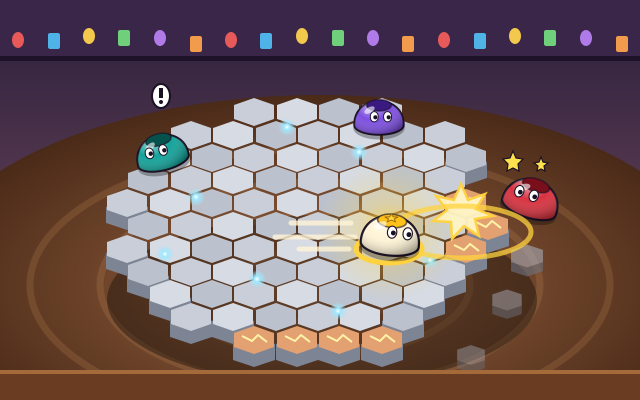
Set in a world of battle-hardened bunnies, the game’s aesthetic is a classic “cute-but-deadly” feint. Beneath the vibrant pixel art and upbeat soundtrack lies a brutal mechanical engine that demands precision. Players choose from ten classes, each of which is a distilled archetype of an MMO role. The Defender is a tank built around timing invulnerability windows. The Assassin is a fast attacker whose specific rotation rewards backstabs and burst windows.
Market-wise, Rabbit and Steel occupies a fascinating niche. It’s a competitive co-op experience that respects the player’s time, offering 30- to 45-minute runs that culminate in the Moonlit Pinnacle. While most roguelikes focus on the “power fantasy” of becoming an unstoppable god through items, this game places equal emphasis on the “skill fantasy” of perfect execution. It’s a bold experiment in genre-blending that lands with surprising weight, appealing to both the hardcore raiding veteran and the roguelike enthusiast looking for something more structured than a random loot drop.
Key features
- MMO-Inspired Combat: Every class operates on Global Cooldowns (GCDs) and specific skill rotations, forcing players to manage resource uptime while dodging lethal telegraphed attacks.
- The “Dance” Mechanics: Boss encounters utilize recognizable raid markers—stack markers, spread markers, tethers, and gaze attacks—requiring split-second spatial awareness and coordination.
- Deep Build Synergy: With over 100 randomized items and class-specific ability upgrades, the game allows for “broken” builds that feel earned through strategic selection rather than pure RNG.
Analysis
The Rhythm of the Rotation
In most action roguelikes, combat is reactive: see an enemy, hit it, dodge its attack. Rabbit and Steel pivots to a proactive model. Because skills have cooldowns and specific interactions (e.g., “this skill resets the cooldown of your primary attack”), the player is constantly performing a mental rotation. This is the game’s greatest strength. It captures the “flow state” of high-level MMO play, where you are trying to maintain your optimal damage-per-second (DPS) while reacting to the boss and the floor literally becomes lava.
The onboarding friction is surprisingly low for such a complex system. While the “Easy” mode allows newcomers to get a feel for the patterns, the game truly sings—and bites—at the Hard and Lunar difficulties. Here, the telegraphed mechanics overlap in ways that feel like a puzzle. You might have a spread marker (stay away from friends) while the boss is casting a gaze attack (don’t look at the boss) and the arena is being halved by a laser. Navigating these moments without dropping your rotation is an intoxicating challenge.
Bosses as Spatial Puzzles
The boss design in Rabbit and Steel is exceptional. Each encounter is a multi-phase battle that introduces and then subverts specific mechanics. Unlike typical bullet hells where you just find the “gap” in the projectiles, here you are often looking for the safety zone defined by the interaction of multiple markers.
The transition to co-op adds another layer of complexity—and occasionally, chaos. In local or online co-op with up to four players, the “stack” and “tether” mechanics become the star of the show. You are responsible for your teammates as well as your own safety. If you have a stack marker and you panic-dash away from the group, you die, and likely cripple the run. This creates a genuine sense of camaraderie and shared triumph that is rarely felt outside of 20-person raid groups.
The Roguelike Engine
Items in this game do more than raise stats. While you’ll find the standard “increase damage by 10%” trinkets, the most impactful items modify your skills directly. An item might change your defensive utility into an offensive burst, or allow your “Special” move to trigger your “Primary” move twice. This encourages experimentation: a Wizard build might be a glass-cannon focusing on massive single-hit strikes, or a high-mobility skirmisher relying on status effects.
However, the lack of a mid-run save feature is a notable oversight. While 40 minutes isn’t an eternity, the intensity of the gameplay means that “life” often gets in the way of a Lunar-mode run. Furthermore, while the item variety is high, the “shop” phase between bosses can feel a bit repetitive once you’ve memorized the item pool, lacking some of the weird, run-altering meta-progression found in games like Hades or Binding of Isaac.
Visuals & performance
The aesthetic direction is a smart choice for a game with this much “visual noise.” The pixel art is clean, and the character silhouettes are distinct, which is critical when the screen is filled with thirty different projectiles. The UI design mimics an MMO interface, complete with cooldown bars and party health frames, providing exactly the information you need without cluttering the center of the screen. As a 2D game of modest scope, it is also light on hardware demands. The soundtrack deserves a special mention; it’s a high-energy, melodic synth-rock collection that perfectly matches the frantic pace of the Moonlit Pinnacle.
Platform nuances
Rabbit and Steel is built for Steam, and the controller mapping appears designed with gamepads in mind: triggers for GCD skills and buttons for movement-based utilities. Mouse and Keyboard are supported, but the “raiding” feel seems naturally suited to the tactile feedback of a controller’s triggers. The short run structure also makes it a natural fit for the Steam Deck—the ideal “one more run” game for a commute, provided you don’t mind the high-stress environment.
Final verdict
Rabbit and Steel is a rare breed of game that knows exactly what it wants to be and executes that vision with precision. It manages to make the most tedious parts of an MMO (the grind, the scheduling, the UI bloat) disappear, leaving behind only the pure, adrenaline-soaked core of the boss fight. While the visual chaos can occasionally mask a lethal mistake, the fairness of the mechanics and the depth of the class systems make this a standout entry in the roguelike space, and one we recommend without hesitation. It’s the best distillation of raid night around, bunnies and all.
Reviewed by the Rankeno RPG & Adventure Desk. Scores are out of 10; the overall score is the desk’s editorial judgement, informed by the four sub-scores above. How we review