

Overview
Choice Provisions made its name on rhythm. The studio, formerly Gaijin Games, built the BIT.TRIP series — twitchy, chiptune-soaked arcade games about hitting the beat. Tharsis is the hard pivot: a turn-based survival strategy game about four people dying slowly in a punctured tin can somewhere between Earth and Mars. The tonal whiplash is the point. This is a studio that got bored of joy.
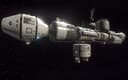
The setup is efficient to the point of brutality. The Iktomi, humanity’s first crewed Mars mission, takes a micrometeoroid storm to the hull. You have ten turns — ten weeks — to reach the planet with anyone still breathing. Every turn the ship breaks in new and specific ways: hull breaches, fires, radiation leaks, cascading system failures, each parked in a module and each demanding a particular total rolled on dice. You assign astronauts to modules. Their dice get spent. What’s left decides who lives.
Released on January 11, 2016 into a market that had already fallen in love with FTL and was still a couple of years out from the deck-builder gold rush, Tharsis arrived as a premium indie curiosity at a board-game price point, and it has aged into something closer to a cult object. The reception tells the story of a split audience: a press and player response that was flatly divided. Critics who wanted a strategy game found a probability engine. Players who accepted it as a probability engine found one of the tensest short-form strategy games around.
Both camps are right. That’s what makes it interesting.
Key features
- Dice-as-Crew: Each astronaut carries a personal pool of dice. Assigning them to a damaged module spends those dice against a required total. There is no separate action economy, no stamina bar, no abstraction layer — the dice are the people, and spending them is spending them.
- The Void Die: Any die that comes up a one is voided. It doesn’t just fail; it wounds the astronaut who rolled it and ratchets up their stress. Failure in Tharsis is not neutral. It compounds.
- The Ten-Week Clock: A fixed, short run length with damage events escalating on a curve that outpaces your repair capacity by design.
- Role-Based Abilities: Four crew with distinct specialties — repair, research, medical, assists — plus a bank of research points that buys narrow, incremental advantages rather than power spikes.
- Event Cards Between Turns: Forced trades. Health against morale, morale against supplies, supplies against the thing you’ll need in four turns and can’t yet see.
- Cannibalism: When food runs out, a dead colleague becomes rations. The game does not editorialize. It just puts the button there.
Analysis
The Gameplay Loop
A turn in Tharsis is a triage exercise conducted with a gun to your head. The ship diagram lights up with new damage. Each hazard displays its target number — the sum you need to roll to clear it — and a countdown to what happens if you don’t. Fires spread. Breaches vent atmosphere. A module that dies takes its function with it, permanently, and the systems you lose early are the ones you’ll be begging for in week eight.
You allocate crew. Dice roll. You reroll, re-sum, spend abilities, pray. Then the consequences resolve and the next wave arrives, worse.
The reason the math feels alive rather than dry is that every resource in the game is simultaneously a tool and a liability. Sending your engineer into a fire to roll five dice means five chances of a one. Each one is a wound and a stress tick, and a stressed astronaut generates fewer dice next turn, which means a worse roll, which means more ones. The death spiral isn’t a failure state bolted onto the design — it is the design, expressed as a feedback loop you can see coming three turns out and cannot always stop.
That’s careful, coherent systems work. Most survival games simulate attrition. Tharsis makes you personally administer it.
The Math Problem
Here is the objection, and it is not a stupid one: dice decide runs. On any individual attempt, that’s correct. You can allocate perfectly, play the odds with cold precision, and still watch a module blow because three dice came up snake-eyes adjacent. There is no skill expression that overrules variance in a single ten-turn window.
The defense — that Tharsis is a game about managing probability rather than winning — holds up, but only if you commit to it in a way the game never adequately explains. Your real job is not repairing the ship. It’s minimizing expected void dice while keeping enough crew functional to absorb the next shock. Deciding which module to let burn is the actual strategic verb here. Concede the greenhouse, save the engine, ration the people. Players who reframe the game as damage control instead of problem-solving are the ones built to stick with it.
Where the criticism lands: the mitigation tools are too thin for the variance on offer. Assists, stasis, research bonuses and module effects are all narrow escapes by design, and that restraint is thematically correct — you’re in a broken ship, not a workshop. But the gap between the damage curve and your ability to blunt it is wide enough that the difference between a disaster and a run feels, too often, like a die you didn’t roll. A slightly deeper toolkit for hedging bad luck wouldn’t have softened the theme. It would have made the losses legible.
Onboarding Friction
The first three runs are a wall. Tharsis explains its rules and hides its math: you can see target numbers, but the compounding cost of void dice across a full run — the thing that actually determines whether you reach Mars — is something you have to lose repeatedly to internalize. There’s no practice mode, no gentle slope, no post-run breakdown telling you that the run died at week four when you spent seven dice on a fire you should have abandoned.
Short sessions are the pressure valve, and the design leans on them hard. Losing a single short run stings a fraction of what losing a four-hour campaign does, and the restart is instant. But the content volume behind that loop is modest: a small crew roster, a limited pool of event cards, a fixed module set and a shallow unlock ladder. Once you’ve seen the hazard vocabulary — and you will, quickly — the runs start rhyming. Before long you’re not discovering the game anymore. You’re grinding against the RNG for a win you’ve already mentally solved.
That’s the ceiling. It’s a real one.
Visuals & performance
The art direction is the quiet triumph here. Tharsis looks like a board game rendered in a mortuary — clean white modules, cold blue interface light, a rotating cutaway of the Iktomi that reads instantly as a game board and never once as a warm place to live. Dice land with satisfying physical weight. Damage markers are legible at a glance. The whole presentation understands that information density is a horror device when the information is all bad.
The CG cutscenes are the weak link. Stiff faces, stiff animation, a narrative frame that gestures at cosmic dread without earning it. They’re skippable, and skipping them is the right call. The audio is better than it needs to be: sparse, tonal, mostly hull groans and interface clicks, letting silence do the heavy lifting between rolls.
Technically, there’s little to worry about: a turn-based dice game of this scope is light on hardware, and the design asks nothing of the platforms that would strain them.
Platform nuances
Steam is the precision option. Mouse-driven dice allocation is fast, and the pace of the game rewards being able to reassign a crew member in half a second while you’re second-guessing yourself. It’s also the version where the community lives — and given that Tharsis is essentially a probability puzzle, having a browser tab open to argue about void-die expected values with strangers is closer to a feature than a distraction. Achievements provide the only structured long-term goals the game has.
Nintendo Switch is the better fit for the game’s actual shape. A full run lasts one commute. Handheld play, poking dice and modules directly, is the most tactile fit for this design — it’s a board game, and touching the board matters. Two caveats. Text and hazard icons are dense for a small screen; the interface was built for a monitor and the port doesn’t meaningfully re-lay it out. And docked, you’re pushing a cursor around a module grid with an analog stick, which turns a snappy allocation phase into something noticeably slower than the mouse. Buy it on Switch if you’ll play it handheld. Buy it on Steam if you won’t.
Final verdict
Tharsis is a better idea than it is a game, and it’s a middling game.
The dice-as-crew mechanic deserved a longer life than it got — it’s one of the cleanest fusions of theme and system in the last decade of indie strategy, and it makes every allocation decision feel like a moral one. The problem is that Choice Provisions built a machine for generating catastrophe and then didn’t give players quite enough leverage against it, and wrapped the whole thing in less content than the loop needed to sustain twenty hours of study.
Take it on its own terms — a short, mean, replayable exercise in probability triage where reaching Mars is a rare event and not the point — and it works. Approach it expecting a strategy game that rewards you for being clever, and it’ll spend ten weeks proving you wrong. That split is exactly why we rate it a 6 out of 10 in spirit: a game that works beautifully for the people it works for, and is simply not worth arguing with the rest.
At $7.49 it’s a cheap gamble on a brilliant idea. Buy it on sale, play it in short bursts, and let the crew die.
Reviewed by the Rankeno Strategy & Sim Desk. Scores are out of 10; the overall score is the desk’s editorial judgement, informed by the four sub-scores above. How we review