

Overview
Somebody built this game with their hands. Not metaphorically — literally. Every location in Trüberbrook started as a physical diorama: foam, plaster, wood, wire, paint, lit on a table in a Berlin studio and then scanned into a computer via photogrammetry. The result is a game that looks like nothing else in the genre, because it isn’t rendered in the usual sense. It’s photographed.
That the studio behind it is btf — bildundtonfabrik, a German TV production house best known for late-night comedy and music video work, not games — explains a lot. Trüberbrook has the sensibility of people who understand set design, lighting, and framing far better than they understand encounter design or puzzle pacing. It arrived on March 12, 2019 after a Kickstarter campaign that comfortably cleared its goal on the strength of a single trailer, and it has since spread to Steam, Switch, iOS, and Android. It is a first game, and it plays like one.
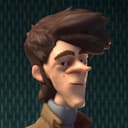
The setup is genuinely good. You’re Hans Tannhauser, a young American physicist who wins a European holiday in a lottery you never entered — already a red flag no character in fiction has ever heeded — and washes up in Trüberbrook, a spa village folded into a West German valley in the 1960s. A stranger lifts a page from your research notes. From there, the game slides out of Heimatfilm nostalgia and into quantum weirdness, folklore, and Cold War paranoia.
The positioning is clear enough: this is an art-forward, low-friction narrative adventure aimed at people who love the aesthetics of classic LucasArts and Revolution games but have no appetite for cat-hair-moustache logic. On iOS it averages 3.9 out of 5 from 89 ratings. That number is not an accident, and it’s not unfair — it’s the sound of a lot of people saying “gorgeous” and “but” in the same sentence.
Key features
- Handmade diorama environments: Physical miniature sets, digitized via photogrammetry, composited with animated 3D characters and effects. The texture of real materials survives the scan — that’s the whole pitch, and it works.
- Classic adventure structure, sanded smooth: Explore, examine, collect, combine, talk. Inventory puzzles and dialogue trees, deliberately fair rather than obtuse.
- A jazz-inflected orchestral score: Moody, brass-heavy, closer to noir doom-jazz than adventure-game whimsy. One of the best soundtracks in the genre, full stop.
- Full dual voice acting: Complete English and German performances, plus twelve text languages. The German track is the better one; play it that way if you can read subtitles.
- Roughly ten hours of play: Realistically six to eight if you’re not lingering. One sitting for a determined weekend.
Analysis
The Gameplay Loop
Trüberbrook’s loop is the oldest one in the genre and it makes no apologies. You arrive somewhere. You click on everything. You pick up the four things that aren’t nailed down. You talk to whoever is standing around until their dialogue tree runs dry. You combine two items, a door opens, you move on.
What’s changed is the difficulty curve, and this is where the game makes its most consequential design decision. btf clearly looked at the genre’s history of moon-logic puzzle design and decided the story was the point, so the obstacles were tuned down until they stopped interrupting. Almost nothing here is built to stop you for more than five minutes. The solutions are usually the only thing you’re carrying that could plausibly work, and the game’s small inventory means brute force is always available and rarely necessary.
That choice is defensible in principle. Narrative momentum is real, and an adventure game that grinds to a halt for two hours over a rubber chicken is not a better game — it’s just an older one. But there’s a difference between fair and absent, and Trüberbrook keeps stepping over that line. A puzzle that resolves the instant you find the item isn’t a puzzle. It’s a fetch quest with better dialogue. When the game does reach for something more involved — a couple of mid-game sequences involving the physics equipment are designed with genuine care — you see the shape of what this could have been, and then it retreats to safety.
The difficulty is also uneven in a way that reads as inexperience rather than intent. Two or three moments spike sharply out of nowhere, usually because a hotspot is small or an object reads as background scenery rather than something interactive. That’s not challenge; that’s a legibility failure, and it’s the one kind of friction the game should have designed out.
Story and Character
The writing is the second-best thing here, and it’s carrying real weight. Trüberbrook is at its strongest in its first two-thirds, when it’s mostly a village comedy with an unease running underneath — eccentric locals, a hotel with too many rules, a valley that doesn’t want to be measured. The cast is memorably sketched. Gretchen, the anthropologist you fall in with, has actual comic timing. The tonal register — nostalgic postwar German cinema, gently sent up, slowly poisoned — is specific and confident in a way very few games attempt.
Then the third act arrives, and the game visibly runs out of road. Threads get bundled rather than resolved. Character motivations that were being carefully built get flattened into exposition. The ending doesn’t land so much as stop. Something got cut, or the schedule ran out, and the last two hours are where the seams show. Given that this is a ten-hour game, losing the final act to a rush is a much bigger percentage loss than it would be in a forty-hour RPG.
Interface and Friction
The control scheme is the weakest part of the package, and by design standards the complaints are legitimate. Navigation is stiffer than it should be: pathfinding hesitates, walking between hotspots takes longer than patience allows, and the cursor doesn’t always communicate what’s interactive with enough confidence. There’s a hotspot highlight, thankfully, and it’s the kind of crutch the design leans on more than it should.
This is the recurring theme. Every rough edge in Trüberbrook is an interaction problem, never an art or audio problem. The people who built this knew exactly how to make a scene look and sound extraordinary. They were still learning how to make a room feel good to move through.
Visuals & performance
This is where the game earns its reputation, and it deserves the praise: Trüberbrook has the most distinctive art direction in the modern adventure genre. The photogrammetry approach means light behaves like light. Plaster looks porous. Wood grain has actual depth. Dust on a windowsill was real dust. There’s a tactile quality to these environments that no amount of PBR shader work reproduces, because it isn’t simulated — it’s captured.
The compositing is the compromise. Animated 3D characters sit on top of scanned sets, and the marriage isn’t always convincing. Character models are simpler than their surroundings, and animation is functional rather than expressive; in wide shots they can read as cutouts pasted onto a photograph. The game mitigates this with smart camera framing and a lot of atmospheric effects — fog, light shafts, particulate haze — which do heavy lifting to bind the layers together. It mostly works. When it doesn’t, the illusion snaps loudly.
Technically, a game of this construction is light on hardware: essentially high-detail static backdrops with modest 3D overlays, built for modest machines rather than cutting-edge ones. The audio deserves a separate mention: the score is brass-forward, melancholic, and unusually restrained, and the sound design of the valley itself — wind, water, distant machinery — is a large part of why the atmosphere holds even when the plot doesn’t.
Platform nuances
Steam is the definitive version. Mouse-driven point-and-click is the native idiom for this design, the resolution does justice to the scanned detail, and the navigation stiffness is at its least intrusive when you’re clicking precisely rather than nudging a stick.
Nintendo Switch is the most compromised. Translating a cursor to a thumbstick is an old problem with no good solutions, and Trüberbrook doesn’t solve it — you’re steering a floating pointer across a scene that was built for direct clicking, and the pathfinding hesitation compounds it. Handheld mode also shrinks the miniature detail that is the entire reason to play this. Playable, but you’re paying a real tax.
iOS and Android land in between, and the 3.9 average on the App Store is about right. Direct touch is conceptually the closest thing to a mouse, and on an iPad the game looks superb. On a phone it’s cramped — hotspots designed for a cursor become fingertip-sized targets on a screen already dense with scanned detail, and mis-taps turn a walk cycle into a wasted twenty seconds. Tablet: recommended. Phone: only if that’s your only option.
Final verdict
Trüberbrook is a fascinating kind of failure — the kind where the ambitious, expensive, high-risk part works perfectly and the conventional part underdelivers. btf gambled an enormous amount of labor on building physical sets, and that gamble paid off completely; these environments will still look striking in twenty years, when this generation’s rendered ones look dated. The score is excellent. The premise is excellent. The first six hours are excellent.
What’s missing is the discipline that comes from having shipped a game before. The puzzles were tuned for accessibility and overshot into weightlessness. The navigation never got the polish pass it needed. And the ending — the part where a mystery has to justify itself — arrives half-cooked, which is the one flaw a mystery cannot absorb.
We rate it a mixed recommendation at best: a beautiful, atmospheric, slightly hollow object. A ten-hour art film with a cursor. Worth a look on sale for anyone drawn to its craft; hard to recommend at full price to anyone who wants the game inside the diorama to be as carefully constructed as the diorama itself.
Reviewed by the Rankeno Puzzle & Casual Desk. Scores are out of 10; the overall score is the desk’s editorial judgement, informed by the four sub-scores above. How we review