
Overview
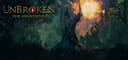
What happens when a shooter refuses to tell the player where to go? Unbroken: The Awakening is built on that question. MGP Studios has made a single-player hybrid of action RPG, adventure and first-person shooter, released on Steam on November 2, 2026.
The premise is a manhunt. The player travels to Crests Edge, a kingdom far from home, to find the traitor Nielsen and bring him to justice, dead or alive. After the intro, the game gives no directions. Routes are non-linear, biomes are numerous, secrets are tucked away, and the story resolves in one of nine endings.
Pressure comes from a calendar. A timeline advances with the player’s actions, and the hunt must finish within five full moons. Events such as the Feast of the 3rd Moon and Earl’s Rebellion unfold in the background, with or without the player.
Positioning matters here, and the Steam page is honest about it. The game looks like a retro shooter, with sprites, gore and fast combos, but the store page warns that it is not an action-focused boomer shooter and that slow, mood-building sections sit between fights. That candor is useful. Anyone expecting wall-to-wall arena combat is looking at the wrong product.
The design’s draws are clear: grindhouse mood, sprite-and-shader look, flashy violence and branching routes. That is niche appeal, and the game’s structure does not pretend otherwise.
One disclosure deserves attention. MGP Studios discloses limited use of generated background art and enemy voice lines, with an option to switch to human voice acting. The transparency is to the studio’s credit. The choice itself will be a dealbreaker for some buyers, and the toggle only addresses the voices.
Key features
- Five-moon timeline: The clock advances with the player’s actions, not in real time. Background events such as the Feast of the 3rd Moon and Earl’s Rebellion happen on schedule.
- Nine endings, no directions: After the intro, the game offers non-linear routes across many biomes and leaves the player to find Nielsen unaided.
- Punch-through combat: Fast, gory fights with flashy combos, volumetric blood and a system that leaves visible holes in enemies.
- Resin oils and resin kick: Different oils grant different forms of bullet time. The kick launches enemies or turns objects into projectiles.
- Class-divided setting: Crests Edge runs from medieval poverty to Victorian and WW1-era industry.
- Retro sprites, modern rendering: Sprite art sits alongside modern shaders, lighting, ragdoll physics and destructible environments.
- Jazzpunk soundtrack: An original score by Roland Redwood.
- Steam features: Achievements, Steam Cloud and leaderboards.
Analysis
Structure: A Manhunt on a Calendar
The timeline is the smartest idea in the package. Open-ended exploration games often suffer from weightlessness, because nothing happens until the player arrives. Unbroken counters that with a deadline and a world that moves on its own schedule. Five full moons is a finite budget, and tying the clock to actions makes every detour a spend without punishing players for idling.
The background events sharpen this. A feast and a rebellion that proceed regardless of where the player is imply missed scenes, and missed scenes are what make nine endings plausible. The design tells the player up front that one run will not show everything. That is a strong argument for replay.
The cost is equally clear. A game with no directions and a ticking clock generates anxiety by design. Some players find that thrilling. Others will feel they are failing a test whose rules were never explained. Onboarding friction is high on purpose, and MGP Studios offers no stated safety net of quest markers or guidance beyond the intro. Whether a first run feels like discovery or like wandering depends on how legible the world’s clues are, and that is the riskiest bet in the design.
Combat: Spectacle With Tools
The fighting is built for visible feedback. Volumetric blood, ragdolls and the punch-through system all serve one purpose: every hit leaves a mark on the enemy. This is the grindhouse sensibility in mechanical form, and it gives the violence a tactile logic that plain hit-flashes lack.
The resin systems add the more interesting layer. Bullet time is an old trick. Splitting it into several forms through different oils turns a single power into a loadout decision. The resin kick does double duty, launching enemies and converting objects into projectiles. Combined with destructible environments and physics-driven bodies, it points to combat that rewards improvisation with the room over memorised rotations.
The open question is depth. Flashy combos and gore are easy to sell in a trailer. Whether the oils differ enough to change how fights are approached is harder to judge from the outside. On paper, the toolset is varied enough to carry a game of this length. It also has to carry repeat runs, since nine endings mean fighting through familiar ground more than once.
Pacing: The Honest Warning
The slow sections are the design’s most divisive element. The game interleaves fast fights with quiet, mood-building stretches, and its own store page says so. This is an adventure game’s rhythm wearing a shooter’s clothes. For players who want atmosphere and a sense of place, the quiet passages are the point. For players chasing momentum, they are dead air.
The trade is defensible only for a narrow audience. A world spanning medieval poverty and WW1-era industry needs room to be looked at, and a class-divided kingdom means little if the player sprints through it. Still, the hybrid label of action RPG, adventure and FPS is broad. Hybrids often serve three audiences partially and none completely, and nothing in the design suggests Unbroken escapes that tension. It picks mood over tempo and accepts the consequences.
Setting and Theme
Crests Edge is an anachronism by design. Stacking medieval squalor beneath Victorian and industrial wealth makes class a visual fact before a line of dialogue lands. It is a sharper hook than the generic fantasy kingdom the genre defaults to. The “dead or alive” framing of the hunt for Nielsen also suggests the endings turn on judgement, not only on completion.
Visuals & performance
The art direction pairs retro sprites with modern shaders and lighting, a combination that has become its own school. The appeal is contrast: flat, hand-styled characters in spaces with real light and shadow, then ragdoll physics and destructible scenery to break the stillness. With volumetric blood on top, the look matches the grindhouse tone the game aims for.
The generated background art complicates that picture. In a game whose identity rests on a distinctive visual style, generated backdrops are a credibility risk, even in limited use. The studio’s disclosure is the correct practice. An art toggle to match the voice option would have been better.
Roland Redwood’s jazzpunk soundtrack is the bolder choice. Jazz against gore and industrial grime is an unusual pairing, and it gives the game an audio identity most retro-styled shooters lack.
On performance, the design sets expectations and nothing more. Sprite-based characters are cheap to render. Modern lighting, volumetric effects, physics and destruction are not. A sensible assumption is modest but not trivial hardware demand.
Platform nuances
Steam is the only platform. There are no console or mobile versions to compare, so parity is not a concern.
- Input: First-person aiming and fast combos favour mouse and keyboard.
- Steam Cloud: Saves sync across PCs, which is useful for a game built around repeat runs.
- Achievements: A natural fit for nine endings and hidden secrets.
- Leaderboards: An unusual inclusion for a narrative single-player game. They suggest a scoring or speed dimension that gives skilled players a reason to return after the endings are exhausted.
- Voice option: Enemy voice lines can be switched from generated to human voice acting.
At $12.99, the value judgement rests on content: multiple routes, nine endings and a structure built for replay.
Final verdict
Unbroken: The Awakening makes clear choices and states them plainly. It withholds guidance, sets a deadline and lets its world run without the player. It wraps that structure in bloody, physics-heavy combat and an offbeat jazz score. Each of those choices narrows the audience, and the studio appears comfortable with that.
The concerns are specific. The no-directions approach lives or dies on world legibility. The slow passages will lose anyone drawn in by the gore alone. The generated assets, though disclosed and partly optional, sit awkwardly in a game sold on style. The design has clear appeal for a niche, but not enough to make it a broad recommendation.
We rate it a mixed, specialised recommendation. For players who want a moody manhunt with consequences and a reason to run it again, MGP Studios has built something distinctive. Players who want constant action should take the store page’s warning at face value.
Reviewed by the Rankeno RPG & Adventure Desk. Scores are out of 10; the overall score is the desk’s editorial judgement, informed by the four sub-scores above. How we review