
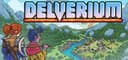
Overview
Survival sandboxes are not short on supply. A new one needs a reason to exist, and Delverium, from developer Sagestone Games, makes its case with volume and structure rather than a single novel hook. It released into Steam Early Access on September 21, 2026, as a paid game priced at $12.49.
The pitch reads like a genre checklist with every box ticked. A procedurally generated world offers varied biomes, caves and dungeons. Players gather resources and mine ores to progress. Crafting covers food, tools, weapons, armor and building materials. Farming adds soil tilling, crop watering, animal breeding, fishing and cooking. Players build shelters and recruit NPCs to fill them. Combat and exploration pay out in unique loot as the danger rises.
What gives the checklist a spine is the story. The land has been invaded by the “Faults”, and players hunt them down to restore stability, collecting lore fragments that piece together a hidden truth. That is a clear objective in a genre that often leaves players to invent their own.
Early reception is encouraging but thin. On Steam, the review sample is too small to establish staying power; it shows the launch did not go wrong, not that the game will hold up.
Two commercial facts shape the buying decision. Sagestone expects a long Early Access runway and plans to raise the price gradually. Early buyers pay less and wait longer. Late buyers pay more for a fuller game. Delverium is PC-only for now, with no mobile or console listing in sight.
Key features
- Procedurally Generated World: Varied biomes, caves and dungeons, with ore mining and resource gathering driving progression into more dangerous territory.
- Deep Crafting: Food, tools, weapons, armor and building materials, supported by nested crafting and an expandable inventory.
- Farming and Husbandry: Till soil, plant and water crops, breed animals, fish and cook recipes.
- Base Building and NPCs: Build shelters and recruit NPCs to populate them.
- The Faults: A story objective built on hunting invading Faults and assembling lore fragments into a hidden truth.
- Flexible Co-op: Single-player, online co-op for large groups, shared or split-screen for smaller groups, plus Remote Play Together.
- Steam Platform Support: Steam Cloud, Steam Achievements and Family Sharing, with a localized interface.
Analysis
The Core Loop
The loop is the familiar one: gather, craft, push deeper, repeat. Delverium’s design ties each step to risk. Ores gate progression, dangerous areas hold the better loot, and unique loot rewards both combat and exploration. That last detail matters. When exploration pays as well as fighting, players who would rather map a cave system than grind enemies still advance. It widens the audience without watering down the challenge curve.
Procedural generation carries the usual trade-off. It offers replay value and a world no guide can fully spoil, but generated dungeons risk feeling interchangeable. Whether Sagestone’s generator produces memorable spaces or merely large ones is the question the feature list cannot answer.
Crafting and Inventory
Nested crafting is the most practical feature on the sheet. In deep crafting trees, building an advanced item typically means manually producing every intermediate component first. A system that resolves those sub-recipes cuts menu time sharply, and menu time is where this genre loses people. Paired with an expandable inventory, it suggests Sagestone understands that friction in the interface is not difficulty. It is just friction.
The crafting scope is broad: food, tools, weapons, armor and building materials. Breadth is easy to list and hard to balance. Five categories of craftables need five reasons to exist, and Early Access is where redundant recipes usually get exposed.
Farming as a Second Game
The farming layer is unusually complete for a game also selling dungeons and boss hunts. Tilling, planting, watering, animal breeding, fishing and cooking amount to a full homestead loop. The design benefit is pacing. A game that only escalates danger exhausts its players; a farm gives them somewhere to go between expeditions and a reason to return to base.
The risk is dilution. Farming that feeds directly into combat readiness, through cooked food that matters in a fight, earns its place. Farming that sits beside the adventure as a separate hobby becomes a chore list. The inclusion of food in the crafting system points toward the former, which is the right call.
NPCs and Shelter
Recruiting NPCs turns a shelter from a storage shed into a settlement. It gives building a purpose beyond aesthetics and gives solo players company. How much the NPCs do remains unspecified: whether they work, trade or simply stand around decides if this is a system or a decoration.
Story Structure
The Faults supply direction. Hunting them to restore stability gives each expedition a target, and the lore fragments reward thoroughness with narrative. Fragmented storytelling suits a procedural world, since it does not depend on players visiting places in a fixed order. It also has a known weakness: players who skip pickups skip the plot. For a sandbox, that is an acceptable bargain. Those who want the hidden truth can chase it; those who want a bigger farm can ignore it.
Co-op
Online co-op for a large group is generous. Local split-screen for a smaller group is rarer and more valuable, because local co-op has largely vanished from this genre. Supporting both means the game works for a Discord group and a living room. It also raises the balancing burden: content tuned for one player and for a full party seldom feels right at both ends, and nothing yet shows how difficulty scales with party size.
The Early Access Question
A long Early Access runway is a long promise. It signals ambition and honesty in equal measure, but it also means the current build is a foundation. Buyers are funding a direction, and the Steam review sample says little beyond early-adopter contentment.
Visuals & performance
The Steam page offers a slim set of screenshots, a thin portfolio for a game promising this much variety. Biome diversity is central to the pitch, and a world sold on varied environments needs art direction that makes each one readable at a glance: players should know where they are, and how dangerous it is, from the palette alone. A slim set of images cannot settle whether Delverium manages that.
Interface design carries more weight here than in most genres. Nested crafting, an expanding inventory, farming, cooking and NPC management all compete for screen space, and split-screen for a small group cuts that space into quarters. A UI that stays legible in a quarter-screen viewport is a hard design problem, and it is the one we would watch most closely as updates arrive.
On performance, only expectations apply. Procedural worlds, large co-op sessions and multiple simultaneous viewports each add load, and Early Access builds are rarely fully optimized. No performance data is available, and buyers should assume tuning is ongoing.
Platform nuances
Delverium is a Steam exclusive. No iOS, Android or Nintendo eShop listing exists.
- Local co-op: Shared and split-screen play for a small group implies a couch-friendly setup, though the game’s input options are not detailed. A small group on one PC realistically means controllers.
- Remote Play Together: Lets friends join a local session over the internet, so groups can try the game together before everyone commits to a purchase.
- Family Sharing: Lowers the cost of entry for households.
- Steam Cloud: Saves travel between machines, which matters in a game built on long-running worlds.
- Steam Achievements: Present from Early Access launch.
- Localization: A localized interface is strong reach for an Early Access release.
- Pricing: At $12.49, the current entry cost is modest, but Sagestone plans gradual increases during Early Access.
Final verdict
The problems are structural. Delverium assembles the survival-sandbox checklist carefully, but a long Early Access runway, a thin public track record and a familiar feature list make it hard to recommend for most people at this stage. The smarter additions—nested crafting, local split-screen, a story with an actual antagonist—show a developer thinking about where these games wear players down.
At $12.49, the entry price is modest; the time and uncertainty are not. Co-op groups and split-screen households have the strongest reason to buy now. Solo players who want a complete, balanced adventure lose little by waiting.
Reviewed by the Rankeno RPG & Adventure Desk. Scores are out of 10; the overall score is the desk’s editorial judgement, informed by the four sub-scores above. How we review