Overview
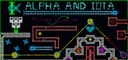
Alpha and Iota Games’ “Alpha and Iota” arrived on Steam on December 13, 2024 not with a bang, but with the quiet confidence of a precisely engineered system. This isn’t another frenetic reflex test; it’s a cerebral journey into the digital heart of a damaged computer network, where the player, embodied as a repair core, must methodically mend the fractured infrastructure. The core conceit—navigating by ejecting into and possessing various “host” types, each endowed with unique traversal capabilities—is the gravitational pull around which Alpha and Iota’s universe orbits. It’s a design choice that instantly distinguishes the title from its peers, pushing players to think less about brute-force execution and more about strategic, symbiotic interaction.
The premise, while initially simple, quickly reveals layers of introspection. Operating under the omnipresent, almost Orwellian gaze of “the Company,” the seemingly mundane task of system repair unfurls into an understated yet profound narrative. Themes of isolation, loss, and the nature of sentient existence within a digital construct are woven subtly into the environmental storytelling and character interactions. This isn’t a story that interrupts; it’s one that permeates the very fabric of the world, enriching the puzzle-solving without ever becoming an exposition dump. Alpha and Iota Games has opted for an elegant blend of narrative depth and mechanical purity, creating a game that appeals equally to the tactile pleasure of mastering movement and the intellectual satisfaction of deciphering the system’s secrets. It respects the player’s intelligence, offering accessibility without sacrificing its potential for genuine challenge.
Key features
- Dynamic Host-Ejection Movement: Players navigate by ejecting between distinct ‘host’ entities, each with unique traversal mechanics (e.g., jumping, sliding, wall-climbing, rail-following), demanding constant adaptation and strategic planning.
- Understated, Affecting Narrative: A subtle yet sincere story exploring themes of isolation and loss is woven into the game’s fabric, offering emotional depth without intrusive cutscenes or heavy exposition.
- Adaptive Challenge Design: Levels cater to a broad skill spectrum, providing clear paths for casual progression alongside intricate secrets and demanding bonus challenges for mastery-oriented players, supported by integrated hint and assist systems.
Analysis
Alpha and Iota’s most compelling argument for its existence lies firmly in its dynamic host-ejection movement system. This is the fundamental language of interaction, a genuine departure from traditional platforming controls. The repair core itself is inert, a digital passenger. True agency stems from its ability to possess and leverage the inherent capabilities of various host units. One host might offer a double-jump, another the ability to slide through narrow conduits, a third might cling to surfaces, and a fourth adheres strictly to predetermined rail pathways. The strength here lies in the sequential combination these hosts necessitate. A single puzzle can require a precise ballet of ejecting from a wall-climbing host, timing a mid-air transfer to a jumping host for a gap crossing, then immediately switching to a rail-following host to clear an automated hazard. That builds a deeply layered tactical consideration into every obstacle.
The onboarding is built to be smooth; the mechanics are intuitively introduced, letting players grasp the basics quickly. True mastery—the ability to fluidly chain transitions and exploit environmental geometry—demands significant practice and spatial awareness. It rewards experimentation, not rote memorization. This translates into a puzzle design philosophy where there are often multiple emergent solutions. This isn’t a game dictating the way; it’s a game providing a toolkit and encouraging players to discover their way. That creative problem-solving ethos is a refreshing departure from the often-linear puzzles found in many platformers, fostering a deeper sense of accomplishment when a complex sequence finally clicks into place.
Beneath the elegant mechanics, Alpha and Iota unfurls an unobtrusive narrative. The game doesn’t bombard the player with lore dumps or lengthy dialogue; instead, the story of sentient agents and the omnipresent “Company” is communicated through environmental cues, cryptic logs, and the very act of repairing a broken digital world. The themes of isolation and loss pair well with the solitary nature of the repair core’s journey, amplifying the emotional weight of seemingly abstract tasks. This minimalist approach keeps the story from ever feeling like a chore, letting players engage at their own pace and discover fragments of the larger picture as they go deeper into the system’s fractured memory banks. This narrative integration, where theme and mechanic are inextricably linked, is a hallmark of sophisticated game design.
Alpha and Iota Games has also deftly navigated the precarious balance of accessibility versus challenge. For the casual player, the core progression is approachable, with levels designed to gently escalate in complexity. Crucially, an in-game hint system and assist features are integrated, ensuring players are never truly stuck. This is a critical design decision that prioritizes player agency and engagement with the narrative over artificial difficulty spikes. Yet, for the completionist or the dedicated puzzle enthusiast, the game offers a rich set of secrets and demanding bonus levels. These aren’t arbitrary add-ons; they push the movement system to its limits, requiring pixel-perfect timing and an intimate understanding of each host’s capabilities. This dual approach ensures broad appeal, inviting a wider audience while still satisfying the hardcore segment.
User Experience Flow
The experience flow in Alpha and Iota is designed to be remarkably fluid. The minimalist UI keeps the focus entirely on the gameplay and environmental details. Level navigation is structured as a natural progression of understanding and mastery: new host types are introduced incrementally, letting players assimilate their unique properties before layers of complexity are added. The hint system is particularly well-conceived, offering progressive levels of guidance rather than immediately revealing the solution, thereby preserving a sense of discovery. This careful pacing guards against cognitive overload, keeping players consistently challenged without tipping into frustration.
Visuals & performance
Alpha and Iota champions a minimalist aesthetic, and the vision is executed with clarity. The visual language is defined by geometric patterns and a clean, almost clinical, color palette. This isn’t an artistic choice born of technical limitation; it is a deliberate decision that prioritizes visual clarity. Each host type is distinct, every interactive element immediately recognizable, and environmental hazards are unambiguously telegraphed. In a game where precise movement and rapid decision-making are paramount, that clear visual feedback loop is invaluable. The absence of extraneous visual noise lets the player focus solely on the puzzle at hand. On the performance side, the streamlined 2D presentation is light on hardware by design, the kind of scope that should hold up well even on modest PC configurations—a sensible fit for a precision platformer. The animations, while subtle, are built to convey the information needed for timing jumps and transitions.
Platform nuances
On Steam, Alpha and Iota is squarely in its element. The precision required by the host-ejection mechanic is well suited to the responsiveness of mouse and keyboard, and the genre’s conventions make controller support a natural fit. The keyboard handles directional movement with familiar ease, while the mouse can be intuitively mapped to the ‘eject’ and ‘switch host’ functions for rapid, accurate targeting. The game’s focus on clear visual cues and deliberate pacing also lends itself well to the PC environment, where players often appreciate deeper strategic engagement over pure twitch reflexes. Steam’s community features also support the “secrets and bonus levels” aspect, fostering discussion and collaboration among players seeking to unearth every hidden path. At a $1.25 asking price, it’s an easy entry point for the curious.
Final verdict
Alpha and Iota rises above the typical indie platformer by refusing to compromise on its core innovative mechanic. Alpha and Iota Games has delivered a study in focused design, demonstrating that real complexity can emerge from elegant simplicity. The host-ejection system is a carefully implemented foundation for every puzzle, demanding both intellect and dexterity. Coupled with a narrative that whispers rather than shouts, and a visual style that serves function above all else, Alpha and Iota makes a compelling case for the power of precision. It respects the player’s intelligence, rewarding patience, observation, and creative thought. It is an intricate, satisfying system to be learned, exploited, and admired—recommended, with the caveat that its restraint won’t be for everyone.
Reviewed by the Rankeno Puzzle & Casual Desk. Scores are out of 10; the overall score is the desk’s editorial judgement, informed by the four sub-scores above. How we review