
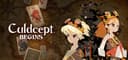
Overview
What happens when a property-trading board game gives every square a monster to defend it? Culdcept has been answering that question for a long time, and Culdcept BEGINS is a new entry after a long gap. Developer Neos Corporation treats the gap as an opportunity. The title promises a starting point, and the design follows through.
The premise is easy to explain and hard to play well. Players, called Cepters, roll dice to move around a board. They claim territories by summoning creatures onto them and collect tolls when opponents land there. The twist is that nothing is safely owned. A rival who lands on a claimed square can fight its defending creature in a card battle and take the land. Each match therefore runs on two engines at once: the luck of the roll and the quality of the deck a player built beforehand.
That deck draws from a large card pool split into creature, item and spell cards, with elemental affiliations that shape abilities. A story wraps around it. On the continent of Bavrashka, a student named Kamur transfers to the Royal Cept Academy and begins to awaken his powers. A single-player campaign and online player-versus-player matches round out the package.
The game releases October 27, 2026 on Nintendo and Steam at $44.99. The design points to a good game with identifiable flaws, not a divisive one. Its strengths are the art, presentation and interface, and its welcome for newcomers. Its weaknesses are an underwhelming campaign and matches that a single dice roll can decide. Digital card games mostly chase live-service loops, so a self-contained board-and-card hybrid occupies a small niche. BEGINS aims to widen that niche, not just serve the faithful.
Key features
- Board-and-card hybrid ruleset: Dice movement, territory claims and tolls come from the board game tradition. Contested squares resolve through card battles, so every landing is a tactical decision.
- Large card pool: Creature cards take and hold land, item cards strengthen creatures in battle, and spell cards shift a match’s momentum.
- Elemental territories: Cards and territories both carry an element, each with different abilities, which ties deck-building to the board itself.
- Academy story campaign: Kamur’s arrival at the Royal Cept Academy on Bavrashka frames the single-player mode.
- Online PvP: Player-versus-player matches give a constructed deck its real test.
- Multiple language options: Support for several regions.
Analysis
The Loop
The central loop is the strongest argument for the game, and it is an old one. Roll, move, then decide whether to claim, pay or fight. The design’s intelligence lies in how those outcomes feed each other. A toll is a tax on bad luck, but a card battle lets a prepared player turn that bad luck into an opening. Territory is an asset and a liability at once, because every claimed square is something an opponent can take.
This gives the game a texture that neither parent genre has alone. Pure property-trading games snowball: the leader keeps leading. Pure card battlers ignore geography. Here, a player who is behind on the board can still be ahead in hand, and a well-timed spell card can undo several turns of someone else’s expansion. The card types map cleanly onto clear jobs: hold ground, win fights, change the state of play. That clarity is a large part of why the system teaches well.
Deck-Building
A large card pool is substantial for a game that is not a live service. The elemental structure gives it shape. Because territories carry elements too, a deck is a plan for a board as well as a list of strong cards. That link encourages committed builds over piles of generically good creatures, and it gives players a reason to think about which lands they want before the first roll.
Item cards deserve particular credit as a design idea. They move the decisive moment of a battle from deck construction to the hand, so a fight between two creatures is rarely a simple stat comparison. Bluffing and holding back become part of the game. For a collectible card game, that kind of hidden information is where long-term depth lives.
The Luck Problem
The dice are the game’s identity and its most common complaint. Matches can turn on a single roll, and no amount of deck craft fully insulates a player from landing on the wrong square at the wrong time. We consider this a real cost, not a matter of taste. A strategy game asks for investment in planning, and when one roll erases that investment, the planning feels less valuable in hindsight.
There is a counter-argument. Variance is what lets a newcomer beat a veteran, and BEGINS plainly wants newcomers. Luck also keeps matches from being solved by the best deck. But the balance point matters, and the criticism suggests the game sits closer to the board game end of its own spectrum than competitive players will like. Anyone who treats online PvP as a pure test of skill should expect frustration.
Campaign and Onboarding
Approachability is a headline strength, and for a series returning after a long gap it is the correct priority. A ruleset with dice, tolls, elements and multiple card types carries serious onboarding friction. An academy setting, with a transfer student learning his powers, is a sensible frame for teaching it in stages.
The campaign itself is the weaker half of that bargain. It has drawn criticism as underwhelming, and the setup reads as serviceable genre furniture: a school, a gifted newcomer, awakening abilities. We judge it as a tutorial and card-collection vehicle with a story attached, not a reason to buy. Players who never go online get the smaller part of the game.
Visuals & performance
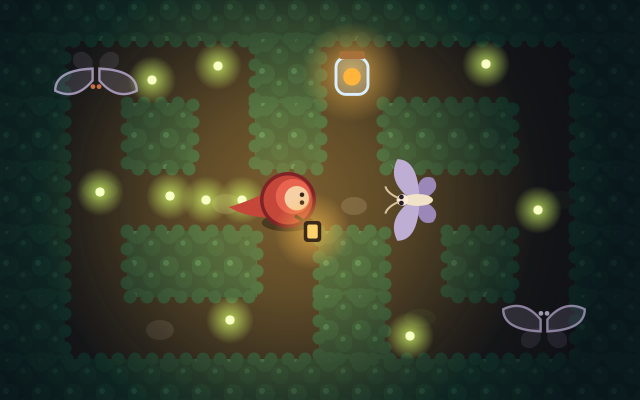
Art, presentation and user interface are the strongest parts of the package, and that matters more here than in most genres. A Culdcept board is information-dense. Territory ownership, element, toll value, defending creature and hand contents all need to be legible at once. An interface that handles that load well does real work, and the design appears to get it right.
Card art carries a collectible game’s appeal, and across a large card set the illustration effort is considerable. The presentation holds across the set.
On performance, a turn-based board and card game is light on hardware by design. Nothing in the ruleset depends on frame-perfect timing or low input latency. The design does not demand new hardware.
Platform nuances
- Nintendo and Steam: The game releases on both on October 27, 2026. Turn-based matches suit controller input.
- Steam: The PC version arrives with the Nintendo release. For a game that depends on online opponents, population matters.
- Elsewhere: There is no iOS or Android version. The game is on Nintendo and PC only, a notable gap for a card game that would suit mobile play.
Cross-platform play and cross-progression are not part of the package as described, so buyers should pick the platform where they expect to find their opponents.
Final verdict
Culdcept BEGINS succeeds at its stated job. It takes a ruleset with a reputation for complexity and presents it cleanly, with strong art, a readable interface and enough cards to sustain long-term deck-building. The hybrid design remains distinctive: few strategy games make geography, economy and card combat depend on each other this tightly.
Its weaknesses are just as clear. The campaign is a ramp into the game, not a destination. The dice give the series its character and also cap how much skill can matter. The balance is clear: a distinctive system with real depth, held back by variance and a campaign that functions as a tutorial.
We rate it a cautious recommendation for newcomers and lapsed fans, and a poor fit for competitive players. We recommend it most to those who accept that luck is part of the bargain.
Reviewed by the Rankeno Strategy & Sim Desk. Scores are out of 10; the overall score is the desk’s editorial judgement, informed by the four sub-scores above. How we review