

Overview
Hunting simulations live or die on a contradiction: the genre sells patience to an audience raised on instant feedback. Way of the Hunter 2, developed by Nine Rocks Games and published by THQ Nordic, does not try to resolve that contradiction. It leans into the slow side of it and adds tools that make the waiting more purposeful.
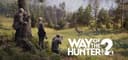
This is a realistic open-world hunting simulation and the sequel to Way of the Hunter. It is available on PC through Steam. Players track and hunt big game (moose, elk, bears and bison) alongside smaller animals and birds, across large reserves that include North American Rocky Mountain territory and the African Kilimaya Reserve. The pairing gives the game two distinct biomes and two distinct fantasies: alpine North America and the African plains.
The sequel’s pitch rests on four additions:
- A trainable hunting dog that detects animal signs, follows blood trails and tracks wounded game.
- A Shot Review bullet camera that breaks down each shot.
- High-tech equipment, including thermal night vision and reserve monitoring tools.
- Hearth & Hunt, a Rocky Mountain lodge that players manage, expand and fill with taxidermied trophies.
The game reached 1.0 on September 29, 2026. Steam reception is mixed, with recent feedback trending upward. That split describes a game with a committed audience and a meaningful minority of unconvinced buyers. Nine Rocks Games has built a sequel with clear ideas about what a hunting sim should reward. Whether the execution matches the ambition is the question the reception leaves open, and the upward trend suggests the answer is getting better.
Key features
- Trainable Hunting Dog: A companion that detects animal signs, follows blood trails and tracks wounded game, and gets better at the job as players train it.
- Shot Review Bullet Camera: A post-shot breakdown of trajectory, speed, angle and placement, built to reward clean, ethical kills over hopeful ones.
- Two Continents of Reserves: Large open-world territory spanning the North American Rocky Mountains and the African Kilimaya Reserve.
- Varied Game: Moose, elk, bears and bison lead the roster, backed by smaller animals and birds.
- High-Tech Equipment: Thermal night vision and reserve monitoring tools extend the hunt beyond daylight and line of sight.
- Hearth & Hunt Headquarters: A Rocky Mountain lodge to manage and expand, with taxidermied trophies on display.
- Two Editions: A standard edition and a Digital Deluxe Edition bundled with a Season Pass.
Analysis
The Hunt Loop
The structure is classic simulation design: find sign, read it, close distance, take one shot, deal with the consequences. What separates a good hunting sim from a shooting gallery is how much weight each stage carries, and Way of the Hunter 2 puts its new systems exactly where the genre is usually weakest, in the minutes before the shot and the minutes after it.
A roster that runs from bison down to birds matters for pacing. Big game implies long stalks and high stakes; small game and birds imply shorter, lower-pressure outings. A loop with both gives players a reason to load in for twenty minutes as well as for an evening.
The Dog Solves the Genre’s Worst Problem
Tracking wounded game is the least loved part of any hunting sim. A marginal hit turns into a long search across open terrain, and the punishment for one imperfect shot can be an hour of staring at the ground. The trainable hunting dog is a direct design answer. It detects animal signs, follows blood trails and tracks wounded animals, turning a solitary chore into a cooperative task.
The smarter decision is the training curve. A dog that improves as it is trained is a progression system with a face on it. It gives the player a long-term investment that is not another rifle, and it ties skill growth to a companion rather than a menu. The risk is the usual one for AI partners: a dog that does too much removes the tracking skill from the game, and one that does too little is decoration. The training system suggests Nine Rocks Games wants players to earn the dog’s competence rather than receive it, which we consider the right call.
Shot Review Turns Every Trigger Pull Into a Lesson
The Shot Review camera breaks down trajectory, speed, angle and placement. In lesser hands a bullet cam is spectacle. Here it is a feedback tool, and feedback is what simulations often withhold. A player who understands why a shot failed, whether through a poor angle or lost velocity, will take a better one next time.
It also carries the game’s ethical argument. By showing exactly what a bullet did, the system makes a clean, well-placed kill the visible standard and a sloppy one hard to ignore. That is a stance, and it gives the sequel a point of view that pure trophy-chasing lacks.
Technology Against Fieldcraft
Thermal night vision and reserve monitoring tools open up night hunting and long-range planning. They also create a tension. Every gadget that reveals an animal reduces the need to read the land. The trade only works if the tools widen the range of hunts on offer without becoming the default answer to every stalk, and the game’s emphasis on shot placement suggests the challenge moves to the trigger rather than disappearing.
Hearth & Hunt Gives the Hunt a Home
The lodge is the meta layer. Managing and expanding a headquarters, and filling it with taxidermied trophies, converts individual hunts into a visible record. It is a sensible structural addition: open-world sims often struggle to make progress feel tangible, and a trophy on a wall does that job better than a statistic.
Reception and Editions
A mixed Steam record is a warning, even with recent improvement. The aggregate does not explain what divides buyers, so we treat it as a signal of uneven satisfaction rather than a specific fault. The improving trend points to a game that has been getting better, not one that has peaked.
The Digital Deluxe Edition with a Season Pass is harder to endorse. Paying up front for future content in a game with a mixed reception asks for trust the record has not fully earned. The standard edition is the prudent entry point.
Visuals & performance
The art direction follows from the premise. A realistic hunting sim needs believable terrain, readable animal behavior at distance and enough environmental variety to keep two continents distinct. Rocky Mountain territory and the Kilimaya Reserve give the game a natural contrast in palette and landscape, and the Hearth & Hunt lodge adds an interior space where trophy presentation is the whole point.
The interface carries a heavy load. Shot Review has to present trajectory, speed, angle and placement clearly enough to teach, and thermal vision and reserve monitoring tools each add their own visual mode. That is a lot of information for a game whose appeal depends on quiet immersion, and how cleanly the UI stays out of the way matters more here than in most genres.
On performance, the expectation is simple: large open-world reserves with wildlife simulation are demanding by design. Buyers on older PC hardware should check requirements against their system before purchasing, and the mixed reception is reason enough to use Steam’s refund window deliberately.
Platform nuances
On Steam, the game benefits from the input a hunting sim suits best. Mouse aim gives fine control over shot placement, which matters in a game that grades every shot on angle and position. The genre also plays comfortably on a controller, though Steam is the only platform listed for this release.
Steam is also where the reception is easiest to read. The overall rating is mixed, and the recent trend points to improvement rather than a settled verdict. That gives PC buyers a clearer picture of the game’s direction than a single star average does.
The game is paid, priced at $39.99. The standard edition and the Digital Deluxe Edition with Season Pass are on offer, so the value comparison between editions depends on the store listing at the time of purchase.
Final verdict
Way of the Hunter 2 knows what it wants to be. The trainable dog addresses the genre’s most frustrating stretch, Shot Review gives the shooting a teaching function and a moral position, and Hearth & Hunt supplies the long-term structure that open-world sims often lack. These are considered design decisions, aimed at the right problems.
The reception keeps the score in check. A mixed Steam record means a real share of buyers left dissatisfied, and the improving recent numbers soften that without erasing it. We rate it as a simulation with a clear audience, not a broad recommendation: the standard edition is the sensible purchase, and the Season Pass is something to revisit once the post-launch record is longer. Ultimately, this is a game for hunters who like the walk as much as the trophy.
Reviewed by the Rankeno Strategy & Sim Desk. Scores are out of 10; the overall score is the desk’s editorial judgement, informed by the four sub-scores above. How we review