
Overview
What does a cemetery sim do for an encore? Lazy Bear Games’ answer is to stop treating the cemetery as the whole job. Graveyard Keeper 2, published by tinyBuild and released on September 22, 2026, promotes the player from put-upon groundskeeper to Grand Inquisitor and attaches three more jobs to the title: factory foreman, town planner and field commander.
The 2018 original built its reputation on a morbid inversion of the cozy farming formula. The sequel keeps that grotesque, darkly comic register and widens the frame. The graveyard is still there to build and run, and resources still need harvesting. Around it now sit machinery for automated production chains, a ruined town to restore through residents’ quests, and a zombie apocalypse to hold off with an undead army the player raises, equips and leads.
This is a single-player game on Steam and Nintendo platforms. It is a paid game at $24.99. The Steam version carries the expected conveniences:
- Achievements
- Full controller support
- Cloud saves
- A demo whose saves carry over to the full game
That last item is a confident move for a genre where the opening hours are the hardest sell.
The feature list is broad, but the design risk is clear: every new system feeds the same resource pipeline. That makes the sequel more ambitious and more demanding. It is a strong pick for management-sim devotees and a harder sell for anyone who bounced off the first game’s workload.
Key features
- Undead Workforce: Zombies can be assigned to resource gathering and crafting, turning the corpses the town supplies into labor and the town’s problems into profit.
- Automated Production Chains: Constructed machinery links harvesting to crafting, shifting the player’s role from doing the work to designing the system that does it.
- Zombie Warfare: New to the sequel. Raise and equip an undead army, craft weapons and armor, build fortifications and lead forces into battle against a zombie apocalypse.
- Town Restoration: A ruined town is rebuilt by completing residents’ quests, giving the management loop a visible, cumulative goal.
- Graveyard Management: The series’ original job remains: build and run a medieval graveyard as the foundation of the whole economy.
- Dark Comedy: A grotesque, humorous story and an eccentric cast carry over from the 2018 game.
- Carry-Over Demo: Demo saves transfer to the full game, so a trial run costs no progress.
Analysis
The Loop: From Gravedigger to Industrialist
The smartest structural idea here is the one inherited from the first game and pushed further: the corpse as a resource. Most management sims separate their inputs from their workforce. Graveyard Keeper 2 collapses the two. The bodies that arrive at the graveyard are also the labor that runs it, which gives the economy a neat, ghoulish circularity. Death feeds production, and production feeds expansion.
Machinery extends that logic. Building automated chains moves the player up the ladder from manual harvesting to systems design, and that is the right escalation for a sequel. It promises the satisfaction that factory builders trade on: a tangle of early chores gradually replaced by a self-running operation.
The catch is that automation only feels like liberation if the grind underneath it eases. It does not ease enough. Resource grind remains the backbone, and that is the central design problem. A sequel that adds zombie workers and machines while leaving the grind as the load-bearing wall has scaled the first game’s problem along with its strengths.
Warfare: A Reason for the Stockpile
Zombie warfare is the headline addition, and on paper it solves a real genre problem. Production sims often struggle to answer the question “what is all this for?” Here, the answer is concrete: weapons, armor, fortifications and an army, all drawn from the same production chains. The threat of an apocalypse turns a stockpile into a war chest and gives the factory a deadline.
It is also a design risk. Combat layered onto a management sim tends to end up as either a shallow diversion or a second game competing for attention. The dependence on crafting suggests Lazy Bear Games aimed for integration over spectacle: battles as an output of good logistics. That is the correct instinct. But it also means more demand on the same resource pipeline, which compounds the grind for players already feeling it.
Town and Story: The Weaker Joint
Restoring the ruined town through residents’ quests is a sound framing device. It gives progress a physical form and ties the eccentric cast to tangible rewards. The problem is synchronization. Story pacing can fall out of step with the management loop. That is the classic failure mode of quest-gated sims: narrative beats waiting on production thresholds, or production stalling behind a quest.
When a story advances at one speed and the economy at another, one of them ends up feeling like an obstacle. The design risks making the story that obstacle more often than the economy.
The premise and tone carry the series’ identity; the dialogue is the weaker link. That split suggests the grotesque comedy still lands while the line-by-line script does not always match it. For a series whose identity rests on its dark humor, that is a meaningful soft spot, not a footnote.
Scope Versus Focus
The design is a deliberate trade: breadth over refinement. Graveyard, factory, town and battlefield are four interlocking systems where the original had roughly one and a half. Players who want a sprawling to-do list with a morbid sense of humor get exactly that. Players who wanted the original’s rough edges sanded down get a larger game with the same edges.
Visuals & performance
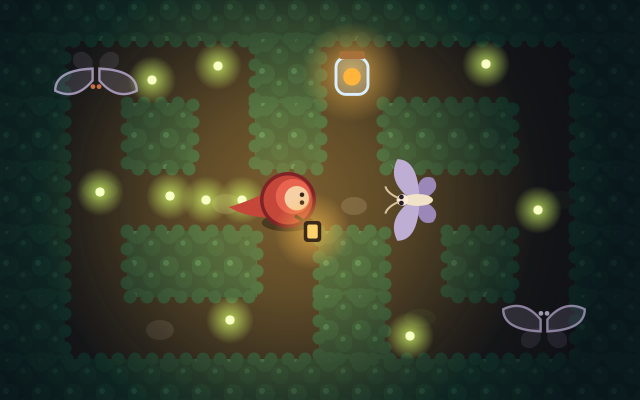
The art direction’s job is tonal, and the tone is the series’ most durable asset. A game about processing corpses for profit only works if it looks and reads as comedy. The grotesque, darkly humorous presentation is what keeps the premise on the right side of grim, and the eccentric cast gives the medieval setting its personality. The premise does heavy lifting; the dialogue is the weaker link.
Interface demands are steep by design. A game that asks the player to manage a graveyard, production chains, a quest log and an army needs clear information hierarchy, and every added system raises the cost of a cluttered menu. Full controller support signals that the UI was built to work without a mouse, which matters for a game shipping on Steam and Nintendo platforms.
Handheld performance is the open question. Simulation-heavy games tend to strain most when production and unit counts peak, and the design pushes both. A compatibility badge is not a guarantee for a late-game town full of automated workers and marching zombies. Handheld buyers should weigh that before committing.
Platform nuances
Steam is the most feature-complete version. It offers:
- Achievements, cloud saves and full controller support
- The demo with carry-over saves, the lowest-risk way to find out whether the grind suits
Mouse and keyboard suit menu-dense management and production planning. Controller support makes couch and handheld play viable.
Nintendo platforms receive the game, which fits the genre: management sims built on short task loops suit portable sessions. Controller input is the default there, so the same controller-first interface carries over. Beyond availability, little is confirmed. No performance details or feature differences between Nintendo versions are stated, and there is no information on whether the demo or cross-platform save transfer extends to Nintendo hardware. The design’s late-game simulation load makes handheld performance a reasonable question, but no platform-specific details are available.
Steam and Nintendo are the listed platforms. No iOS or Android version has been announced.
Final verdict
Graveyard Keeper 2 makes the right additions and leaves the wrong thing untouched. The undead workforce and automated machinery are a natural, clever evolution of the corpse-economy premise. Zombie warfare gives all that production a goal the original lacked. Restoring a ruined town adds visible stakes.
Against that stand a grind that still dictates the pace, a story that struggles to keep time with the systems around it, and dialogue that undersells a strong comic setup. The result is a substantial sequel that is hard to recommend for most people. We rate it Mixed and recommend it only to players who already know they like this kind of work. Everyone else should start with the demo.
Reviewed by the Rankeno Strategy & Sim Desk. Scores are out of 10; the overall score is the desk’s editorial judgement, informed by the four sub-scores above. How we review