

Overview
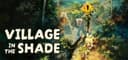
What happens when a farming sim tells you not to go outside after dark, and means it? Village in the Shade builds its identity on that question. Developed by Nippon Ichi Software, Inc., the studio behind the Yomawari series, and published by NIS America, it is a single-player hybrid that plants a horror story inside the most comforting genre in games. It releases July 29, 2026, as a paid game priced at $49.99.
The setup is familiar on purpose. You move to Kagatsu, a secluded Japanese mountain village, where you plant crops, customize a homestead and build relationships with the locals. You buy furniture in town, craft fences from resources gathered on your own land, sit by the brook, and attend the summer festival and cherry-blossom viewing. So far, so pastoral.
Then come the rules. Don’t talk to strangers. Don’t leave the village. Don’t go out at night. Obey them and the game stays a peaceful rural life sim. Break them and you start uncovering the truth about Kagatsu. That fork is the pitch, and it is a sharp one: the horror is opt-in, gated behind the player’s own curiosity.
The pedigree matters here. Yomawari paired soft, storybook visuals with dread, and this game applies the same contrast to a genre crowded with interchangeable cosy farms. That gives it a clear position in a saturated market: a farming sim for people who suspect the idyll is hiding something.
Reception is positive on Steam, and comparisons to Higurashi recur in reviews, which tells prospective buyers what flavour of rural unease to expect.
The game is available on Steam and Nintendo platforms.
Key features
- The three rules: Don’t talk to strangers, don’t leave the village, don’t go out at night. Follow them for a quiet life, or break them to expose what Kagatsu is hiding.
- Farming and homestead customization: Plant crops, decorate the house with furniture bought in town, and craft fences and other items from resources gathered on the farm.
- Villager relationships: Building bonds with Kagatsu’s residents is a central activity, and the horror premise gives those bonds an uneasy second meaning.
- Seasonal festivals: Traditional events such as the summer festival and cherry-blossom viewing punctuate the calendar.
- Hand-painted art: A soft, illustrated look that sells the rural calm and sharpens the contrast when the tone turns.
- Multiple text languages: Several text languages are supported, with no full voice audio.
- Mature content: Cartoon blood and violence, horror themes and themes of suicide.
Analysis
The Rules as a Design Device
Most horror games push dread at the player. This one hands the player a prohibition and waits. The three rules are simple enough to memorize in a sentence, and each one maps onto an ordinary life-sim impulse: talk to every character, explore past the map’s edge, squeeze more out of the day by staying up late. Genre veterans have spent years being rewarded for exactly those behaviours. Here the same habits are framed as transgressions.
The design does not need a jump scare to create tension; the rule itself does the work. A night-time curfew in a farming sim normally exists as a stamina mechanic. In Kagatsu it reads as a warning, and every evening becomes a small decision about whether tonight is the night to ignore it.
Two Games, One Village
The structure offers a real fork. Players who obey can keep to a peaceful rural life, which means the farming, decorating and festival loop has to hold up on its own. Players who disobey get the mystery. The risk in any hybrid like this is that one half becomes a thin wrapper for the other, with the farm as busywork between story beats or the horror as a late gimmick bolted onto a standard sim.
The balance appears to land. The Higurashi comparisons are instructive too: that series earned its reputation by making the everyday scenes matter so that their corruption hurt. A farming loop serves the same function here. The routine of tending crops and befriending neighbours is an investment, and the horror spends it.
Farming and Homestead
The sim layer described is conventional: crops, furniture from the town shop, crafted fences and items from gathered resources. Nothing in the feature set suggests the mechanical depth of the genre’s heavyweights, such as sprawling automation, deep crop economies or combat-driven mining. That reads as deliberate. The farm’s job is to establish routine and attachment, and a leaner system does that without burying the pacing of the story under spreadsheets.
Players who want a long optimization sandbox should adjust expectations accordingly. The appeal is atmosphere and consequence, not yield per tile.
Relationships Under Suspicion
Villager relationships gain a charge that other life sims rarely attempt. In a typical farming game, a friendly neighbour is a gift-giving meter. In a village whose rules forbid contact with strangers and departure from the town limits, every friendly neighbour is also a potential keeper of the secret. The design turns the genre’s warmest system into its most suspicious one, and it does so without changing the mechanic, only the context.
Content and Tone
The horror is not decorative. The game carries cartoon blood and violence, horror themes and themes of suicide. The painted art softens the presentation, but the subject matter is heavy, and buyers drawn in by the cherry blossoms should know what sits behind them. Anyone sensitive to those themes should treat the warning seriously.
Localization
Text is available in multiple languages, and there is no full voice audio. For a story-led mystery, that puts all the weight on the writing and translation. The text-only delivery asks more of the reader and of the sound design around it.
Visuals & performance
The hand-painted art direction is the game’s main narrative tool. A mountain village rendered in soft brushwork signals safety, and the Yomawari lineage shows how effectively Nippon Ichi uses gentle visuals to set up harsh turns. The style also gives the game a distinct identity in a genre dominated by pixel art.
The lack of full voice audio is a real limitation for a horror story, where performance can carry dread. Text-only delivery asks more of the reader and of the sound design around it.
A 2D painted game of this scope should be light on hardware. Console performance is not detailed here.
Platform nuances
- Steam (PC): The version with the clearest public reception. The slow, menu-and-movement rhythm of a farming sim suits a controller as well as mouse and keyboard.
- Nintendo platforms: A life sim built around short daily routines fits portable play naturally, and the genre has a long history on Nintendo hardware. No specific differences between Nintendo editions are documented.
- Parity and pricing: Nothing indicates content differences between platforms, and the same text languages apply. The game is a paid release at $49.99.
Final verdict
Village in the Shade has one big idea and commits to it. Three plain rules convert the standard farming-sim routine into a standing temptation, and the choice to obey or transgress gives the player authorship over how dark the game gets. The sim layer looks modest and the absence of voice acting is a missed opportunity, but the concept is sharp and the art direction serves it.
The reception is positive, and the Higurashi comparisons point to a game that delivers on its premise. We rate it a good buy for players who want their rural idyll with teeth, and an informed pass for those who came only for the turnips.
Reviewed by the Rankeno Strategy & Sim Desk. Scores are out of 10; the overall score is the desk’s editorial judgement, informed by the four sub-scores above. How we review