

Overview
The roguelike deckbuilder is one of the most crowded shelves on Steam. Most newcomers arrive with a single twist bolted onto a familiar frame of map nodes, card rewards and boss fights. Shroom and Gloom arrives with two, and both change how a run is played rather than how it is dressed.
Developed by Team Lazerbeam and published by Devolver Digital, the game is a first-person roguelike “double-deckbuilder”. It launched in Steam Early Access on September 10, 2026 at $14.99, with a free demo alongside it. Players descend through hand-drawn dungeons overrun with fungal enemies while managing two separate decks. The combat deck handles fights. The explore deck governs everything between them: navigating the dungeon, modifying cards, and unlocking weapons and abilities.
The second twist is culinary. Enemies can be seasoned, skewered or roasted, then eaten to restore health. Roasted foes can also go into soups with run-altering effects. Healing, in other words, is something the player prepares mid-fight instead of collecting at a rest stop.
The design has drawn attention for its hand-drawn art, brisk combat and two-deck system. The main reservation is the Early Access label: later runs may offer fewer surprises.
That is the shape of the proposition. This is a distinctive, single-player card game sold at a modest price, with development still ahead. Buyers are paying for a solid first act and a promise.
Key features
- Double-deckbuilding: A combat deck for fights and an explore deck for navigation, card modification and unlocking weapons and abilities. Each is built and managed separately.
- Growable cards: Cards can be grown and altered throughout a run. Low-level starter cards can become strong attacks, and rare cards can be turned into powerful super-weapons.
- Cook-and-eat combat: Enemies can be seasoned, skewered or roasted, then eaten to restore health.
- Soups: Roasted foes can be cooked into soups whose effects reshape a run.
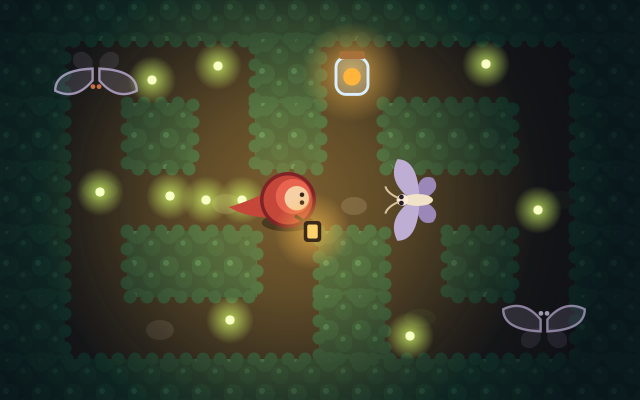
- Hand-drawn dungeons in 3D: Hand-drawn art and animation are layered into 3D environments and viewed in first person.
- Steam platform support: Single-player, with Steam Achievements, Steam Cloud and Family Sharing.
- Free demo: The design can be sampled before spending anything.
Analysis
The Two-Deck Structure
Most deckbuilders treat the space between fights as a menu: pick a node, take a reward, move on. Shroom and Gloom turns that space into a second card game. The explore deck is the tool for navigating the dungeon, modifying cards and unlocking weapons and abilities, which means progression is played rather than merely selected.
This matters for two reasons. First, it gives the downtime between battles its own decisions and its own build. A player who neglects the explore deck presumably pays for it in the combat deck, because the former is the route to improving the latter. Second, it splits a run’s attention in a productive way. A strong run needs two engines that work, plus a sense of when to feed one at the expense of the other.
The risk is cognitive load. Two decks mean two sets of cards to learn, and the genre already asks newcomers to absorb a lot. Here the free demo does real work as onboarding: anyone unsure whether the double structure reads as depth or as bookkeeping can find out at no cost.
Card Growth
The upgrade model is the design’s most effective piece of economy. In many deckbuilders, starter cards are dead weight to be removed as fast as possible, and the optimal play becomes a thinning exercise. Here, cards can be grown and altered throughout a run, so a low-level starter can become a strong attack and a rare card can be pushed into super-weapon territory.
That reframes the early game. Starter cards become raw material, and the interesting question shifts from “what do I cut?” to “what do I invest in?”. It also raises the ceiling at the other end, since a rare card is a starting point rather than a finished reward. Systems like this tend to produce the lopsided, overpowered builds that roguelike players chase, and the design leans into that appeal openly.
Cooking as Combat
The cooking layer is mechanical, not decorative. Seasoning, skewering or roasting an enemy and then eating it to restore health ties sustain to offensive play. A player low on health has a reason to fight with more care and more intent, because the meal has to be prepared before it can be eaten. That is a tighter risk-and-reward loop than the usual pattern of trading a campfire visit for a heal.
Soups add a second tier. A roasted foe can go into a soup with effects strong enough to change a run’s direction, so every roast poses a choice between the immediate heal and the larger payoff. It is a clean piece of design: one resource, two competing uses, and a decision that recurs every fight.
Where It Runs Thin
The weak point is longevity in the current build. The risk that later runs offer fewer surprises is the criticism that matters most for a roguelike, because variety across repeated runs is the genre’s whole contract. Planned updates may answer it, but those are plans, and the Early Access window is long.
Difficulty is the other filter. Players who want a gentle card game with a cute mushroom motif should check the demo before assuming the art style signals an easy ride.
Visuals & performance
The art direction is a clear selling point. Hand-drawn art and animation sit inside 3D environments, and the first-person view puts those drawings directly in the player’s face rather than at the far end of a board. For a card game, that perspective is a meaningful choice. It trades the tabletop overview for presence and makes the dungeon a place rather than a map.
The fungal theme gives the enemy roster a coherent identity, and the cooking mechanics give the animation something specific to do. A foe that can be seasoned, skewered and roasted needs visual states that communicate each condition, so in this design the art carries gameplay information as well as charm.
On performance, the scope suggests modest demands: a turn-based, single-player card game built on drawn art is not the kind of project that typically taxes hardware. That is an expectation from the design, not a measured result. As with any Early Access release, the build is unfinished by definition and will change over the coming months.
Platform nuances
Shroom and Gloom is a Steam release. Players hoping to take a card game like this on a handheld or phone have no native option today.
- Price: $14.99 in Early Access, with a free demo.
- Steam features: Steam Cloud, Family Sharing and Achievements are supported.
- Input: A turn-based card game suits mouse and keyboard by nature, and timing and dexterity are not part of the design.
Final verdict
Shroom and Gloom earns its place on a crowded shelf through design rather than volume. The explore deck turns dead time into play. Card growth rescues starter cards from the discard-on-sight fate they suffer elsewhere. The cooking system makes healing a tactical decision with a real opportunity cost. These three ideas interlock, and the design has clear appeal for the audience it targets.
The caveat is the one attached to every unfinished roguelike: content. Fewer surprises in later runs is a real limitation for a genre built on repetition, and the fix depends on planned updates. At $14.99, with a free demo to remove the guesswork, the risk is small. We recommend it now for genre enthusiasts and recommend the demo for everyone else. The foundation is solid, and the final score depends on what Team Lazerbeam builds on top of it.
Reviewed by the Rankeno RPG & Adventure Desk. Scores are out of 10; the overall score is the desk’s editorial judgement, informed by the four sub-scores above. How we review